

Recipe
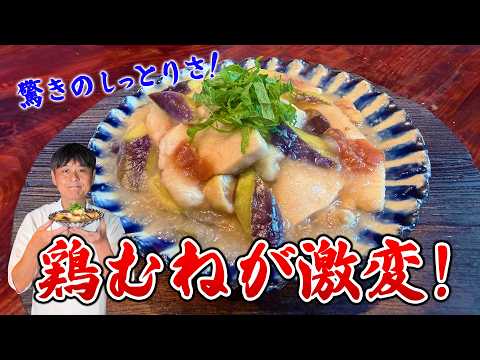
Kasahara-Style Chicken Breast & Eggplant with Plum & Grated Daikon (How to Keep Chicken Breast Juicy)
Ingredients
- 1Shinrin-dori chicken breast (or regular chicken breast)
- 2eggplants
- 150gdaikon radish
- 3pickled plums (umeboshi, approx. 8% salt content)
- 5shiso leaves
- 1tsp sugar (for seasoning) + 1 tsp sugar (for broth)
- 1/2tsp salt (for seasoning)
- 1tbsp sake (for seasoning)
- 200mldashi stock
- 20mllight soy sauce
- 20mlmirin
- Potatostarch to taste (for coating) + 1/2 tbsp potato starch (for slurry)
- Waterto taste (for slurry)
About "Chicken Breast & Eggplant with Plum & Grated Daikon (Ume Mizore-ni)"
Chef Kasahara, whose family ran a yakitori restaurant, introduces a refreshing summer dish: Chicken Breast & Eggplant with Plum & Grated Daikon, featuring "Shinrin-dori" chicken breast. It is packed with professional techniques to keep chicken breast incredibly juicy, such as cutting against the grain, using sugar for moisture retention, the "kuzu-uchi" starch-coating method, and staggered simmering. The refreshing acidity of grated daikon and pickled plums (umeboshi) makes this the perfect dish to beat the summer heat.
Introduction to 【賛否両論】笠原将弘の料理のほそ道 →
Tips for Making "Chicken Breast & Eggplant with Plum & Grated Daikon (Ume Mizore-ni)"
-
Prep
- Slicing the chicken breast diagonally against the grain is the key to keeping it juicy. Aim for a thickness of about 8mm, keeping it slightly on the thicker side.
-
Prep
- Massaging sugar into the sliced chicken enhances its moisture retention, locking in juices for a tender finish.
-
Prep
- Partially peel the eggplants in stripes, cut them into small bite-sized chunks, and soak them in water to remove bitterness and help them cook faster.
-
Heat control
- Use the "kuzu-uchi" technique by coating the chicken with potato starch and blanching it briefly to form a protective barrier. Remove while still medium-rare to avoid overcooking.
-
Heat control
- Use a staggered cooking method: simmer the slower-cooking eggplant for 2.5 minutes first, add the pickled plums and grated daikon, and then return the chicken to the pan.
-
Heat control
- After returning the chicken to the pan, cook gently over low heat and turn off the stove as soon as the pink meat turns white.
Ingredients for "Chicken Breast & Eggplant with Plum & Grated Daikon (Ume Mizore-ni)"
13 items* Tap ingredient names to find on Amazon
- 1Shinrin-dori chicken breast (or regular chicken breast)
- 2eggplants
- 150gdaikon radish
- 3pickled plums (umeboshi, approx. 8% salt content)
- 5shiso leaves
- 1tsp sugar (for seasoning) + 1 tsp sugar (for broth)
- 1/2tsp salt (for seasoning)
- 1tbsp sake (for seasoning)
- 200mldashi stock
- 20mllight soy sauce
- 20mlmirin
- Potatostarch to taste (for coating) + 1/2 tbsp potato starch (for slurry)
- Waterto taste (for slurry)
How to Make "Chicken Breast & Eggplant with Plum & Grated Daikon (Ume Mizore-ni)"
- 1
Remove the skin from the chicken breast, then cut it into three pieces. Slice each piece diagonally against the grain into slices about 8mm thick. Finely chop the skin and fat, and set them aside.
- 2
Place the sliced chicken in a bowl, add 1 tsp sugar, 1/2 tsp salt, and 1 tbsp sake. Massage well and let sit for 10 minutes to marinate.
- 3
Grate 150g of daikon radish, keeping the juice. Cut off the stems of 2 eggplants, partially peel them with a peeler, cut them into small bite-sized chunks (ran-giri), and soak them in water.
- 4
Thoroughly coat the marinated chicken with potato starch. Briefly blanch in boiling water until the surface becomes glossy and translucent, then drain in a strainer.
- 5
In a frying pan, combine 200ml dashi stock, 20ml light soy sauce, 20ml mirin, and 1 tsp sugar, and bring to a simmer. Add the reserved chicken skin and fat to infuse their umami into the broth.
- 6
Add the eggplant first, as it takes longer to cook, and simmer for about 2 and a half minutes.
- 7
Once the eggplant softens, tear 3 pickled plums into small pieces by hand and add them to the pan. Add the grated daikon along with its juice, and bring to a boil.
- 8
Once the broth boils, return the blanched chicken to the pan. Simmer gently over low heat while stirring. As soon as the pink meat turns white, turn off the heat.
- 9
Add the potato starch slurry (1/2 tbsp potato starch mixed with water) to thicken the sauce. Transfer to a serving dish and garnish with 5 finely sliced shiso leaves.
Detailed Commentary on "Chicken Breast & Eggplant with Plum & Grated Daikon (Ume Mizore-ni)"
* Content organized by topics from the video.
Morning Tongue Twisters to Warm Up
Chef Kasahara makes a lively entrance with a Japanese tongue twister. Since the shoot is early in the morning and he feels his tongue has been a bit stiff lately, he has been practicing tongue twisters to warm up. He shares some classic Japanese tongue twisters and mentions he practices them daily. Today, Chef Kasahara—whose family ran a yakitori restaurant and who boasts 20,000 chicken recipes—introduces a refreshing summer dish using his current favorite "Shinrin-dori" chicken breast: "Chicken Breast & Eggplant with Plum & Grated Daikon." This particular chicken is known for staying incredibly juicy and flavorful even after cooking.
How to Slice Chicken Breast for Maximum Juiciness
We begin by prepping the main ingredient, one Shinrin-dori chicken breast. First, remove the skin. Admiring the beautiful meat, Chef Kasahara happily shares, "I recently set a photo of this chicken as my phone lock screen and proudly showed it to my daughter, and she actually gave me a 'like'!" The most crucial tip when cutting chicken breast is to slice against the grain. This makes the final texture dramatically juicier. Balancing the thick and thin parts, first cut the breast into three pieces. Then, slice them diagonally at an angle to a thickness of just under 1cm (about 8mm). Slicing too thin will ruin the juicy texture, so the trick is to cut them slightly on the thicker side. Finely chop the removed skin and fat and save them to add rich umami to the broth.
Sugar's Hydrating Effect & Veggie Prep
Place the sliced chicken in a bowl, add sugar (1 tsp), salt (1/2 tsp), and sake (1 tbsp), and massage well. While Shinrin-dori chicken naturally retains moisture well, adding sugar to the marinade enhances this effect, locking in the juices for an even tenderer result. Let it sit for 10 minutes to absorb the flavors. Meanwhile, prepare the vegetables. Grate 150g of daikon radish, but do not discard the juice, as it is packed with sweet, savory flavor. Cut the stems off 2 eggplants. To help them cook faster and look appealing, partially peel them in stripes with a peeler, then cut them into small bite-sized chunks. Soak the eggplant in water to remove bitterness; absorbing water also helps them cook more quickly.
The 'Kuzu-uchi' Technique to Lock in Umami
After marinating for 10 minutes, coat the chicken thoroughly with potato starch. This is a traditional Japanese culinary technique called "kuzu-uchi" (starch coating). By creating a gelatinous barrier around the meat, it locks in moisture and umami, ensuring a juicy finish. Once fully coated, blanch the chicken briefly in boiling water. The goal here is not to cook it all the way through, but simply to set the starch on the surface. Overcooking will dry it out, so remove the chicken as soon as the surface looks glossy and translucent, then drain. Since it will be simmered later, taking it out while still medium-rare is the professional secret to keeping the meat incredibly tender.
Staggered Simmering to Layer Flavors
In a frying pan, combine dashi stock (200ml), light soy sauce (20ml), mirin (20ml), and sugar (1 tsp), and bring to a simmer. Add the reserved chicken skin and fat to infuse their rich flavor into the broth. Next, add the eggplant first, as it takes longer to cook, and simmer for about 2 and a half minutes. This staggered approach accounts for the different cooking times of eggplant and chicken. Once the eggplant softens, tear 3 pickled plums (umeboshi, around 8% salt content is recommended) by hand and add them to the pan. Chef Kasahara suggests saving the plum pits for cooking rice or simmering sardines instead of throwing them away. Finally, add the grated daikon with its juice and bring to a boil. This combination of refreshing acidity and grated daikon is perfect for beating the summer heat.
Gentle Cooking and a Satisfying Taste Test
Once the broth boils, return the blanched chicken to the pan. From this point, avoid high heat; simmer gently over low heat while stirring. Overcooking will toughen the meat, so gently heat until the center is cooked through. As soon as the pink parts turn white, turn off the heat immediately. Finally, stir in the potato starch slurry (1/2 tbsp potato starch mixed with water) to thicken the sauce. Transfer to a serving dish and garnish with 5 finely sliced shiso leaves. During the taste test, Chef Kasahara praised his own creation, saying, "This is ridiculously juicy!" His assistant Yoshiki joked, "It's so juicy I thought I was going to drown," while Nanako got teased for tongue-tripping over "toro-toro" (thick/creamy) and saying "tori-tori" (chicken-chicken). They finished the dish in a warm, lively atmosphere. It pairs wonderfully with beer and is the ultimate dish to keep you energized through the summer.
About 【賛否両論】笠原将弘の料理のほそ道
【賛否両論】笠原将弘の料理のほそ道
136万人 subscribers ・ 和食
* Opens YouTube channel
* Subscriber count is as of article creation and may differ from the current number.
