

Recipe
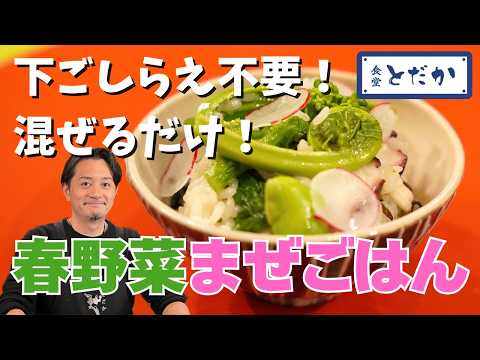
"Spring Vegetable Mixed Rice" - A Mix of Fava Beans, Canola Blossoms, Fiddleheads, and Snap Peas! Balanced with Savory Shio Kombu!
Ingredients
- 3fava bean pods
- 1bunch canola blossoms
- 5–6fiddlehead ferns
- 6–7snap peas
- 2–3boiled octopus tentacles
- About10 cm (4 inches) nagaimo (Japanese mountain yam)
- 1radish
- 4pinches shio kombu (salted kelp)
- 2tbsp sesame oil
- 2cups freshly cooked rice (cooked from 2 rice-cooker cups of rice)
- 2g salt (for boiling)
- 2liters water (for boiling)
About "Spring Vegetable and Octopus Mixed Rice"
This mixed rice features spring favorites like fava beans, canola blossoms, fiddlehead ferns, and snap peas, combined with boiled octopus. Simply seasoned with shio kombu (salted kelp) and sesame oil, nagaimo (Japanese mountain yam) is added to bind the ingredients together. By mixing the vegetables instead of cooking them with the rice, this dish preserves their crisp texture and vibrant colors.
Introduction to 動画 de 食堂とだか 料理人・戸高雄平 →
Tips for Making "Spring Vegetable and Octopus Mixed Rice"
-
Prep
- Pierce the fava bean skin with your fingernail and peel along the skin to easily remove it without a knife.
-
Prep
- Use mainly the leafy parts of the canola blossoms, and save the stems for other dishes.
-
Prep
- Fiddlehead ferns require no bitterness removal; just rinse quickly to wash away dirt.
-
Prep
- Carefully remove the tough strings all the way around the snap peas.
-
Cooking
- Cut the vegetables into relatively large pieces instead of chopping too finely to retain texture.
-
Cooking
- Shock the boiled vegetables in ice water to preserve their vibrant color and stop overcooking.
-
Cooking
- Thoroughly squeeze out excess moisture from the boiled vegetables using paper towels.
-
Seasoning
- Letting the rice sit allows the shio kombu flavors to meld, making it delicious even when cold.
-
Seasoning
- It is recommended to cook the rice slightly firm for mixed rice.
-
Other
- Adding nagaimo creates a sticky texture that binds the rice and ingredients together beautifully.
Ingredients for "Spring Vegetable and Octopus Mixed Rice"
12 items* Tap ingredient names to find on Amazon
- 3fava bean pods
- 1bunch canola blossoms
- 5–6fiddlehead ferns
- 6–7snap peas
- 2–3boiled octopus tentacles
- About10 cm (4 inches) nagaimo (Japanese mountain yam)
- 1radish
- 4pinches shio kombu (salted kelp)
- 2tbsp sesame oil
- 2cups freshly cooked rice (cooked from 2 rice-cooker cups of rice)
- 2g salt (for boiling)
- 2liters water (for boiling)
How to Make "Spring Vegetable and Octopus Mixed Rice"
- 1
Prepping the Fava Beans
Make a small cut in the fava bean pods with a knife to remove the beans. Use your fingernail to pierce the protruding part of the bean slightly, then peel along the skin. This allows you to peel the thin outer skin cleanly using only your fingertips without damaging the beans.
- 2
Prepping the Canola Blossoms
Cut the canola blossoms in half, using mainly the tender leafy parts. Save the remaining stems for other dishes like miso soup.
- 3
Prepping Fiddleheads and Snap Peas
Rinse the fiddlehead ferns quickly to remove any dirt; there is no need to remove bitterness (aku). Trim the ends of the stems and cut them in half. Carefully remove the tough strings all the way around the snap peas, then cut them in half.
- 4
Boiling the Canola Blossoms
Add 2 g of salt to boiling water (about 2 liters). Add the canola blossoms and boil for 30 seconds to 1 minute, then immediately transfer to ice water to preserve the vibrant green color and stop the cooking process.
- 5
Boiling the Fiddleheads
Next, boil the fiddlehead ferns for 1.5 to 2 minutes. Meanwhile, thoroughly squeeze out the excess moisture from the boiled canola blossoms using paper towels.
- 6
Boiling Snap Peas and Fava Beans
Boil the snap peas for 1 minute and transfer to ice water. Finally, boil the peeled fava beans for 1 minute and transfer to ice water. Drain both thoroughly.
- 7
Cutting the Octopus and Nagaimo
Chop the boiled octopus into bite-sized pieces. Peel the nagaimo and cut it into small cubes, holding it steady on a paper towel or kitchen towel to prevent slipping. Adding nagaimo creates a sticky texture that binds the rice and ingredients together beautifully.
- 8
Prepping the Radish
Thinly slice the radish using a mandoline slicer, then soak in water for about 5 minutes to make it crisp. This will be used to add a pop of color.
- 9
Mixing the Ingredients
Place all the boiled spring vegetables, octopus, and nagaimo in a bowl. Add 2 pinches of shio kombu and 2 tbsp of sesame oil, then mix thoroughly to coat everything. Letting it sit for a bit allows the shio kombu flavors to meld, making it even tastier and delicious even when cold.
- 10
Mixing with Rice
Transfer 2 cups of freshly cooked rice to a bowl, add the seasoned ingredients, and fold gently to combine. It is recommended to cook the rice slightly firm for mixed rice.
- 11
Plating and Serving
Scoop into bowls and garnish with the drained radish slices. This mixture can also be used as a topping for pasta or somen noodles.
Food Science
Combining the abundant glutamic acid in shio kombu with the inosinic acid in boiled octopus creates a powerful umami synergy, resulting in a much deeper flavor. Additionally, the pleasant, spring-like "bitterness" of the canola blossoms and fiddleheads balances beautifully with the "sweetness" of the snap peas and rice, as well as the "saltiness" and "umami" of the shio kombu. This harmonizes the five basic tastes, creating a dish with incredible depth of flavor.
Detailed Commentary on "Spring Vegetable and Octopus Mixed Rice"
* Content organized by topics from the video.
Cooking on the Fly: Spring Veg & Octopus Rice
In mid-March, as spring is in the air, we are tackling a recipe featuring spring vegetables. This is another installment of our "cooking on the fly" series, meaning we are making this dish on the spot without any prior trial runs. Today's menu is Spring Vegetable and Octopus Mixed Rice. When the staff asked, "Is octopus in season during spring?" Chef Todaka smiled wryly and replied, "Actually, it's summer..." Nonetheless, we are pairing octopus—which is delicious and available year-round—with our rice today. By the way, while Chef Todaka admits he is more of a "squid person" than an "octopus person," he excitedly shares that octopus rice always boosts his mood.
Feeling Spring with Everyday Ingredients
The ingredients for today's dish include four spring vegetables—fava beans, canola blossoms, fiddlehead ferns, and snap peas—along with nagaimo, radish, boiled octopus, shio kombu, sesame oil, and freshly cooked rice. Chef Todaka's philosophy on YouTube is to use ingredients that are easily accessible at any local supermarket. These spring vegetables are no exception. While wild mountain vegetables like fiddlehead ferns might seem intimidating to prep, they actually have no harsh bitterness (aku) and are incredibly easy to use just by boiling. The red accents from the octopus and radish beautifully break up the green of the spring vegetables, making the dish visually stunning.
No Knife Needed! Pro Tip for Peeling Fava Beans
We start by prepping the fava beans. We bought them fresh in their pods today. Trying to crack the pods open by hand takes a surprising amount of strength, so Chef Todaka makes a small slit with a knife first to release them. Fava beans need to be peeled before boiling, and there is a neat trick to peeling their thin outer skin. Simply pierce the protruding part of the bean with your fingernail, peel a small section, and slide your finger along the skin. This allows you to peel them cleanly and easily using only your fingertips without damaging the beans. It is a handy technique you can easily try at home.
Retaining Texture: Prepping Spring Vegetables
Next, we prep the other spring vegetables. Cut the canola blossoms in half; since we are mixing them with rice, we will mainly use the tender leafy parts. The remaining stems are perfect for miso soup. Although fiddlehead ferns might look like they have a strong bitterness, they actually require no special prep—just a quick rinse to wash away any dirt trapped in the leaves. Once washed, trim the ends of the stems and cut them in half. For the snap peas, carefully pull the tough strings all the way around and cut them in half. The key is to cut all the vegetables into relatively large pieces rather than chopping them too finely to preserve their delightful textures.
Vibrant Greens: Boiling Times and Tips
Now, let's boil the chopped vegetables. Add about 2 grams of salt to boiling water (approx. 2 liters). Start with the canola blossoms, boiling them for 30 seconds to 1 minute. Overcooking ruins their texture, so boil them quickly and shock them in ice water immediately. This preserves their vibrant green color and stops the residual heat from cooking them further. Next, boil the fiddlehead ferns for 1.5 to 2 minutes. While they boil, thoroughly squeeze out the excess water from the canola blossoms using paper towels. Follow this by boiling the snap peas for 1 minute, and finally, the peeled fava beans for 1 minute. Shock both in ice water and drain thoroughly.
Adding Texture and Unity: Octopus and Nagaimo
Once the vegetables are ready, we cut the remaining ingredients. Chop the boiled octopus into bite-sized pieces. You can easily substitute the octopus with shrimp, squid, tuna sashimi, or canned tuna. Next is the nagaimo. Adding nagaimo introduces a sticky texture that beautifully binds the rice and other ingredients together. Since peeled nagaimo is very slippery, hold it steady on a paper towel or kitchen towel while dicing it into small cubes. Finally, thinly slice the radish using a mandoline slicer to add a pop of color, and soak it in water for 5 minutes to make it crisp.
Shio Kombu is Key: Seasoning and Mixing
Combine the boiled spring vegetables, octopus, and nagaimo in a bowl. Add 2 pinches of shio kombu (the key flavor maker, adding about 4 pinches in total later) and 2 tbsp of sesame oil. The beauty of this seasoning is that it relies solely on the saltiness and umami of the shio kombu and the rich aroma of the sesame oil. Mix everything thoroughly to coat with the sesame oil. We chose to make "mixed rice" instead of "cooked-in rice" (takikomi gohan) because cooking spring vegetables with the rice would ruin their delicate textures and vibrant colors, making them mushy. Mixing them in at the end preserves their crispness and bright green hues perfectly.
Firm Rice is Best! Vibrant Mixed Rice is Ready
Transfer 2 cups of freshly cooked rice to a bowl, add the seasoned ingredients, and fold them in gently. Chef Todaka recommends cooking the rice slightly "firm" for mixed rice. Letting it sit for a short while allows the shio kombu flavors to meld into the rice, making it even more delicious—and since it tastes great cold, it is perfect for meal prep. Scoop into bowls and garnish with the drained radish slices to complete the colorful Spring Vegetable and Octopus Mixed Rice. Tasting his creation, Chef Todaka exclaimed, "Wow, this is delicious!" The pleasant bitterness and fresh taste of the spring vegetables pair beautifully with the sticky texture of the nagaimo. This mixture can also be used as a topping for pasta or somen noodles.
About 動画 de 食堂とだか 料理人・戸高雄平

動画 de 食堂とだか 料理人・戸高雄平
6,680人 subscribers ・ 和食・居酒屋料理
* Opens YouTube channel
* Subscriber count is as of article creation and may differ from the current number.
