

Recipe
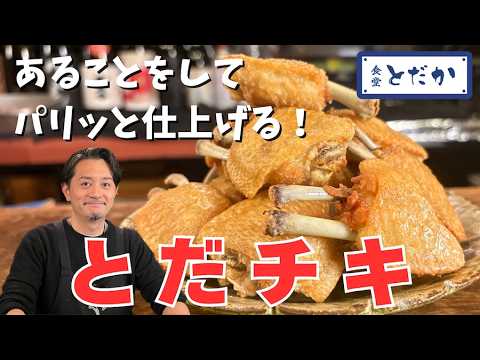
"Toda Chiki" — Could You Eat 100 of These Fried Chicken Wings?! The Secret Step to a Super Crispy Finish
Ingredients
- 7–8chicken wings
- 1/4tsp salt (plus extra to taste for finishing)
- 1tsp MSG (umami seasoning)
- Oilfor deep-frying, as needed
About "Deep-Fried Chicken Wings (Toda Chiki)"
Shokudo Todaka's famous Toda Chiki features chicken wings seasoned simply with salt and MSG, air-dried with a circulator fan for 4 to 5 hours, and then deep-fried without batter at 180°C (350°F). By completely drying the surface, the wings become incredibly crispy on the outside and juicy on the inside when fried. Since they retain their texture even after cooling, they are perfect as a bar snack or for bento boxes.
Introduction to 動画 de 食堂とだか 料理人・戸高雄平 →
Tips for Making "Deep-Fried Chicken Wings (Toda Chiki)"
-
Prep
- Make a slit on the back of the wings, bend the joints, and cut off the tips. Leave the two bones as handles for easy eating.
-
Seasoning
- Rub in 1/4 tsp of salt and 1 tsp of MSG by hand. The simple salt flavor enhances the natural umami of the chicken.
-
Drying
- Completely dry the surface with a circulator fan for 4 to 5 hours. This step is the ultimate secret to achieving a crispy texture.
-
Heat control
- Deep-fry without batter in oil at 180–200°C (350–390°F) for just under 5 minutes. Remove once they are completely golden brown.
-
Finishing
- Sprinkle with salt while hot. They will retain their crispy texture even after cooling down.
Ingredients for "Deep-Fried Chicken Wings (Toda Chiki)"
4 items* Tap ingredient names to find on Amazon
How to Make "Deep-Fried Chicken Wings (Toda Chiki)"
- 1
Prep the chicken wings
Make a vertical slit along the back (the side without tight skin) of each chicken wing. Push the meat down firmly with your hands to expose the two bones. Cut through the joint of the exposed bones to remove the wing tips, leaving the two main bones intact.
- 2
Season and rub the wings
Sprinkle 1/4 tsp of salt and 1 tsp of MSG over the prepped wings, then rub them in thoroughly by hand for about 30 seconds to 1 minute to ensure the seasoning is evenly distributed.
- 3
Dry with a circulator fan
Arrange the wings in a single layer on a tray without overlapping. Blow air on them using a circulator fan (or regular fan) to thoroughly dry out the surface moisture. Let them dry for 4 to 5 hours, flipping them once halfway through to dry the other side.
- 4
Deep-fry without batter
Carefully place the dried wings into frying oil heated to 180–200°C (350–390°F). Deep-fry them without any batter or coating for just under 5 minutes. Once they turn a beautiful golden brown all over, remove them from the oil.
- 5
Season with salt and serve
Sprinkle a pinch of salt to taste over the wings while they are still piping hot.
Food Science
When the inosinate (an umami compound abundant in chicken) combines with the glutamate in the MSG, an umami synergy occurs, dramatically boosting the deliciousness. Additionally, sprinkling salt draws out excess moisture through osmosis, concentrating the flavor. Furthermore, deep-frying at a high temperature rapidly evaporates surface moisture to create a crispy texture, while the Maillard reaction enhances the savory, aromatic flavor.
Detailed Commentary on "Deep-Fried Chicken Wings (Toda Chiki)"
* Content organized by topics from the video.
The Appeal of the Signature "Toda Chiki"
Toda Chiki is a highly popular menu item that has been loved since the opening of Shokudo Todaka. Its name was inspired by "Famichiki," the famous convenience store fried chicken. The most remarkable feature of this dish is its light, non-greasy finish—so much so that customers often ask, "Was this grilled?" The outside is incredibly crispy, making it light enough to eat dozens of them. To achieve this ultimate crispiness, there is a secret "extra step" not found in typical home cooking. Along with temperature control, managing the moisture content of the chicken is the key to achieving a professional finish without any sogginess. In this video, we will reveal this secret process in full detail.
Simple Ingredients and Rich Chicken Flavor
The ingredients this time are incredibly simple: chicken wings (7–8 pieces), salt (1/4 tsp), MSG (1 tsp), and frying oil (as needed). No spices, pepper, or special sauces are used. Chef Todaka says, "Honestly, you don't even need MSG; it becomes incredibly delicious with just salt." The reason lies in the chicken wings themselves. Chicken wings are packed with collagen, and the meat around the bone has a highly concentrated, rich flavor. Drawing out this potential to the maximum with just simple salt, without any extra seasonings, is the origin of this dish's deliciousness. By trusting the quality of the ingredients and keeping it simple, you get an exquisite taste you'll never tire of.
Prep Work for Easy Eating and Presentation
The first step in cooking begins with careful prep work to make the wings look beautiful and easy to eat. First, make a vertical slit with a knife on the back of the chicken wing (the side without tight skin). From there, push the meat down firmly with your hands to expose the two inner bones. Next, cut through the joint of the exposed bones to remove the excess wing tips. The key here is to leave the two main bones in the meat. Don't throw away the removed wing tips; save them to make a delicious soup stock. This extra step dramatically improves the final presentation and allows you to eat them cleanly by holding the bones without getting your hands dirty.
The Secret to Ultimate Crispiness: Drying
After prepping the wings, sprinkle MSG and salt all over them, and rub them in thoroughly by hand for about 30 seconds to just under a minute. While this is a standard step, what comes next is the ultimate secret to giving "Toda Chiki" its unique texture: "completely drying" the surface of the meat before frying. Chef Todaka brings out a circulator fan that he bought at Don Quijote. By blowing air directly onto the wings arranged on a tray, he thoroughly evaporates the surface moisture. Drying the skin until it is completely dry causes it to shrink rapidly the moment it hits the hot oil, creating that mind-blowing crispy texture. This drying process is essential to sealing in the juices inside.
The Patient Process of Air-Drying
Arrange the chicken wings neatly on a tray without overlapping, and keep the circulator fan blowing on them. The drying time is a serious "4 to 5 hours." Although it takes some time and effort, this process is what defines the professional finish. Flip them once halfway through to dry the other side thoroughly as well. At the restaurant, they sometimes hang them outside to dry during the cold winter months. In the world of Japanese cuisine, winter is often the season for making "karasumi" (cured mullet roe), but Todaka shares a unique story about hanging "Toda Chiki" outside instead. While outdoor drying should be avoided in the summer due to hygiene and temperature concerns, the cold natural wind of winter is perfect for drying them beautifully.
Changes After Drying and Prep for Frying
After 4 to 5 hours of air-drying with the circulator fan, the chicken wings have clearly lost their moisture, and the surface has shriveled, making them a size smaller. Touching them reveals a completely dry, papery texture, which is proof of success. According to Chef Todaka, when wings that have been dried and shriveled like this are placed in hot oil, the moisture inside heats up and expands, causing them to plump up again. This mechanism of "shrinking them first, then letting them expand rapidly during frying" is the secret to creating an ultra-thin, crispy skin on the outside while locking in plenty of juices on the inside.
Deep-Frying Without Batter
Now, we move on to the frying process. Set the oil temperature slightly high, around 180–200°C (350–390°F). Without using any flour or potato starch coating, place them into the oil completely naked (without batter). As they sizzle pleasantly, fry them thoroughly for just under 5 minutes. Since there is no batter, the oil doesn't get dirty during frying, which is a great benefit for home cooks. At the restaurant, they reuse this oil specifically as "Toda Chiki oil," and each batch infuses the oil with chicken fat and umami, making it even more flavorful over time. Once they turn a beautiful golden brown and the skin becomes tight and crispy, remove them from the oil. Finish by sprinkling a little extra salt while they are hot, and they are ready to serve.
Crispy Outside, Juicy Inside! Tasting Time
Pile the finished "Toda Chiki" high on a plate, and it's finally time to taste! The Todaka way to eat them is to hold the two protruding bones and pull them apart to split the meat in two. The moment you split them, hot steam rises along with a burst of locked-in juices. Take a bite, and you'll hear a satisfying, loud crunch. While the surface is incredibly crispy, the meat inside is amazingly plump, tender, and juicy. Because of the simple salt seasoning, the rich, natural flavor of the chicken comes through directly. Chef Todaka proudly claims, "I could eat 100 of these!" It is the ultimate dish, perfect as a bar snack or a main course.
About 動画 de 食堂とだか 料理人・戸高雄平
動画 de 食堂とだか 料理人・戸高雄平
6,680人 subscribers ・ 和食・居酒屋料理
* Opens YouTube channel
* Subscriber count is as of article creation and may differ from the current number.
