

Recipe
Enjoying Cod Hot Pot Alongside a Masterfully Butchered Monkfish
Ingredients
- Cod(fillets and milt)
- Vegetables
- Ponzusauce
- Greenonions (for garnish)
About "Tarachiri Nabe (Cod Hot Pot)"
Tarachiri Nabe is a luxurious Hokkaido hot pot dish made with fresh cod fillets and milt (tachi). The key to this dish is gently warming the delicate milt by floating it in the hot pot right before eating, which coaxes out its rich, natural umami. The highlight is the incredibly plump texture that can only be achieved with ultra-fresh ingredients.
Tips for Making "Tarachiri Nabe (Cod Hot Pot)"
-
Heat control
- Milt (tachi) is an extremely delicate ingredient. Since it will melt away if boiled vigorously, it is best to float only the portion you are about to eat in the pot right before eating, warming it just slightly.
-
Texture
- Fresh cod fillets retain a plump, elastic texture and do not crumble easily when cooked. Selecting ultra-fresh ingredients is crucial to highlighting this texture.
-
Serving
- Serve the cod fillets, milt, and vegetables in a bowl and enjoy with ponzu sauce.
-
Garnish
- Prepare plenty of green onions for garnish.
Ingredients for "Tarachiri Nabe (Cod Hot Pot)"
4 items* Tap ingredient names to find on Amazon
- Cod(fillets and milt)
- Vegetables
- Ponzusauce
- Greenonions (for garnish)
How to Make "Tarachiri Nabe (Cod Hot Pot)"
- 1
Bring the hot pot to a gentle boil over heat.
- 2
Right before eating, float only the portion of cod milt you are about to eat in the pot.
- 3
Remove the milt once it is just lightly warmed through.
- 4
Serve in a bowl along with the cod fillets and vegetables.
- 5
Drizzle with ponzu sauce, garnish with green onions, and enjoy.
Food Science
By warming the milt only briefly right before eating, you prevent the excessive thermal coagulation of proteins, preserving its meltingly creamy texture. Additionally, combining cod—which is mild yet rich in the umami compound inosinic acid—with the acidity and saltiness of ponzu and the sharp flavor of green onions balances the five basic tastes, beautifully highlighting the natural flavors of the ingredients.
Detailed Commentary on "Tarachiri Nabe (Cod Hot Pot)"
* Content organized by topics from the video.
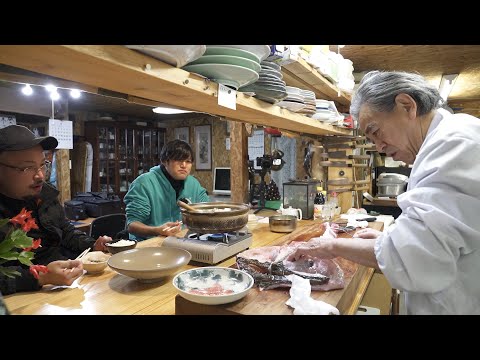
A Luxurious Hot Pot in the Presence of Monkfish
The scene opens with an impressive sight: beautifully butchered monkfish meat is presented in the kitchen, while the entire skeleton of the monkfish lies on the counter. Customers visiting the shop are thrilled by its powerful presence, exclaiming, "Wow, that's amazing!" When handling fish at home, people usually chop off the head and discard it immediately, so they rarely get to see a whole fish displayed like this. One customer remarks, "Usually, we just cut it here and throw the rest away," to which the chef replies, "That's normal, since it's usually sold as fillets." This exchange builds anticipation for the special meal about to begin.
Tips for Enjoying the Star Ingredient: Cod Milt
In front of the bubbling Tarachiri Nabe on the counter, the chef shares tips on how to enjoy it best. The star of this hot pot, cod milt (tachi), is an extremely delicate ingredient. The chef warns, "If you let it boil vigorously, it will melt away in no time." To enjoy it at its best, it is ideal to float only the portion you are about to eat in the pot right before eating, warming it just slightly. This meticulous attention to heat control brings out the rich, natural umami of the ingredient. The customers nod in agreement, saying, "Ah, so it melts," and carefully gather around the pot following the chef's advice.
A Happy Table with the Younger Generation
The chef prepares plenty of green onions for garnish, and the meal finally begins. The customers are overjoyed, exclaiming, "Eating milt two days in a row is such a luxury!" When a customer mentions they never expected to visit the chef's restaurant three days in a row, the chef beams with a wide smile, saying, "I'm so happy. Being surrounded by young people like this makes me truly fortunate." Holding their bowls of rice, everyone says "Itadakimasu" (bon appétit) and raises a toast, filling the restaurant with a warm, cozy atmosphere. It is a heartwarming moment that showcases the chef's wonderful personality and his deep bond of trust with his customers.
Monkfish Trivia and the Chef's Playful Jokes
As the chef continues butchering the monkfish at the counter, he starts talking about its unique ecology. "In the ocean, it wiggles its lure to attract fish. Then, it snaps up the fish that come close—what a wild creature!" he explains humorously with hand gestures. When a customer teases him, saying, "That sounds just like you, Chef," he playfully shoots back, "Leave me alone!" and cracks another joke: "Maybe I should attach a 10,000-yen bill here to lure people in." While demonstrating his precise culinary skills, the chef's charm shines through his playful banter, keeping everyone laughing.
Tasting the Hot Pot: Amazed by the Plump Cod
Finally, it is time to taste the Tarachiri Nabe. As the customers eat the cod fillets, milt, and vegetables served in their bowls with ponzu sauce, they cannot stop eating. They are particularly amazed by the texture of the cod. While fish fillets usually crumble easily when cooked, this cod is incredibly plump and retains a firm elasticity in the mouth. "When you bite into it, it doesn't fall apart; it keeps its texture. That's why it's so delicious!" they exclaim, deeply impressed by the exceptional quality. Everyone is thoroughly satisfied with the exquisite texture that only ultra-fresh fish can offer.
The Chef's Passion for Making a Monkfish Specimen
While the customers enjoy their meal, the chef is absorbed in carefully scraping the meat off the monkfish bones. He is actually planning to use this skeleton to make a dried specimen (taxidermy) of the monkfish. The chef shares his extraordinary dedication as a craftsman: "If you don't remove the meat as cleanly as possible, any remaining bits will degrade and spoil over the years. To make it last for 3, 5, or 10 years, you have to strip the meat down to the absolute limit." He passionately talks about this new challenge, explaining his plan to keep the tail intact and finish it in a powerful pose with its mouth wide open.
Stories of Handmade Specimens and Next Steps
The chef shares a story about a pufferfish lantern he made in the past, which was so popular that many people asked him to make one for them. However, making a whole monkfish specimen is a first-time challenge even for him. "If the cartilage snaps, the whole thing is ruined, so I have to work very carefully," he says, explaining how nerve-wracking the process is. He adds, "And that's not all—I still have to process the liver. I probably won't get any sleep tonight," showing his craftsman's passion as he gears up for a long night of work.
About こぶしの板さん
こぶしの板さん
9.9万人 subscribers ・ 和食・天ぷら
* Opens YouTube channel
* Subscriber count is as of article creation and may differ from the current number.
