

Recipe
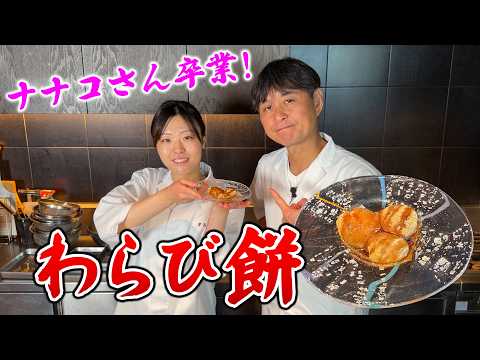
[Nanako's Graduation] Her Final Dish is Exquisite Warabimochi! Master Chef Kasahara's Ultimate Secrets
Ingredients
- 110gwarabiko (bracken starch)
- 50gshiratamako (glutinous rice flour)
- 150gsugar
- 500mlwater
- Kinako(roasted soybean flour), to taste
- Kuromitsu(black honey syrup), to taste
About "Warabimochi"
Kasahara-style warabimochi blends warabiko (bracken starch) and shiratamako (glutinous rice flour). By dissolving them by hand, straining through a sieve, and kneading with a wooden spatula over medium heat, you get a chewy yet melt-in-your-mouth texture. Cooled on a bed of kinako (roasted soybean flour), shaped into bite-sized pieces, and drizzled with kuromitsu (black honey syrup), this is an exquisite summer treat.
Introduction to 【賛否両論】笠原将弘の料理のほそ道 →
Tips for Making "Warabimochi"
-
Ingredients
- Blending 110g of warabiko with 50g of shiratamako creates a far superior texture, with the shiratamako adding a delightful chewiness.
-
Prep
- Gradually add water to the warabiko, shiratamako, and sugar in a bowl, dissolving them by hand. Crushing the grains with your fingers prevents lumps better than a whisk.
-
Straining
- Once dissolved, strain through a sieve and press any remaining lumps through. This step dramatically improves the smoothness of the final texture.
-
Heat & Kneading
- Cook over medium heat, stirring constantly. Lower heat when it clumps at the edges, and knead vigorously while scraping the bottom. Knead for 15 seconds off the heat to maximize chewiness.
-
Finishing
- Pour hot warabimochi onto a kinako-lined tray, dust with more kinako, and flatten. Shape into bite-sized pieces once cooled. Eat warm on the same day; over-chilling makes it hard.
Ingredients for "Warabimochi"
6 items* Tap ingredient names to find on Amazon
How to Make "Warabimochi"
- 1
Combine the warabiko, shiratamako, and sugar in a bowl.
- 2
Gradually add 500ml of water while rubbing and dissolving the mixture with your hands.
- 3
Once fully dissolved, strain through a sieve into a pot, crushing any remaining lumps with your hands.
- 4
Spread a layer of kinako on a tray.
- 5
Place the pot over medium heat and knead constantly with a wooden spatula.
- 6
Once it starts to clump around the edges, lower the heat and knead vigorously while scraping the bottom of the pot.
- 7
When the mixture becomes translucent and thoroughly kneaded, remove from heat and knead for another 15 seconds using residual heat.
- 8
Pour the hot warabimochi directly onto the bed of kinako.
- 9
Dust generously with more kinako on top, then gently press and flatten it with your hands.
- 10
Once cooled enough to touch, pinch and shape into bite-sized pieces.
- 11
Drizzle with kuromitsu to serve.
Food Science
Heating starches like warabiko and shiratamako with water causes them to gelatinize, creating a uniquely sticky, translucent, and smooth texture. Constant kneading during heating ensures even gelatinization. Additionally, the nuttiness of the kinako coating combined with the rich sweetness of kuromitsu perfectly balances the gentle sweetness of the warabimochi itself, achieving a harmonious profile of flavors.
Detailed Commentary on "Warabimochi"
* Content organized by topics from the video.
Assistant Graduation & the Final Warabimochi
At the beginning of the video, Chef Kasahara announces that his assistant, Nanako, is graduating (transferring). As the second-generation assistant following Yabe-san, she brought great energy to the show, and the staff cannot hide their sadness at her departure. To send off Nanako, who has cheered up viewers with her many jokes, they decide to make her favorite sweet: warabimochi. Although they usually operate as the 'Stir-Fry Club,' this time the main task is kneading, so they form the 'Kneading Club' for one last fun cooking session. While graduation episodes can get gloomy, Chef Kasahara shares his warm wish to send her off with smiles and joy until the very end.
Kasahara's Ingredients & Golden Ratio
While warabimochi is easy to make at home, Chef Kasahara has a special approach. He uses store-bought warabiko, noting that while 100% pure 'hon-warabiko' is extremely expensive, standard warabiko works perfectly. The key secret to the Kasahara style is mixing in shiratamako. Blending shiratamako (50g) with the warabiko (110g) creates a much chewier, superior texture compared to using warabiko alone. He compares the color difference between the two flours (warabiko is slightly dark, while shiratamako is pure white) as he introduces this upgraded version. The recipe uses a golden ratio of 110g warabiko, 50g shiratamako, 150g sugar, and 500ml water.
Dissolving by Hand to Prevent Lumps
After combining the warabiko, shiratamako, and sugar in a bowl, add the water gradually. The most crucial tip here is to 'rub and dissolve by hand' instead of using a whisk. Since both shiratamako and warabiko have coarse, gritty particles, feeling them with your hands and crushing each grain is the most reliable way to dissolve them. Adding all the water at once will leave lumps, so crush them thoroughly while the mixture is still thick, then add the remaining water. Once dissolved, always strain it through a sieve to ensure a smooth texture. Pressing any remaining lumps through the sieve with your hands dramatically improves the final smoothness.
Vigorous Kneading Over Medium Heat
Pour the strained liquid into a pot and cook over medium heat, kneading constantly with a wooden spatula. Since the starch settles easily, it is important to work quickly once it is on the heat. It won't change at first while cold, but as it heats up, it will suddenly start to solidify from the edges. From this point, lower the heat slightly and knead vigorously, scraping the bottom of the pot to prevent burning. Once the liquid turns completely into a dough-like paste, the real work begins. Under-kneading results in a powdery finish, so kneading thoroughly is key to giving the warabimochi its signature elasticity and chewiness. It requires some muscle, but this is the most critical step for the best texture.
Cooling on Kinako and Shaping
Once the mixture becomes translucent and thoroughly kneaded, turn off the heat and continue kneading for about 15 seconds using residual heat to make it even chewier. Pour the hot warabimochi directly onto a bed of kinako spread out on a large tray. Lining the tray with plastic wrap will cause it to stick, so using kinako or potato starch is a must. Dust more kinako generously on top, then gently press and flatten it with your hands to let it cool. Once it cools to a touchable temperature, pinch and shape it into bite-sized pieces. Freshly made, warm warabimochi is the softest and best eaten on the same day. Be careful not to over-chill it, as it will harden.
Tasting Session & Emotional Send-off
The finished warabimochi is drizzled with kuromitsu and tasted by the entire restaurant staff. Everyone praises it, saying 'It's delicious,' creating a warm, harmonious atmosphere. After eating the warabimochi she helped knead, Nanako remarks, 'It's smooth and chewy, just like my cheeks, and so delicious!'—entertaining everyone with her signature unique humor until the very end. Having grown in her speaking and comedic skills through her YouTube appearances, she has become highly respected by other chefs. Chef Kasahara presents her with a gorgeous graduation bouquet, celebrating her new journey with warm applause. He sends her off with encouragement to do her best at her next school, keeping the lessons she learned on YouTube close to her heart.
About 【賛否両論】笠原将弘の料理のほそ道
【賛否両論】笠原将弘の料理のほそ道
136万人 subscribers ・ 和食
* Opens YouTube channel
* Subscriber count is as of article creation and may differ from the current number.
