

Recipe
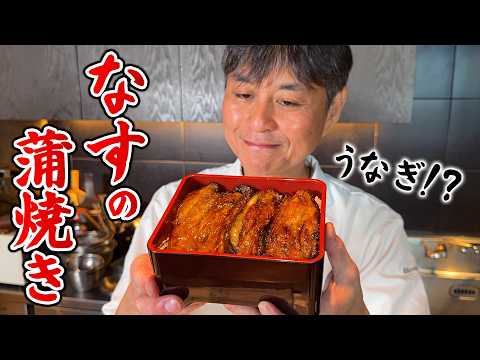
Just Like Eel!? Surprisingly Satisfying! Kasahara-Style Eggplant Kabayaki
Ingredients
- 4eggplants
- 2tbsp vegetable oil
- Potatostarch, to taste
- 4tbsp sake
- 2tbsp mirin
- 4tbsp soy sauce
- 2tbsp water
- 1.5tbsp sugar
- Cookedrice, to taste
- Shreddednori seaweed, to taste
- Sanshopepper powder, to taste
About "Eggplant Kabayaki"
A dish that recreates eel kabayaki using eggplant. By butterflying boiled eggplant, dusting it with potato starch, pan-frying it, and glazing it in a sweet and savory sauce of sake, mirin, and soy sauce, you get a melt-in-your-mouth texture and savory aroma. It is a cheap, healthy, and highly satisfying side dish that goes perfectly with rice.
Introduction to 【賛否両論】笠原将弘の料理のほそ道 →
Tips for Making "Eggplant Kabayaki"
-
Prep
- Trim the eggplant stems, boil for about 10 minutes until tender, then transfer to cold water. Can also be microwaved.
-
Heat Control
- Cook over low heat as the eggplant breaks easily. Do not flip; spoon the sauce over to coat.
-
Seasoning
- Adding a little water to the sauce prevents it from reducing too quickly, making it foolproof. Turn off the heat just before it gets too thick.
-
Shaping
- Butterfly the boiled eggplant, opening it flat without cutting all the way through, and shape to a uniform thickness. Smaller sizes are best.
-
Pre-frying Prep
- Dusting both sides of the butterflied eggplant with potato starch helps it brown well and allows the sauce to cling.
Ingredients for "Eggplant Kabayaki"
11 items* Tap ingredient names to find on Amazon
How to Make "Eggplant Kabayaki"
- 1
Prep and Cook the Eggplants
Trim the stems off 4 eggplants. Bring water to a boil in a pot, cover, and boil the eggplants for about 10 minutes. Once they are tender, transfer them to ice water to cool.
- 2
Butterfly and Shape the Eggplants
Pat the cooled eggplants dry with paper towels. Make a slit down the middle of each eggplant with a knife, open them flat to the left and right, and shape them into flat pieces of uniform thickness. Be careful not to cut them all the way through.
- 3
Dust with Potato Starch
Dust both sides of the butterflied eggplants evenly with potato starch. This helps them brown better and allows the sauce to cling to them.
- 4
Pan-Fry in a Skillet
Heat 2 tbsp of vegetable oil in a skillet and sear the eggplants cut-side down over medium heat. Fry them slowly until both sides are beautifully browned.
- 5
Glaze with the Sauce
Once both sides are browned, wipe off any excess oil with paper towels. Reduce the heat to low and add 4 tbsp sake, 2 tbsp mirin, 4 tbsp soy sauce, 2 tbsp water, and 1.5 tbsp sugar. Without flipping, spoon the sauce over the eggplants to coat them. Turn off the heat just before the sauce becomes too thick.
- 6
Plating
Scoop rice into bowls, drizzle with the remaining sauce, and scatter shredded nori on top. Place the cooked eggplant on top and finish with a sprinkle of sansho pepper powder.
Food Science
Dusting the eggplant with potato starch before pan-frying locks in internal moisture to keep it juicy, while also thickening the sauce so it clings well. Additionally, heating the soy sauce, mirin, and sugar triggers the Maillard reaction and caramelization, creating the characteristic savory aroma of kabayaki. Furthermore, combining the saltiness and umami of soy sauce with the sweetness of sugar and the spiciness of sansho pepper balances the five basic tastes, resulting in a deep, complex flavor.
Detailed Commentary on "Eggplant Kabayaki"
* Content organized by topics from the video.
Opening and Memories of Snack Bars
The video kicks off with a cheerful greeting from Masahiro Kasahara. He shares a personal anecdote about his mother's go-to karaoke song, "Tonde Istanbul," and reminisces about old-school Japanese "snack bars." In his hometown of Musashi-Koyama, there used to be countless snack bars that his parents frequented. He laughingly recalls how his father, a great singer, would belt out "My Way" with confidence, while his mother was a bit tone-deaf. He fondly remembers how his mother, despite initially refusing, would eventually sing happily when coaxed by the bar's hostess—a memory that left a strong impression on him as a child, warming up the atmosphere before cooking.
Today's Star: Eggplant Kabayaki & Prep
Since eggplants are still in season, he makes "Eggplant Kabayaki Bowl" using beautiful eggplants from the greengrocer. This dish recreates the kabayaki eel on a rice bowl using eggplant, making it cheap, healthy, and incredibly delicious. First, he trims the stems off the eggplants (4 pieces). During this prep, he continues chatting about the old snack bar district near Musashi-Koyama Station. He shares nostalgic memories of his hometown, which has lost many of its drinking alleys to redevelopment, joking that if you called out "Mama!" (hostess), three different women would turn around at once.
Boiling the Eggplants Until Tender
The trimmed eggplants go into a pot of boiling water to cook until tender. Since the goal is simply to soften them, a microwave works too, but he boils them today. As they boil, the beautiful purple color of the eggplant skin bleeds into the water. He notes that in Japanese cuisine, cooking eggplant skin beautifully is a true test of a chef's skill. He shares an inspiring story of a restaurant where he saw a chef boil peeled skins to extract the color, then use that water to cook the eggplants again. After boiling for about 10 minutes until completely soft, they are transferred to cold water.
Butterflying the Eggplants
After thoroughly patting the boiled eggplants dry with paper towels, he butterflies them. He carefully cuts down the middle without slicing all the way through, opening them flat into uniform sheets. He notes that smaller eggplants are better suited for this dish than overly large ones. When a staff member comments that the butterflied eggplant already looks delicious, he suggests that impatient cooks could eat it as-is with bonito flakes, soy sauce, and grated ginger, or marinate it in olive oil and salt. Next, he dusts both sides with potato starch to ensure a good sear and help the sauce cling.
Pan-Frying to Savory Perfection
He heats vegetable oil (2 tbsp) in a skillet and pan-fries the eggplants cut-side down over medium heat. Kasahara explains that this dish likely has roots in Shojin Ryori (Buddhist vegetarian cuisine), where vegetables are prepared to mimic meat or fish for monks. Expressing admiration for the wisdom of ancestors—such as the technique of spreading tofu paste on nori seaweed to mimic eel skin—he slowly pan-fries them until beautifully browned on both sides. He also reflects on the contrast between the time spent cooking and the fleeting moment of eating, passionately concluding that this is what makes cooking so wonderful.
Glazing with the Sweet-Savory Sauce
Once both sides are aromatically browned, he wipes away excess oil with paper towels. Reducing the heat to low, he adds sake (4 tbsp), mirin (2 tbsp), soy sauce (4 tbsp), water (2 tbsp), and sugar (1.5 tbsp). Adding a bit of water prevents the sauce from reducing too quickly, making it foolproof. Since the eggplants are soft and fragile, he avoids flipping them, instead spooning the sauce over them to coat. He turns off the heat just before the sauce thickens too much, leaving enough sauce to drizzle over the rice.
Plating and 'Dad's' Tasting Time
He prepares two presentations: a traditional lacquer box (ju-bako) and a rice bowl. First, he drizzles the sauce over the rice and scatters shredded nori. He tops it with the glossy eggplant and finishes with a sprinkle of sansho pepper powder. Tasting it, Kasahara is full of praise: "It's completely like eel; the melting texture is incredible." He shares it with his apprentices, but as his own portion quickly disappears, he jokingly compares himself to "a dad who takes his family to an eel restaurant, only to have his kids eat everything, leaving him with nothing but sauce-covered rice," bringing a humorous end to the video.
About 【賛否両論】笠原将弘の料理のほそ道
【賛否両論】笠原将弘の料理のほそ道
136万人 subscribers ・ 和食
* Opens YouTube channel
* Subscriber count is as of article creation and may differ from the current number.
