

Recipe
[Kitchen Hack] Upgrade Canned Sauce to Pro Quality & Cut Costs by 30%!
Ingredients
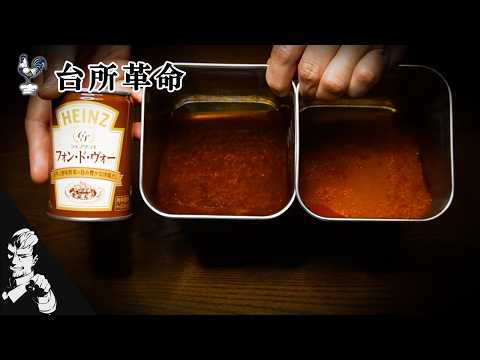
- 1can Heinz Chef Socié Fond de Veau (280g)
- 500gbeef tendon (imported/lean beef recommended)
- 30gtomato paste (divided into two 15g portions)
- Approx.100g onion (1/2 onion)
- Approx.100g carrot (1/2 carrot)
- Approx.80g celery (1 stalk)
- 1clove garlic
- 1bay leaf
- Waterto taste (for deglazing and second stock)
About "Hacked Canned Fond de Boeuf (Beef Stock)"
This recipe shows how to make a "hacked fond de boeuf" by roasting beef tendon and aromatics in the oven to extract first and second stocks, using canned Heinz fond de veau as a base. By masking the canned retort smell with rich beef flavor and roasted vegetable aromas, you get a gelatin-rich, authentic stock. It cuts the usual 11-hour process down to just 2.5 hours and reduces costs by about 32%. Freeze the resulting 940g of stock in ice cube trays for a highly practical, portion-controlled kitchen staple.
Introduction to フレンチシェフ高御仁のガチレシピ →
Video Timestamps
Tips for Making "Hacked Canned Fond de Boeuf (Beef Stock)"
-
Ingredients
- Choose imported beef tendon (such as Australian) rather than Wagyu. Wagyu tendon is too fatty and has an overpowering aroma, whereas leaner imported beef is better suited for a clean, elegant French finish.
-
Prep
- Cut the aromatic vegetables (onion, carrot, celery) into 1cm cubes and crush the garlic with the flat side of a knife. Cut the beef tendon into manageable pieces for sautéing.
-
Searing
- Sauté the aromatics in a skillet and spread them on a baking sheet. Without washing the skillet, sear the beef tendon thoroughly until deeply browned on all sides, then drain excess fat.
-
Deglazing
- Add water to the skillet after searing the beef tendon to scrape up the caramelized bits (suc) from the bottom. Save this liquid for the simmering process.
-
Roasting
- Layer the vegetables, beef tendon, and garlic on a baking sheet and roast at 230°C (445°F) for 30 minutes. Flip larger pieces after 20 minutes for even browning. Roasting until crispy is key for flavor.
-
Simmering
- Transfer the roasted ingredients to a pot, add the Heinz can, deglazed liquid, and 15g of tomato paste. Bring to a boil, skim off scum, add the bay leaf, and simmer on low for 1 hour.
-
Second Stock
- Strain after 1 hour to collect the first stock (approx. 500g). Return the solids to the pot with water and 15g of tomato paste, and simmer on low for another hour to extract the second stock (approx. 480g).
-
Defatting
- Combine both stocks, strain through a chinois, and chill overnight. Spoon off the solidified white fat layer from the surface to finish the clear stock.
-
Storage
- Reheat the stock to liquefy, pour into silicone ice cube trays, and freeze. Once frozen, transfer to Ziploc bags or containers. Use cube by cube as needed.
-
Usage & Leftovers
- The leftover beef tendon can be simmered in a sweet-savory sauce to eat separately. Use the finished fond de boeuf to dramatically elevate curries or Salisbury steak sauces.
Ingredients for "Hacked Canned Fond de Boeuf (Beef Stock)"
9 items* Tap ingredient names to find on Amazon
How to Make "Hacked Canned Fond de Boeuf (Beef Stock)"
- 1
Cut the onion, carrot, and celery into 1cm cubes, and crush the garlic with the flat side of a knife. Cut the beef tendon into bite-sized pieces for easy browning.
- 2
Add the aromatic vegetables to a heated iron skillet and sauté until lightly browned. Spread the sautéed vegetables evenly across a toaster oven baking sheet.
- 3
Without washing the skillet, add the beef tendon and sear thoroughly until deeply browned on all sides. Transfer to a strainer to drain excess fat.
- 4
Heat the skillet used for the beef tendon, add water, and scrape up the browned bits (succulent residue/suc) stuck to the bottom (deglazing). Transfer this liquid to a pot.
- 5
Spread the drained beef tendon in a single layer over the vegetables on the baking sheet, and top with the crushed garlic. Roast in an oven preheated to 230°C (445°F) for 30 minutes.
- 6
About 20 minutes into roasting, remove the tray and flip any large pieces of meat to ensure even browning on both sides. Roast for the remaining 10 minutes until the meat and vegetables are crispy.
- 7
Transfer the roasted meat and vegetables to the pot. Add the can of Heinz fond de veau, the deglazed liquid, and 15g of tomato paste.
- 8
Bring to a boil over high heat and carefully skim off any scum that rises to the surface. Add 1 bay leaf, reduce heat to low, and simmer gently for 1 hour.
- 9
After 1 hour, strain through a mesh strainer to extract the first stock (approx. 500g).
- 10
Return the strained solids (meat and vegetables) to the pot, add water and the remaining 15g of tomato paste, and simmer on low heat for another hour to extract the second stock (approx. 480g).
- 11
Combine the first and second stocks, and strain them together through a chinois (fine-mesh strainer).
- 12
Chill the strained stock in the refrigerator overnight. Carefully skim off the layer of white fat that solidifies on the surface using a spoon.
- 13
Gently reheat the finished stock (approx. 940g) to liquefy it, then pour it into silicone ice cube trays and freeze. Once frozen, pop them out and transfer to a Ziploc bag for freezer storage.
Detailed Commentary on "Hacked Canned Fond de Boeuf (Beef Stock)"
* Content organized by topics from the video.
Upgrade Canned Stock! Modern French Kitchen Hack
Many people want to cook authentic French cuisine but give up because making the foundational 'fond' (stock) from scratch is too labor-intensive. Today, we will introduce a modern, highly efficient way to make fond de veau, a method actually used in professional kitchens. Since most home kitchens don't have large commercial ovens, we designed this recipe to work using standard home ovens or toaster ovens. By using easily accessible canned Heinz fond de veau as a base, we'll show you the 'hacking' process to elevate it to restaurant quality. This recipe will bring French cooking closer to home and dramatically upgrade your culinary game.
Ingredient Selection & Beef Tendon Tips
The Heinz fond de veau used here comes in a 280g can. It has a 2-year shelf life at room temperature, making it incredibly convenient to stock. However, tasting it straight from the can reveals a slightly overpowering spice profile typical of canned goods. To balance this, we add a few key ingredients: two 15g portions of tomato paste, 1/2 onion, 1/2 carrot, 1/2 celery stalk, 1 clove of garlic, 1 bay leaf, and 500g of beef tendon. For the tendon, we recommend imported beef (such as Australian). Wagyu tendon is too fatty and has an overly distinct aroma; choosing leaner, imported beef tendon is crucial for achieving the elegant, clean finish characteristic of French fond de veau.
Sautéing Mirepoix and Beef Tendon
Start by prepping the ingredients. Cut the onion, carrot, and celery into 1cm cubes to prepare your mirepoix (aromatic vegetables). Crush the garlic with the flat side of a knife, and cut the beef tendon into manageable pieces for sautéing. Next, thoroughly heat an iron skillet and sauté the mirepoix until lightly colored. Once done, spread the vegetables across a baking sheet. Without washing the skillet, add the beef tendon. Press the meat firmly against the pan, flipping to develop a deep, rich sear on all sides. Once browned, transfer the tendon to a strainer to drain excess fat—this is key to achieving a clean, impurity-free stock.
The Secret to Oven-Roasting Until Crispy
After searing the beef tendon, the skillet will have rich flavors stuck to the bottom. Heat the pan, add water, and scrape up these browned bits (known as 'suc' or 'schuck') to deglaze. Transfer this flavorful liquid to your cooking pot. Next, arrange the drained beef tendon in a single layer over the vegetables on the baking sheet, and top with the crushed garlic. Roast in an oven preheated to 230°C (445°F) for 30 minutes. About 20 minutes in, take the tray out and flip the larger pieces of meat to ensure even browning. Roasting the meat and vegetables until they are thoroughly crispy is the ultimate secret to creating a deeply aromatic and rich stock.
Double Extraction Simmering Method
Transfer all the roasted meat and vegetables to a pot. Add the canned Heinz fond de veau, the deglazing liquid, and the first 15g of tomato paste. Bring to a boil over high heat, carefully skimming off any scum that rises. Add the bay leaf, reduce to low, and simmer gently for 1 hour. Strain through a colander to extract about 500g of rich 'first stock' (fond primaire). Don't stop there—return the strained solids (meat and vegetables) to the pot, add water and the second 15g of tomato paste, and simmer on low for another hour. This yields about 480g of 'second stock' (fond secondaire). Combining both gives you nearly 1kg (940g) of exquisite fond de boeuf. The leftover beef tendon can be simmered in a sweet-savory soy glaze for a delicious side dish.
Defatting and Convenient Cube Freezing
Combine the first and second stocks and strain them through a chinois (fine-mesh strainer). Chill this in the refrigerator overnight; the abundant gelatin from the beef tendon will turn it into a firm, jiggly jelly. Once chilled, a white layer of excess fat will solidify on the surface. Carefully scrape this off with a spoon to yield a clean, clear fond de boeuf. To store, gently reheat the stock to liquefy it, pour it into silicone ice cube trays, and freeze. Once frozen, pop the cubes out and transfer them to a Ziploc bag or airtight container. This allows you to grab exactly the amount you need for daily cooking, making it an incredibly practical kitchen staple.
30% Cost Savings & Time-Saving Benefits
This hacked recipe offers incredible benefits in both cost and time. Based on typical retail prices, the ingredients (Heinz can, beef tendon, tomato paste, and vegetables) cost around 2,645 yen in total, yielding 940g of stock. When scaled to the equivalent of one Heinz can (280g), this costs about 788 yen—a massive 32.6% savings compared to the retail price of a single can (1,170 yen). Furthermore, making authentic fond de veau from scratch usually takes over 11 hours (roasting veal bones, simmering the first stock for 8 hours, and the second for 3 hours). This canned hack delivers restaurant-quality stock in just 2.5 hours, dramatically cutting down your time investment.
The Science of Masking Canned Odors
Why not just use the canned stock as-is? Canned and retort-packaged foods undergo high-temperature, high-pressure sterilization (such as 121°C for over 4 minutes) during manufacturing, which inevitably creates a distinct 'retort odor.' Manufacturers often use heavy spices and herbs to mask this, resulting in the sharp, artificial flavor characteristic of canned stocks. Our hack dilutes these harsh spices by adding water, beef tendon, and fresh vegetables, while rebuilding layers of aroma with the fresh, roasty fragrance of oven-crisped ingredients. Using beef tendon instead of veal bones also replenishes gelatin and deep beef umami. Adding this to curries or Salisbury steak sauces will instantly elevate them to restaurant quality.
About フレンチシェフ高御仁のガチレシピ

フレンチシェフ高御仁のガチレシピ
6,310人 subscribers ・ フランス料理
* Opens YouTube channel
* Subscriber count is as of article creation and may differ from the current number.
