

Recipe
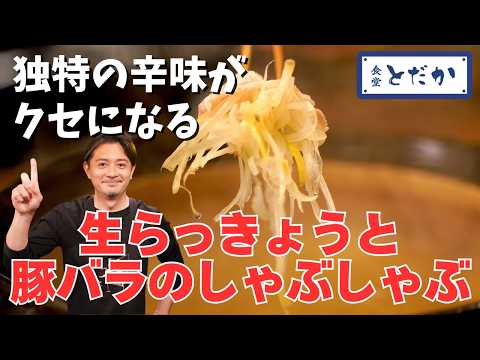
Pork Belly and Fresh Rakkyo Shabu-Shabu: An Addictive Kick!
Ingredients
- 500gfresh rakkyo (with sand/unpeeled)
- 300gpork belly (thinly sliced)
- 1200mlwater
- 1pack Kayanoya dashi (or preferred dashi packet)
- 10gsalt
- 20mllight soy sauce
- [DippingSauce] 3 tbsp sesame oil
- [DippingSauce] 1/2 tsp salt
- [DippingSauce] 2g garlic (approx. 1/2 clove)
About "Fresh Rakkyo and Pork Belly Shabu-Shabu"
This hot pot dish features fresh rakkyo (Japanese scallions), in season during early summer, thinly sliced and enjoyed as shabu-shabu with pork belly. Because the rakkyo itself releases a deeply flavorful broth, a simple seasoning of Kayanoya dashi, salt, and light soy sauce is all you need to create a rich soup. Soaking the sliced rakkyo in water briefly tempers its sharp bite while preserving its signature crunchy texture and refreshing flavor. The dipping sauce is a simple mix of sesame oil, salt, and garlic, which beautifully complements the sweetness of the pork and the mild spice of the rakkyo. Finishing the meal by making rice porridge (zosui) with the leftover broth is absolutely delicious and perfect for beating the summer heat.
Introduction to 動画 de 食堂とだか 料理人・戸高雄平 →
Tips for Making "Fresh Rakkyo and Pork Belly Shabu-Shabu"
-
Prep
- Thoroughly wash fresh rakkyo under running water to remove sand while peeling off the thin outer skin. Pay extra attention to sand dune rakkyo, as they tend to hold a lot of sand.
-
Prep
- After thinly slicing the rakkyo, gently massage them under running water to wash away harshness, then soak in water for about 20 minutes to temper the sharpness. Taste-test after 10 minutes to check the progress.
-
Prep
- Do not over-soak the rakkyo, as removing too much sharpness will make them taste like regular green onions. It is important to leave a mild, pleasant kick.
-
Seasoning
- Keep the broth light to highlight the rakkyo's natural flavor. Since the rakkyo itself releases a deeply savory broth, a simple combination of dashi, salt, and light soy sauce is plenty.
-
Sauce
- The dipping sauce is a simple mix of sesame oil, salt, and sliced garlic. The fragrant sesame oil and punchy garlic perfectly elevate the flavors of the rakkyo and pork.
-
How to Eat
- Simmer the rakkyo in the pot for about 1 minute. Swish the pork belly in the broth to cook, wrap it around a generous amount of rakkyo, and dip into the sesame oil sauce.
-
Variations
- Add yuzu for a citrusy aroma, or use ponzu for a refreshing taste. Be sure to use the leftover umami-rich broth to make a delicious rice porridge (zosui) at the end.
Ingredients for "Fresh Rakkyo and Pork Belly Shabu-Shabu"
9 items* Tap ingredient names to find on Amazon
How to Make "Fresh Rakkyo and Pork Belly Shabu-Shabu"
- 1
Thoroughly wash the fresh rakkyo under running water to remove sand and dirt, then peel off the thin outer skin.
- 2
Cut off the roots and thinly slice (julienne) the rakkyo. If they are small, you can use a mandoline slicer.
- 3
Gently massage the sliced rakkyo under running water to wash away any harshness, then soak them in a bowl of water for about 20 minutes. Taste-test after 10 minutes to check and adjust the level of sharpness, ensuring you leave a pleasant, characteristic kick.
- 4
Make the dipping sauce. Slice the garlic and mix it well with the sesame oil and salt.
- 5
Add water and the dashi packet to a clay pot (donabe) and bring to a boil, then stir in the salt and light soy sauce.
- 6
Add the soaked, sliced rakkyo to the pot and bring to a simmer (about 1 minute is the ideal cooking time).
- 7
Swish the pork belly slices in the hot broth to cook them, wrap them around a generous amount of rakkyo from the pot, dip into the special sesame oil sauce, and enjoy.
Detailed Commentary on "Fresh Rakkyo and Pork Belly Shabu-Shabu"
* Content organized by topics from the video.
The Appeal of Fresh Early-Summer Rakkyo
As early summer approaches, fresh rakkyo (Japanese scallions) start appearing in supermarkets. Most people associate rakkyo with the sweet-and-sour pickled version served alongside curry. However, Chef Todaka confesses, 'I absolutely love fresh rakkyo.' While we often eat scallions or shallots raw, eating standard rakkyo raw is quite rare. In fact, rakkyo is highly nutritious and known for its health benefits, such as promoting healthy blood circulation. Although it has a distinct, sharp flavor, learning how to highlight or temper that bite makes it the star of any dish. It is also highly affordable, often sold in large bags for under 800 yen at supermarkets.
An Unexpected Match: Rakkyo Shabu-Shabu
Today, we are introducing 'Pork Belly and Rakkyo Shabu-Shabu,' featuring fresh rakkyo as the main ingredient. Cooking rakkyo might sound unusual, but Chef Todaka arrived at this shabu-shabu recipe after experimenting with stir-frying, grilling, simmering, and deep-frying. Heating rakkyo coaxes out its natural sweetness, offering a completely different kind of deliciousness compared to eating it raw. This dish will completely redefine how you view this vegetable, moving beyond its image as a mere pickle.
Simple Ingredients and Flavorful Rakkyo Broth
The ingredients for two servings are incredibly simple: 500g of fresh rakkyo, 300g of pork belly, 1200ml of water, 1 dashi packet, 10g of salt, and 20ml of light soy sauce. This is all you need for a deeply satisfying flavor. The secret lies in the rich broth released by the rakkyo itself. Since rakkyo belongs to the allium family, this recipe is a creative twist on the classic green onion and pork belly shabu-shabu, swapping the green onions for rakkyo. Even without complex seasonings, the natural umami of the ingredients creates a broth with incredible depth.
Prepping Sand Dune Rakkyo & A TV Show Secret
Rakkyo is often grown in sandy soils, such as in Tottori or Kagoshima prefectures, and is famous for being covered in sand when harvested. Therefore, the first step in prep is to thoroughly wash away the sand under running water while peeling off the thin outer skin. For this recipe, we use thick, plump rakkyo that are easy to slice and offer a satisfying bite. Here, Chef Todaka shares a story from when his restaurant was featured on the popular Japanese drama 'Gourmet of Solitude' (Kodoku no Gurume). When he asked the director why his restaurant was chosen, the director revealed that the deciding factor was the 'rakkyo miso soup.' The sliced rakkyo in the miso soup had deeply impressed the director, showcasing the incredible versatility of this ingredient.
Slicing and Tempering the Sharpness
Once prepped, cut off the roots of the rakkyo and slice them thinly. Using a mandoline slicer is highly recommended if the rakkyo are small. Raw rakkyo has a very strong aroma and an intense sharpness if eaten as-is. To temper this bite and aroma, it is crucial to gently massage the sliced rakkyo under running water to wash away the harshness, then soak them in water for about 20 minutes. Taste-test around the 10-minute mark to monitor the sharpness. Be careful not to soak them too long, as removing all the bite will make them taste just like regular green onions; keeping a mild, characteristic kick is key.
The Perfect Match: Special Sesame Oil Sauce
Since the hot pot broth is kept light to highlight the natural flavor of the rakkyo, we prepare a special dipping sauce for the shabu-shabu. The ingredients are incredibly simple: 3 tbsp of sesame oil, 1/2 tsp of salt, and 2g of grated garlic (about 1/2 clove). Simply mix these together in a small bowl. Despite its simplicity, the fragrant sesame oil and punchy garlic pair beautifully with the refreshing sharpness of the rakkyo and the sweet, savory pork belly.
Tasting the Crunchy Rakkyo and Pork Belly
Once soaked in water to temper the sharpness, the sliced rakkyo becomes incredibly mild and easy to eat. Bring the broth (made with the dashi packet, 20ml of light soy sauce, and 10g of salt) to a boil, then add a generous amount of the sliced rakkyo. Let it simmer for about 1 minute until it is ready to eat. Swish a slice of pork belly in the broth to cook it, wrap it around a heap of rakkyo from the pot, dip it into the special sesame oil sauce, and take a bite. The crunchy texture and refreshing kick of the rakkyo combine instantly with the juicy sweetness of the pork belly, making it absolutely irresistible.
Finishing with Rice Porridge & Recipe Twists
For a refreshing twist, you can add a squeeze of yuzu juice or enjoy the shabu-shabu with ponzu sauce. Furthermore, the broth—now packed with the rich umami of both the rakkyo and pork—is spectacular. Finishing the meal by adding rice to make a 'rakkyo zosui' (rice porridge) is an absolute treat. While this recipe keeps things simple with just rakkyo and pork, feel free to customize it by adding tofu, green onions, or enoki mushrooms. It also pairs wonderfully with beef or chicken instead of pork. We highly recommend trying this eye-opening, delicious hot pot at home during the peak rakkyo season of May and June.
About 動画 de 食堂とだか 料理人・戸高雄平

動画 de 食堂とだか 料理人・戸高雄平
6,680人 subscribers ・ 和食・居酒屋料理
* Opens YouTube channel
* Subscriber count is as of article creation and may differ from the current number.
