

Recipe
Easy & Foolproof! How to Make Professional-Style Japanese Roast Beef at Home
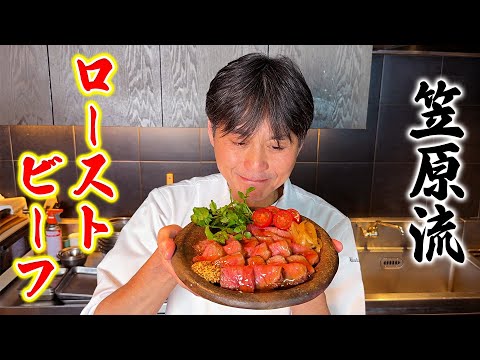
Ingredients
- Beefblock (aitchbone/ichibo) 400–500g
- 1/2onion
- 5gdashi kombu
- 1tbsp vegetable oil
- Saltto taste
- 600ml water
- 100ml soy sauce
- 100ml mirin
- 100ml sake
- 1tbsp sugar
- Potatostarch slurry to taste
- Watercressto taste
- Cherrytomatoes to taste
- Wholegrain mustard to taste
About "Japanese-Style Roast Beef"
This Japanese-style roast beef is made by salting beef aitchbone (ichibo) and bringing it to room temperature to ensure even cooking, searing the surface in a skillet, and then gently simmering it in a soy sauce, mirin, and sake broth. Perfect for Christmas or New Year's, letting it cool slowly in its residual heat yields a perfectly juicy, pink medium-rare center.
Introduction to 【賛否両論】笠原将弘の料理のほそ道 →
Tips for Making "Japanese-Style Roast Beef"
-
Prep
- Prick the beef with a fork, rub with salt, wrap, and rest at room temp for 1 hour to ensure deep flavor penetration and even cooking.
-
Heat control
- Sear all sides over medium heat for 5 minutes. Simmer on low for 3 minutes per side (6 minutes total). Avoid overcooking to prevent toughness.
-
Cooking
- After simmering, cover with a paper towel and rest at room temp for 1 hour to let the residual heat gently cook the center.
-
Flavoring
- Add onion and dashi kombu to the broth to draw out Japanese umami, and thicken the sauce with a potato starch slurry.
Ingredients for "Japanese-Style Roast Beef"
14 items* Tap ingredient names to find on Amazon
How to Make "Japanese-Style Roast Beef"
- 1
Prep the beef
Prick the entire surface of the beef with a fork. Sprinkle salt generously all over, rub it in by hand, wrap in plastic wrap, and let sit at room temperature for about 1 hour. This ensures even heat distribution to the center and improves the color.
- 2
Slice the onion
Thinly slice 1/2 onion. Since it is used for flavoring, rough slices are perfectly fine.
- 3
Sear the beef
Heat 1 tbsp of vegetable oil in a skillet over medium heat and sear all sides of the beef. Once a nice, fragrant crust forms all over (about 5 minutes), turn off the heat. Do not cook the inside at this stage; the goal is to sear the surface to lock in the juices and umami.
- 4
Make the simmering broth
In a pot, combine 600 ml water, 100 ml soy sauce, 100 ml mirin, 100 ml sake, and 1 tbsp sugar. Add the sliced 1/2 onion and 5g dashi kombu. Bring to a boil over high heat to burn off the alcohol, then reduce the heat to low.
- 5
Simmer the beef
Place the seared beef into the simmering broth on low heat and simmer for 3 minutes. Flip the beef over and simmer for another 3 minutes. For a 400–500g block of meat, 3 minutes per side is ideal. Be careful not to overcook, as it will make the meat tough.
- 6
Cool in residual heat
Immediately turn off the heat after simmering both sides, and cover the meat with a paper towel. This helps the broth distribute evenly so the flavor penetrates uniformly. Let it sit at room temperature for about 1 hour until cool, allowing the residual heat to gently cook the center.
- 7
Make the sauce
Transfer a portion of the simmering broth to a separate pot, bring to a simmer, and thicken with potato starch slurry. Since it thickens further as it cools, the key is to keep it slightly runny.
- 8
Plate and serve
Slice the beef thinly and arrange the slices beautifully on a plate. Garnish with watercress, cherry tomatoes, the simmered onions from the broth, and whole grain mustard. Generously drizzle the special sauce over the top.
Food Science
Combining the inosinic acid in beef with the glutamic acid in dashi kombu and soy sauce creates an umami synergy, resulting in a deep, rich flavor. Searing the surface of the meat triggers the Maillard reaction, adding a savory aroma. Finally, thickening the sauce with a potato starch slurry helps it cling to the meat, providing a smooth mouthfeel while locking in moisture to keep the beef incredibly juicy.
Detailed Commentary on "Japanese-Style Roast Beef"
* Content organized by topics from the video.
Kasahara-Style Holiday Special Kickoff
As the streets fill with Christmas songs, Chef Kasahara's 'Christmas & New Year Special' kicks off! For the first installment, he introduces a Japanese-style roast beef that brings professional flavors right to your home. In the opening, the kitchen is filled with laughter as the chef shares playful childhood memories, like his father's favorite toothpaste 'Zact Lion' and how he got scolded for cutting open a tube of 'Aquafresh' with scissors just to see its striped structure. Amidst this warm, homey atmosphere, the preparation of this luxurious holiday dish begins. Unlike typical oven-baked recipes, this unique Japanese approach involves searing the meat in a skillet and then gently simmering it in a flavorful broth. This foolproof method is the ultimate way to achieve exquisite tenderness easily at home.
Prepping Ichibo: The Best Cut for Roast Beef
For this recipe, we use a 480g block of ichibo (beef aitchbone/rump cap). Lean cuts like round or rump are great for roast beef because their fat doesn't solidify when cold, but ichibo is the chef's absolute favorite. First, to help the flavors penetrate, prick the entire surface of the meat with a fork. While joking about retro pro-wrestlers like Abdullah the Butcher and Terry Funk, the chef rubs a generous amount of salt into the meat. It is then wrapped in plastic wrap and left to rest at room temperature for 1 hour. Bringing the meat to room temperature ensures even heat distribution during cooking. Additionally, salting and resting the meat enhances its color, resulting in a beautifully vibrant finish.
Searing with Chef Kasahara's 'Sauna Theory'
After resting for an hour, it's time to sear the meat. Heat 1 tbsp of vegetable oil in a skillet over medium heat and brown all sides of the beef. Here, the chef shares his unique 'Sauna Theory.' He imagines himself as the piece of meat sitting in a 90°C (194°F) sauna, calculating how long it would take for his core to warm up. Just as it takes longer to warm up in the winter than in the summer, the way heat transfers to meat differs drastically depending on whether it starts cold or at room temperature. This is why the 'room temperature' step is so crucial. After about 5 minutes of searing, once a beautiful, fragrant crust forms all over like a steak, turn off the heat. There is no need to cook the center yet; the goal is simply to sear the surface to lock in the umami and juices.
Broth Inspired by Japanese 'Kamo Rosu'
Next, prepare the simmering broth. In a pot, combine 600 ml water, 100 ml soy sauce, 100 ml mirin, 100 ml sake, and 1 tbsp sugar, then add 1/2 sliced onion and 5g dashi kombu. Since the onion is for flavoring, a rough chop is fine. You can also add green onion tops, garlic, or ginger for extra flavor. Bring the broth to a boil over high heat to burn off the alcohol from the sake and mirin, then reduce to low. Add the seared beef and simmer on low for 3 minutes. This method is adapted from the traditional Japanese 'Kamo Rosu' (duck breast) technique; poaching the meat in broth keeps it incredibly moist and juicy. The chef's humor shines as he compares the broth's aroma to sauna scents (onion) and the steam-distributing towel of a sauna master (kombu).
Foolproof Heat Control with Residual Heat
After simmering one side for 3 minutes, flip the beef and simmer the other side for another 3 minutes. Simmering times may vary depending on the thickness of the meat, but for a 400–500g block, 3 minutes per side is perfect. Be careful not to overcook, as the meat will become tough. Once both sides are done, immediately turn off the heat and cover the meat with a paper towel. This draws the broth upward, ensuring the flavor penetrates evenly. Let it sit at room temperature for about 1 hour to cool, allowing the residual heat to gently cook the center. This slow cooling process lets the Japanese-style umami sink deep into the meat fibers. If you aren't serving it immediately, transfer the meat and broth to a container and refrigerate; the flavors will meld further, making it even more delicious the next day.
Umami-Rich Japanese Sauce and Plating
Once the meat has cooled, make the exquisite Japanese-style sauce. Transfer some of the umami-rich simmering broth to a separate pot, bring to a simmer, and thicken with a potato starch slurry. Since it thickens as it cools, keep it slightly runny. Slicing the beef thinly reveals a gorgeous pink, perfect medium-rare center. Arrange the slices beautifully on a plate, garnish with watercress, cherry tomatoes, the simmered onions, and whole grain mustard, then generously drizzle the special sauce over the top. During the tasting, everyone was thrilled by the tender, juicy texture and the sweet-and-savory soy-based flavor that pairs perfectly with both rice and sake. Amidst lively behind-the-scenes stories about the hectic prep for New Year's feast (osechi), the staff thoroughly enjoyed this delicious roast beef.
About 【賛否両論】笠原将弘の料理のほそ道
【賛否両論】笠原将弘の料理のほそ道
136万人 subscribers ・ 和食
* Opens YouTube channel
* Subscriber count is as of article creation and may differ from the current number.
