

Recipe
How to Prep Sculpin (Kajika) from a Chef with 55 Years of Experience! Beginner-Friendly Guide
Ingredients
- 1sculpin (large)
- Sculpinroe, to taste
- Sculpinliver, to taste
- Burdockroot, generous amount
- Carrot,to taste
- Miso,to taste
- Dashistock, to taste
- Soysauce, to taste
- Mirin,a small amount
- Water,to taste
- Salt,a pinch
About "Sculpin Soup and Soy-Marinated Sculpin Roe"
A veteran chef with 55 years of experience explains how to prep sculpin and make sculpin soup for beginners. He teaches how to harvest the roe and liver without damaging them, and how to completely eliminate any fishy odor using parboiling and burdock root. He also makes a special soy-marinated sculpin roe. The dish features a wonderfully plump and bouncy texture.
Tips for Making "Sculpin Soup and Soy-Marinated Sculpin Roe"
-
Prep
- Carefully open the sculpin's belly and gently remove the roe and liver without damaging them, as they are valuable ingredients for the soup and marinade.
-
Prep
- Do not struggle with a large fish; cut it in half first before chopping it into manageable chunks. Use a wooden cutting board instead of plastic for safety.
-
Prep
- Secure the head by piercing the tip of the knife through to the cutting board, then safely apply force to split it in half. Carefully remove the gills afterward.
-
Heat control
- Briefly parboil the pieces and head in boiling water, then wash them in cold water. This removes surface slime and blood to eliminate any fishy odor.
-
Seasoning
- Add a generous amount of burdock root to the miso-based dashi stock. The burdock root plays a crucial role in completely neutralizing the sculpin's unique odor.
-
Marinating
- Make soy-marinated roe by adding soy sauce and a small amount of mirin to the harvested roe. Avoid adding too much mirin to keep the flavor savory and salty.
Ingredients for "Sculpin Soup and Soy-Marinated Sculpin Roe"
11 items* Tap ingredient names to find on Amazon
How to Make "Sculpin Soup and Soy-Marinated Sculpin Roe"
- 1
Carefully open the sculpin's belly and gently remove the roe and liver without damaging them.
- 2
Transfer the harvested roe to a bowl and set aside to marinate in soy sauce later.
- 3
Cut off the dorsal fins and other obstructive parts with a knife.
- 4
If the fish is large, cut it in half first, then chop it into manageable, bite-sized chunks.
- 5
Secure the head by piercing the tip of the knife through to the cutting board, then split it in half.
- 6
Carefully remove the gills from the split head.
- 7
Briefly submerge the sculpin pieces and head in boiling water to parboil (blanch) them.
- 8
Plunge them into cold water and gently rub with your hands to wash away any impurities.
- 9
Prepare a miso-based dashi stock and add a generous amount of burdock root.
- 10
Simmer the parboiled sculpin pieces, head, and liver with the burdock root, carrots, and other vegetables.
- 11
Carefully skim off any foam (scum) to finish the sculpin soup.
- 12
Add soy sauce and a small amount of mirin to the roe, mix well, and let it marinate.
Food Science
The combination of inosinate in the sculpin and glutamate in the dashi and miso creates an umami synergy, resulting in a deep, rich flavor. Additionally, parboiling the fish in boiling water beforehand causes the surface proteins to thermally coagulate. This efficiently removes blood and impurities that cause odors, while also preventing the fish from breaking apart during simmering, thereby locking in its natural umami.
Detailed Commentary on "Sculpin Soup and Soy-Marinated Sculpin Roe"
* Content organized by topics from the video.
A Long-Awaited Reunion and a Giant Sculpin
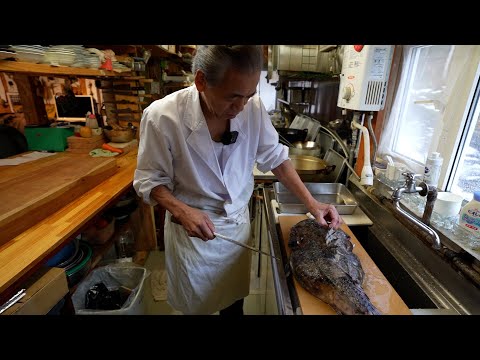
Ken-chan, the videographer, visits Itasan, a veteran chef with 55 years of experience, after a long time. They greet each other warmly, exclaiming how many years it has been, starting the shoot in a friendly atmosphere. Today's ingredient is an incredibly large, plump `sculpin`. Itasan happily shares, 'It's getting cold, so I've been craving sculpin hot pot.' Ken-chan is amazed by its massive size. Joking that he would have preferred a slightly smaller one, Itasan efficiently prepares his station. Although sculpin looks a bit grotesque, it is a highly prized, delicious winter delicacy in Hokkaido. With Itasan's lively banter and the impressive presence of the fish, the kitchen instantly comes alive.
Harvesting Precious Roe and Liver Safely
First, Itasan opens the sculpin's belly to extract the valuable internal organs. As he carefully inserts the knife, a magnificent batch of `sculpin roe` and a large `liver` are revealed. Since these are delicacies when added to hot pot or marinated in soy sauce, the professional technique lies in removing them gently without any damage. Laughing that he hasn't handled fish in a while and might have forgotten how, Itasan separates the roe and liver with flawless skill. He also explains that other organs like the stomach are completely edible. Describing the stomach's texture as 'like a rubber band,' he makes sure nothing goes to waste. The harvested roe is transferred to a bowl and kept aside for `soy-marinating` later.
The Secret to Improving: Don't Show Off
As he chops the sculpin into chunks, Itasan offers crucial advice for beginners. Trying to prep a large fish whole can be slippery and dangerous, so he advises, 'If it feels difficult, just cut it in half to make it easier.' He shares some tough-love wisdom: 'People try to show off by doing it all at once, but trying to look cool when you can't do it yet is just dangerous.' He first cuts off obstructive parts like the dorsal fins, slices the body in half, and then chops it into manageable chunks. Using a wooden `cutting board` that grips the knife blade well, rather than a slippery plastic one, is another of his key tips for safe cooking.
How to Safely Split the Tough Head
Nearly half of a sculpin's body is its head, making splitting this giant head the most challenging part. Itasan demonstrates his unique technique: firmly piercing the tip of the knife into a soft spot on the head, driving it all the way down to the `cutting board` to secure the knife. This prevents the blade from slipping, allowing him to safely apply force and split the head right down the middle. Watching this intense process, Ken-chan jokes, 'You look like a killer,' to which Itasan laughs and replies, 'I am a killer.' After splitting the head, he carefully removes the gills, which cause fishy odors. Although the head has hard bones and is tough to work with, it yields an incredible dashi stock, making it the most delicious and essential part of sculpin hot pot.
Eliminating Fishy Odors with Prep & Burdock
Instead of putting the chopped sculpin pieces and head directly into the pot, they are first parboiled (`blanched`) by briefly dipping them in boiling water. This process solidifies excess surface slime and blood. By then plunging them into cold water and gently rubbing them with your hands, you can easily wash away any impurities. This extra step completely eliminates any fishy odor. Furthermore, a generous amount of `burdock root` is added to the miso-based dashi stock. The burdock root plays a vital role in neutralizing the sculpin's unique aroma, resulting in a rich, flavorful soup. Itasan explains, 'Adding burdock root gets rid of the fishy smell,' sharing this key cooking tip based on his decades of experience.
Rich Soy-Marinated Roe & Finishing the Soup
Using the `sculpin roe` harvested earlier, Itasan makes a special `soy marinade`. He adds soy sauce and a small splash of mirin as a secret ingredient to the roe in a bowl, mixing it well with chopsticks. He insists on a simple seasoning, saying, 'If you add too much mirin, it changes the flavor, so a saltier taste is better.' As the roe absorbs the soy sauce, it develops a rich, popping texture just like salmon roe (ikura). Meanwhile, in the pot, the parboiled sculpin pieces, head, and liver are simmered gently with vegetables like burdock root and carrots. Skimming off the foam carefully at the end completes the ultimate, heartwarming `sculpin soup` packed with concentrated umami.
Amazing Texture and Rich Cheek Meat
Ken-chan tastes the finished dishes at the counter. Taking a sip of the `sculpin soup`, he praises it highly: 'Ah, so good! The broth is incredibly flavorful.' When he tries the sculpin meat, he is amazed by its texture. 'It's so plump! Actually, it has an incredible bounce and elasticity,' he says, describing its firm bite. Itasan explains, 'Monkfish meat can be mushy, but sculpin is firm and bouncy. That's why sculpin tastes better.' Next, Ken-chan tries the rare `cheek meat` harvested from the head with ponzu sauce. Captivated by its rich umami and unique collagen-rich texture, he can't stop eating. The video wraps up with Itasan's energetic parting words: 'I'll be back again soon for the next one!'
About こぶしの板さん
こぶしの板さん
9.9万人 subscribers ・ 和食・天ぷら
* Opens YouTube channel
* Subscriber count is as of article creation and may differ from the current number.
