

Recipe
You Must Watch This! The Best Way to Make Gyudon (90% of People Don't Know This)
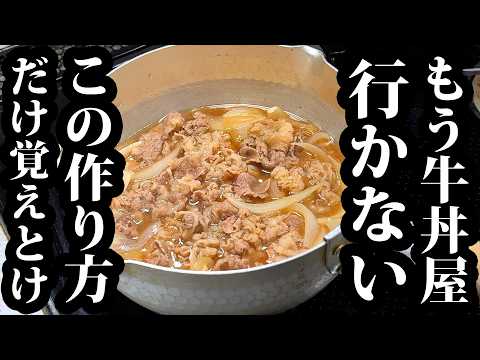
Ingredients
- 300gsliced beef plate (or beef chuck/short plate)
- 1onion
- 500mlwater
- 1tbsp sugar
- 2tbsp cooking sake
- 2tbsp mirin
- 2tbsp + 1 tsp dark soy sauce (1st: 1 tbsp, 2nd: 1 tbsp, 3rd: 1 tsp)
- 4gdashi powder (bonito flavor)
- 2tsp grated ginger
- Cookedwhite rice, to taste
- Redpickled ginger (beni shoga), to taste
About "Gyudon (Japanese Beef Bowl)"
Chef Kosei, with 23 years of culinary experience, shares his recipe for the ultimate homemade Gyudon using sliced beef plate. The secret to tender, flavorful beef lies in tenderizing it with a rolling pin and blanching it to remove any gamey odor. By cutting the onion into two styles and simmering the thin slices first, the broth gains a deep richness. Adding soy sauce in three separate stages is a professional technique that maximizes its aroma. Serve it "tsuyudaku" (with extra broth) and top with red pickled ginger for a restaurant-quality beef bowl.
Introduction to 飲食店独立学校 /こうせい校長 →
Tips for Making "Gyudon (Japanese Beef Bowl)"
-
Beef Selection
- Choose thinly sliced beef plate (or chuck roll) with plenty of fat. The fat adds richness to the broth and helps the beef meld perfectly with the rice.
-
Prep
- Pounding the beef with a rolling pin (or the back of a knife) breaks down muscle fibers, making even affordable imported beef tender.
-
Prep
- Blanching the beef before cooking removes excess scum and gamey odors, resulting in a clean, refined flavor.
-
Ingredient Prep
- Divide the onion: cut half into large bite-sized pieces for the topping, and thinly slice the remaining outer layers for the broth.
-
Simmering
- Simmering the thinly sliced onions in water and seasonings for 5 minutes first dissolves their sweetness and umami into the broth for a deeper flavor.
-
Seasoning
- Add soy sauce in three stages: 1st for the broth base, 2nd to infuse the beef and onions, and 3rd (1 tsp) at the end to boost the aroma.
-
Heat & Simmering
- Use a paper towel with a small center hole as a drop lid, and simmer on medium heat for 10 minutes. This prevents boiling over while ensuring even flavor absorption.
-
Finishing
- Gently squeeze the juices from the paper towel drop lid back into the pot to save all the umami. Tilt the pot to incorporate the final soy sauce without breaking the tender onions.
Ingredients for "Gyudon (Japanese Beef Bowl)"
11 items* Tap ingredient names to find on Amazon
How to Make "Gyudon (Japanese Beef Bowl)"
- 1
Spread the beef on a cutting board and pat dry any excess moisture or blood with a paper towel. Cut into bite-sized pieces, then gently pound the meat with a rolling pin (or the back of a knife) to tenderize the muscle fibers. Lightly loosen the meat with your hands.
- 2
Bring water to a boil in a pot and quickly blanch the tenderized beef. Once scum and impurities rise, drain the water and set the beef aside.
- 3
Cut the onion in half. Peel apart the layers of one half and cut into large, bite-sized pieces (for the main topping). For the other half, peel out the center and cut it into bite-sized pieces as well, then thinly slice the remaining outer layers (for the broth).
- 4
In a pot, combine the thinly sliced onion, 500ml water, 1 tbsp sugar, 2 tbsp cooking sake, 2 tbsp mirin, 1 tbsp dark soy sauce (1st addition), 4g dashi powder, and 2 tsp grated ginger, then bring to a heat.
- 5
Once boiling, reduce the heat to medium and simmer for 5 minutes to let the sweetness and umami of the sliced onion melt into the broth.
- 6
Add the bite-sized onions to the pot, loosening them slightly, then add the blanched beef and submerge it in the broth. Bring to a boil over high heat, then add 1 tbsp dark soy sauce (2nd addition).
- 7
Once boiling, reduce to medium heat, place a paper towel with a small hole cut in the center on top as a drop lid (otoshibuta), and simmer for 10 minutes.
- 8
After 10 minutes, remove the paper towel drop lid, gently squeeze the remaining broth back into the pot, and discard the paper. Add 1 tsp dark soy sauce (3rd addition) to finish, and gently tilt the pot to incorporate it throughout.
- 9
Scoop rice into a bowl, top generously with the simmered beef and onions along with plenty of broth, and garnish with red pickled ginger.
Detailed Commentary on "Gyudon (Japanese Beef Bowl)"
* Content organized by topics from the video.
Selecting the Best Beef for Mind-Blowing Gyudon
Chef Kosei, who has 23 years of culinary experience, 17 years of restaurant management experience, and a deep love for Yoshinoya, shares how to make an incredibly delicious Gyudon using affordable sliced beef plate. While you can use beef scraps (komagire), we highly recommend using thinly sliced beef plate with a good amount of fat (300g used in this recipe). The fat adds richness to the broth and helps the beef meld perfectly with the rice. Even if you don't have a Japanese beef bowl chain nearby, mastering this method will let you easily enjoy ultimate-quality Gyudon at home!
Prep and Blanching for Ultra-Tender Beef
Laying out the beef neatly on a cutting board makes it easier to cut into uniform pieces. If there is any excess moisture or blood, pat it dry with a paper towel to prevent off-flavors. Once cut into bite-sized pieces, gently pound the meat with a rolling pin. Cheap sliced beef or imported beef can sometimes be tough and fibrous, but pounding it before cooking breaks down the fibers and flattens thicker parts, resulting in a tender, easy-to-eat texture. If you don't have a rolling pin, the back of a knife works perfectly. After pounding, lightly loosen the meat with your hands. Next, bring water to a boil and quickly blanch the beef. Cheap beef tends to release scum and gamey odors, so a quick blanching removes these impurities and ensures a clean, refined flavor.
Two Onion Cuts to Maximize Flavor
For this recipe, we use one onion divided into two different cuts: one for the main topping and one to add richness to the broth. Cut the onion in half, then peel the layers apart by hand to ensure even cooking. Use the first half for the main topping, cutting it into large, bite-sized pieces since onions shrink when cooked. For the second half, peel out the center and cut it into bite-sized pieces for the topping as well. Thinly slice the remaining outer layers to add sweetness and umami to the broth. By using two different cuts, you maximize the onion's potential—infusing the broth with deep richness while keeping a satisfying texture for the main topping.
Golden Ratio Broth and Pre-Simmering Onions
First, place the thinly sliced onions in a pot, add 500ml of water, and season. The seasonings are: 1 tbsp sugar, 2 tbsp cooking sake, 2 tbsp mirin, 1 tbsp dark soy sauce, 4g dashi powder (Yamaki brand used here), and 2 tsp grated ginger. Bring to a boil, then reduce to medium heat and simmer for about 5 minutes. Simmering only the thinly sliced onions first breaks down their cell walls, allowing their sweetness and umami to dissolve into the broth for a deeper flavor. Additionally, the melted, tender onions will cling beautifully to the beef, creating a smooth, juicy mouthfeel.
The Pro Method: Adding Soy Sauce in 3 Stages
After 5 minutes, add the bite-sized onions, loosen them slightly, and add the blanched beef, making sure it is fully submerged in the broth. Bring to a boil over high heat, then add the second addition of soy sauce (1 tbsp dark soy sauce). Cooking soy sauce for a long time causes its aromatic compounds to evaporate. Just like ramen shops add "kaeshi" at the very end to boost the aroma, we add the soy sauce in three separate stages to maximize its flavor profile. The first addition builds the base flavor of the broth, the second infuses the beef and onions, and the third adds a fresh burst of aroma at the end. Once boiling, reduce to medium heat and simmer for 10 minutes.
Simmering with a Drop Lid and the Final Touch
While simmering for 10 minutes, use a paper towel as a drop lid. Cutting a small hole in the center allows steam to escape moderately, preventing boiling over. This ensures all ingredients are evenly submerged and absorb the flavors. Once the time is up, remove the paper towel and gently squeeze the flavorful juices back into the pot so nothing goes to waste. Finally, add the third addition of soy sauce (1 tsp dark soy sauce) to bring out the maximum aroma. Avoid stirring vigorously at this stage, as the tender onions can easily break apart; instead, gently tilt the pot to incorporate the soy sauce. The beef will turn out beautifully glossy and appetizing.
Enjoying 'Tsuyudaku' Gyudon and the First Bite
Scoop rice into a bowl and generously pile on the simmered beef and onions. Chef Kosei loves "tsuyudaku" (extra broth), so he pours plenty of broth over the rice. Garnish with red pickled ginger to complete a restaurant-quality beef bowl. Making it at home is the best because you can adjust the amount of meat, broth, and seasoning to your liking. Tasting it at 11:54 PM, Chef Kosei was absolutely thrilled from the very first bite. He jokingly declared, "The fourth major beef bowl chain, 'Iwanoya,' is officially born!" The beef is incredibly juicy, fully infused with flavor, and deeply satisfying. While toppings like raw egg, green onions, or spicy cod roe mayo (takana mentai mayo) are great, he enjoyed this late-night masterpiece simply with a sprinkle of ichimi chili powder.
About 飲食店独立学校 /こうせい校長

飲食店独立学校 /こうせい校長
116万人 subscribers ・ 飲食店経営・家庭料理
* Opens YouTube channel
* Subscriber count is as of article creation and may differ from the current number.
