

Recipe
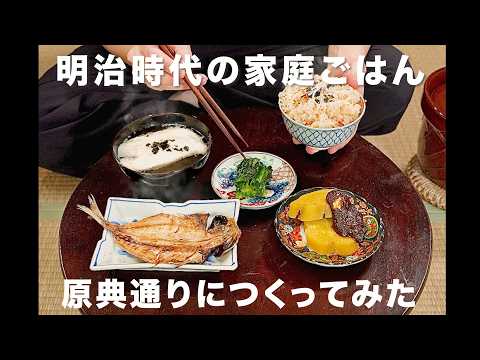
Recreating Meiji Era Home Cooking Exactly from the Original Recipe
Ingredients
- 1carrot
- 1sweet potato
- Mountainyam (nagaimo), to taste
- 1bunch spinach
- 1dried horse mackerel
- Thick-cutbonito flakes, to taste
- 2tbsp red miso
- 1tbsp sake
- 1tsp mirin
- Soysauce, to taste
- Asakusanori (seaweed), to taste
- Greenonion, to taste
- Ginger,to taste
- Water,to taste
About "Meiji Era Home Cooking (Carrot Rice, Furofuki Sweet Potato, Clear Soup with Grated Yam, Grilled Dried Fish)"
Based on the 1893 cookbook *Shuto Ryori Nenju Sozai no Shikata*, we recreate a traditional Meiji-era home-cooked meal featuring carrot rice, furofuki sweet potato, clear soup with grated yam, and grilled dried fish. By carefully practicing historical cooking techniques—such as making dashi with thick-cut bonito flakes and grating mountain yam to create a bouncy texture—you can experience the simple yet deep flavors of home cooking from an era before electricity and modern kitchen appliances.
Introduction to すいじば SUIJIBA →
Tips for Making "Meiji Era Home Cooking (Carrot Rice, Furofuki Sweet Potato, Clear Soup with Grated Yam, Grilled Dried Fish)"
-
Prep
- Cut carrots into uniform thin rectangular strips of 1 sun (approx. 3 cm). Slice sweet potatoes to 5 bu (approx. 1.5 cm) thick and peel carefully while soaking in vinegar water.
-
Prep
- Grate the mountain yam carefully, then stir vigorously with chopsticks to create an incredibly bouncy, mochi-like texture.
-
Heat control
- Slowly steam the sweet potatoes in a steamer for about 20 minutes.
-
Heat control
- For the carrot rice, cook on low heat for about 12 minutes after boiling, then turn off the heat and steam for 10 minutes.
-
Dashi
- Boil thick-cut bonito flakes in water and strain through a cloth to recreate the simple dashi of the era.
-
Seasoning
- For the furofuki miso sauce, grind red miso and sake together in a mortar, heat, and use only the smooth upper portion.
Ingredients for "Meiji Era Home Cooking (Carrot Rice, Furofuki Sweet Potato, Clear Soup with Grated Yam, Grilled Dried Fish)"
14 items* Tap ingredient names to find on Amazon
How to Make "Meiji Era Home Cooking (Carrot Rice, Furofuki Sweet Potato, Clear Soup with Grated Yam, Grilled Dried Fish)"
- 1
Cut the carrot into thin rectangular strips (tanzaku-giri) about 1 sun (approx. 3 cm) long.
- 2
Slice the sweet potato into rounds about 5 bu (approx. 1.5 cm) thick, and carefully peel them while soaking in vinegar water.
- 3
Peel the mountain yam and grate it carefully. Stir vigorously with chopsticks to develop a bouncy, elastic texture.
- 4
Add thick-cut bonito flakes to water, bring to a boil, and strain through a cloth to make dashi.
- 5
Set aside some dashi and add a splash of soy sauce to create the base for the clear soup.
- 6
Place the sweet potatoes in a steamer and steam for about 20 minutes.
- 7
Grind the red miso and sake together in a mortar, transfer to a pot, and heat. Use only the soft upper portion.
- 8
Add mirin and soy sauce to the dashi, bring to a boil, and add the carrots. Cook over low heat for about 12 minutes, then turn off the heat and let steam for about 10 minutes.
- 9
Boil the spinach, plunge it into cold water, squeeze out excess moisture, cut into bite-sized pieces, and drizzle with soy sauce to make ohitashi.
- 10
Slowly grill the dried horse mackerel on a wire rack.
- 11
Scoop the carrot rice into a bowl, and top with torn Asakusa nori and finely julienned green onions as garnishes.
- 12
Pour the dashi broth into a bowl, float the grated mountain yam on top, and scatter Asakusa nori over it.
- 13
Serve the steamed sweet potato with the warm miso sauce and grated ginger.
Food Science
Combining the inosinate in bonito flakes with the glutamate found in miso, soy sauce, and nori creates an umami synergy that enhances the overall richness of the meal. Additionally, steaming the sweet potato slowly activates the internal enzyme beta-amylase, which breaks down starches into sweet maltose, bringing out the natural sweetness of the ingredient.
Detailed Commentary on "Meiji Era Home Cooking (Carrot Rice, Furofuki Sweet Potato, Clear Soup with Grated Yam, Grilled Dried Fish)"
* Content organized by topics from the video.
Exploring Authentic Meiji-Era Home Cooking
During the Meiji era, Japan underwent rapid Westernization, and restaurants serving Western dishes like curry rice and stew multiplied. However, home kitchens still largely followed the Edo-period style, relying on well water and cooking over a kamado (clay stove). Today, we refer to *Shuto Ryori Nenju Sozai no Shikata* (Everyday Home Cooking for Amateurs), written in 1893 by Hananoya Kocho. This cookbook covers simple, daily side dishes using ingredients and seasonings accessible in any region. It is organized efficiently by category—from soups to rice dishes—allowing home cooks to easily plan a daily menu by selecting one dish from each section. We will recreate these honest, practical home-cooked dishes, free from modern trends or superficial presentation.
Careful Prep to Highlight Seasonal Ingredients
We begin by prepping the vegetables. Carrots, which are in season during winter, will be used for carrot rice. We cut them into thin rectangular strips (tanzaku-giri) about 1 sun (approx. 3 cm) long. Next, we prepare the sweet potato for furofuki, another classic winter dish. We slice it into rounds 5 bu (approx. 1.5 cm) thick and carefully peel them while soaking in vinegar water to prevent discoloration. Native to Central and South America, sweet potatoes traveled through the Philippines, China, and Ryukyu before spreading across Japan, historically saving countless lives during famines. It is a humble ingredient that arguably surpasses modern superfoods.
Traditional Seasonings & Bouncy Mountain Yam
Next, we make the miso sauce for the furofuki sweet potato. Grind red miso and sake together in a mortar, then transfer to a pot and heat. Interestingly, the recipe instructs to discard any hardened bits stuck to the pot and use only the smooth, soft upper portion—a detail suggesting this book was aimed at educated, well-to-do households. For the soup, we make 'Otoshi-imo' (dropped yam) from the year-round section. Peel the mountain yam and grate it carefully with a grater. When you stir the grated yam vigorously with chopsticks, it develops an incredibly bouncy, elastic texture, allowing you to lift it like mochi.
Extracting Umami: Dashi and Steaming
Now, we move on to cooking. First, place the sweet potato—which takes the longest—into a steamer and steam slowly for about 20 minutes. Meanwhile, we prepare the dashi, the foundation of our seasoning. Add thick-cut bonito flakes to water, bring to a boil, and strain through a cloth. Since thin bonito shavings did not exist back then, thick-cut flakes were the standard. We set aside a portion of this dashi and add a splash of soy sauce to create a simple, deeply comforting clear soup base.
Carrot Rice and Classic Side Dishes
Next, we cook the carrot rice. Add mirin and soy sauce to the dashi, bring to a boil, and add the sliced carrots. Cook over low heat for 12 minutes, then turn off the heat and let steam for 10 minutes. Mirin only became widely accessible to commoners around the late Edo period, so seeing it in a Meiji recipe shows the evolution of home cooking. While the rice steams, boil the spinach, plunge it into cold water, squeeze, cut, and drizzle with soy sauce to make ohitashi (I forgot to add sesame seeds this time!). Finally, we slowly grill the dried horse mackerel—a year-round staple perfect for busy days—on a wire rack.
Simple Flavors and Gratitude for Modern Life
Scoop the cooked carrot rice into a bowl and garnish with torn Asakusa nori and julienned green onions. For the clear soup, float the bouncy, grated mountain yam on top and scatter more Asakusa nori. Serve the steamed sweet potato with the warm miso sauce and grated ginger. Tasting the meal, the clear soup is incredibly simple and comforting, carrying a deep, rustic flavor even without kombu. The carrot rice is outstanding, with the subtle sweetness of the carrots and the aroma of the dashi making it a dish that easily holds up today. The furofuki sweet potato is beautifully balanced, with the sharp kick of ginger cutting through the sweet miso and potato. Reflecting on the hard work of our ancestors, who prepared such meals daily without microwaves or gas stoves, fills us with deep gratitude for modern conveniences and the civilization they built.
About すいじば SUIJIBA
すいじば SUIJIBA
151万人 subscribers ・ 料理全般
* Opens YouTube channel
* Subscriber count is as of article creation and may differ from the current number.
