

Recipe
The 'Perfect Fried Egg' Perfected by a Pro | Improve Your Cooking Just by Watching | Tips to Keep the Yolk from Turning White
Ingredients
- 2eggs
- 10gbutter
- Apinch of salt
About "Fried Egg"
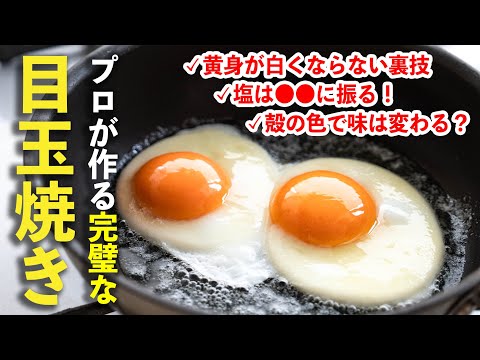
This is a recipe for the perfect fried egg proposed by culinary expert Naoya Higuchi. The goal is a runny yolk and silky, perfectly set whites. Through three key points—egg freshness, removing thin whites, and cooking on low heat with butter—and explanations based on scientific principles like egg structure and coagulation temperatures, you can learn the depth of this simple dish.
Introduction to 樋口直哉の料理論[Cooking theory] →
Video Timestamps
Tips for Making "Fried Egg"
-
Choosing Eggs
- The most important factor is freshness, not shell color or brand. Choosing fresh eggs is the first step to a perfect finish.
-
Prep
- Strain the cracked eggs to remove the thin whites, which coagulate at a lower temperature. This step is crucial for older eggs to ensure a silky texture.
-
Cracking
- Crack eggs on a flat surface. Cracking them on sharp edges makes it easier for shell fragments to get inside.
-
Heat Control
- Maintain low heat throughout. The ideal pan temperature is around 120°C (248°F). Slide the eggs in before the butter's foaming subsides (just before it browns).
-
Cooking
- Yolks set at 65°C–75°C (149°F–167°F) and whites at 60°C–80°C (140°F–176°F). The best time to stop cooking is when the whites around the yolk are fully set.
-
Seasoning
- Salt only the whites, not the yolks. Salting the yolk directly draws out moisture, causing proteins to coagulate and create unsightly spots.
-
Science
- Fresh eggs contain high levels of carbon dioxide. Rapid high-heat cooking solidifies proteins before the gas escapes, resulting in a rubbery texture.
Ingredients for "Fried Egg"
3 items* Tap ingredient names to find on Amazon
How to Make "Fried Egg"
- 1
Crack the eggs on a flat surface and crack them into a fine-mesh strainer instead of a bowl.
- 2
Let the thin, watery whites drain through the strainer, collecting only the thick whites and yolks in a bowl.
- 3
Heat a frying pan over low heat and melt 10g of butter.
- 4
The moment the butter melts (before the foaming completely subsides), gently slide the eggs into the pan.
- 5
Sprinkle a pinch of salt only on the egg whites (do not sprinkle it on the yolks).
- 6
Watch closely and turn off the heat the exact moment the whites around the yolks are completely set and white.
- 7
Gently loosen the eggs from the pan and slide them onto a plate to serve.
Food Science
By straining out the thin whites, you control the moisture level, preventing the egg from spreading too thin and ensuring a thick, plump shape. Additionally, by utilizing the difference in coagulation temperatures between egg whites (approx. 60–80°C / 140–176°F) and yolks (approx. 65–70°C / 149–158°F) and cooking on low heat, you can gently set the whites while keeping the yolk perfectly runny, creating an incredibly silky texture.
Detailed Commentary on "Fried Egg"
* Content organized by topics from the video.
The Ultimate Goal of a Perfect Fried Egg
The 'perfect fried egg' proposed by culinary expert and author Naoya Higuchi features a runny yolk and silky, smoothly set whites. While steaming with a lid (as taught in home economics class) or making a Spanish-style fried egg in plenty of oil are both delicious, this recipe aims to maximize the natural aroma and delicate flavor of the egg. Browning the whites diminishes this delicate flavor, so the professional approach is to cook them gently without browning. Simple dishes we make every day are the best tools for learning scientific culinary principles. Just by watching this video, you will deepen your understanding of egg structure and elevate your cooking skills with these fried egg secrets.
Egg Selection and the Importance of Freshness
Supermarket shelves display both white and brown eggs, with brown eggs often favored for their perceived richer flavor. However, this shell color difference is simply due to the breed of chicken; if they eat the same feed, their taste and nutritional value are virtually identical. Furthermore, regarding eggs with yolks so firm they can be picked up with chopsticks—often seen in the media—Mr. Higuchi explains that younger chickens naturally lay eggs with stronger yolk membranes. Additionally, this characteristic can be artificially induced by feeding chickens diets high in acetic acid, such as wood vinegar, making it an unreliable standard for quality. The most crucial factor for a delicious fried egg is not the brand or yolk firmness, but freshness. Using fresh eggs is the first step to a perfect result.
Cracking Eggs and Removing Thin Whites
Now, let's move on to the practical steps for making the perfect fried egg. First, when cracking the eggs, it is crucial to tap them against a flat surface rather than the sharp edge of a bowl. Cracking them on an edge makes it easier for shell fragments to get pushed inside. For this recipe, we will use two eggs per serving. Instead of cracking them directly into the pan, crack them into a fine-mesh strainer first. As they sit in the strainer, you will see watery whites slip through. This is called the 'thin white' (or watery albumen). Extremely fresh eggs have very little thin white, so they can be cracked straight into a bowl, but if you are using eggs that are slightly older, this extra step makes a massive difference in the final result.
The Science Behind Removing Thin Whites
Looking at a cracked egg scientifically, it consists of three parts: the central yolk, the firm 'thick white' (dense albumen) surrounding it, and the watery 'thin white' (outer fluid albumen) on the outside. While thin whites are perfectly edible and actually whip up easily for meringues, they should be removed when making fried eggs. This is because thin whites coagulate at a lower temperature than thick whites; if cooked together, the thin whites overcook first, resulting in a dry, rubbery texture. To achieve a silky-smooth fried egg, it is vital to strain out these low-coagulation-temperature thin whites beforehand. Additionally, as eggs age, the proportion of thin whites naturally increases.
Why We Cook Gently with Low Heat and Butter
Heat a frying pan over low heat and melt 10g of butter. Since egg proteins coagulate at relatively low temperatures, and we want to avoid browning, we maintain a consistent low heat throughout. Fresh eggs contain a lot of carbon dioxide; if heated rapidly at high temperatures, the proteins solidify before the gas can escape, resulting in a rubbery texture. According to the scientific culinary book 'On Food and Cooking' by Harold McGee, the ideal pan temperature for a tender, unbrowned fried egg is around 120°C (248°F). This is the stage just as the butter's foaming subsides, right before it begins to brown. Waiting until the foaming stops completely means the temperature has risen too high, so slide the strained eggs gently into the pan the moment the butter melts.
Where to Salt and How to Tell When It's Done
Once the eggs are in the pan, season them with a pinch of salt. The professional secret here is to sprinkle the salt only on the whites. Salting the yolk directly draws out its moisture, causing the proteins in that spot to coagulate and create unsightly white spots on the surface. The coagulation temperature for egg yolks is 65°C to 75°C (149°F to 167°F), while whites set between 60°C and 80°C (140°F to 176°F). Since the yolk has a narrower temperature window for setting, we cook the eggs slowly without a lid. The best time to stop cooking is the exact moment the whites surrounding the yolk turn completely opaque and set. Turn off the heat immediately, gently loosen the eggs from the pan, and slide them onto a plate. Serving with crispy toasted bread is highly recommended.
Tasting the Perfect Fried Egg and Pro Summary
When you cut into the finished fried egg, the rich yolk flows out beautifully, while the whites remain incredibly silky—a truly perfect state. Enjoying this rich yolk and white on buttered toast offers an exquisite harmony of buttery richness and savory egg flavor. Mr. Higuchi notes that the essence of egg cookery lies in controlling two components with entirely different physical properties: the yolk and the white. Even the famous fried egg created by three-star chef Bernard Loiseau relied on strict temperature control, baking only the whites in the oven before adding the yolk to warm through with residual heat. By paying just a little attention to cooking temperatures, anyone can easily fry a picture-perfect, beautiful egg.
About 樋口直哉の料理論[Cooking theory]
樋口直哉の料理論[Cooking theory]
7.9万人 subscribers ・ 家庭料理/調理科学
* Opens YouTube channel
* Subscriber count is as of article creation and may differ from the current number.
