

Recipe
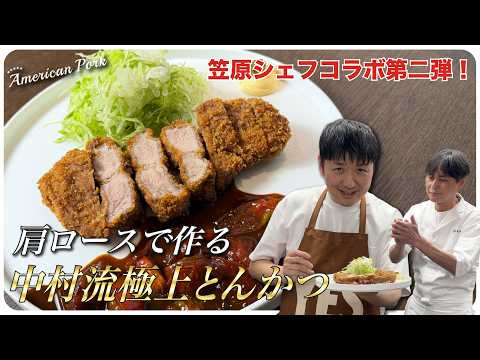
Chef Kasahara Collab Part 2! Nakamura-Style Premium Pork Shoulder Tonkatsu
Ingredients
- Americanpork shoulder: 400g
- Salt:to taste
- Pepper:to taste
- Flour:to taste
- Eggs:2
- Pankobreadcrumbs: to taste
- Fryingoil: to taste
- Mayonnaise:to taste (for garnish, optional)
- Yuzukosho: to taste (for garnish, optional)
- Mediumtomatoes: 2 (for sauce)
- Oliveoil: 1 tsp (for sauce)
- Worcestershiresauce: 2 tbsp (for sauce)
- Currypowder: 1 tsp (for sauce)
- Butter:10g (for sauce)
- Lettuce:1/4 (for garnish)
- Celery:1/2 stalk (for garnish)
About "Pork Shoulder Tonkatsu with Medium Tomato Curry Sauce"
This is Chef Nakamura's signature tonkatsu recipe using American pork shoulder, cooked evenly using a double-frying method. It features a clever hack of shaking breadcrumbs in an air-filled plastic bag to coat the pork perfectly and mess-free. The dish is served with a fruity and spicy special sauce made by sautéing medium tomatoes in olive oil and combining them with Worcestershire sauce, curry powder, and butter. Accompanied by shredded lettuce and sliced celery, with optional mayonnaise and yuzu kosho for a flavorful accent. Since pork shoulder is rich in lean meat and packed with deep flavor, combining double-frying with residual heat cooking yields an incredibly juicy result.
Introduction to アメリカンビーフ&アメリカンポーク公式チャンネル →
Video Timestamps
Tips for Making "Pork Shoulder Tonkatsu with Medium Tomato Curry Sauce"
-
Prep
- It is fine if the flour coating is slightly uneven. Don't worry too much about perfect uniformity; just dust it lightly all over.
-
Prep
- Make sure to shake off any excess egg thoroughly after dipping the pork.
-
Prep
- Put panko in a large plastic bag, add the pork, trap plenty of air inside like a balloon, and shake vigorously. This coats the pork evenly without messing up your hands. Gently press over the bag at the end to set the coating.
-
Prep
- Peeling lettuce from the outside makes it last longer. Soak the cut lettuce and celery in water to crisp them up, then drain well.
-
Heat control
- Heat the frying oil to 170–180°C (340–355°F) before adding the pork.
-
Heat control
- For the first fry, cook for only 30 seconds to set the crust, then remove immediately and rest for 3 minutes to let the residual heat cook the inside.
-
Heat control
- For the second fry, return to the oil and cook for about 3 minutes. This double-frying method is highly effective for lean, firm pork shoulder.
-
Sauce
- Sauté the medium tomatoes in olive oil. Once they break down and become juicy, turn off the heat before adding the Worcestershire sauce, curry powder, and butter.
-
Sauce
- Limit the butter to about 10g; adding too much will make the dairy flavor overpower the sauce.
Ingredients for "Pork Shoulder Tonkatsu with Medium Tomato Curry Sauce"
16 items* Tap ingredient names to find on Amazon
- Americanpork shoulder: 400g
- Salt:to taste
- Pepper:to taste
- Flour:to taste
- Eggs:2
- Pankobreadcrumbs: to taste
- Fryingoil: to taste
- Mayonnaise:to taste (for garnish, optional)
- Yuzukosho: to taste (for garnish, optional)
- Mediumtomatoes: 2 (for sauce)
- Oliveoil: 1 tsp (for sauce)
- Worcestershiresauce: 2 tbsp (for sauce)
- Currypowder: 1 tsp (for sauce)
- Butter:10g (for sauce)
- Lettuce:1/4 (for garnish)
- Celery:1/2 stalk (for garnish)
How to Make "Pork Shoulder Tonkatsu with Medium Tomato Curry Sauce"
- 1
Season the American pork shoulder with salt and pepper.
- 2
Dust the pork entirely with flour (it is fine if it is slightly uneven).
- 3
Beat the eggs in a bowl, then dip the floured pork into the egg. Shake off any excess egg thoroughly.
- 4
Put plenty of panko breadcrumbs into a large plastic bag and add the egg-coated pork. Gather the opening of the bag to trap plenty of air inside like a balloon, and shake it vigorously to coat the pork evenly with breadcrumbs. Finally, gently press over the bag with your hands to set the coating.
- 5
Shred the lettuce and thinly slice the celery. Soak the cut vegetables in water to make them crisp, then drain well.
- 6
Place the coated pork into oil heated to 170–180°C (340–355°F) and fry for about 30 seconds to set the outer crust.
- 7
Remove the pork and let it rest for about 3 minutes to allow the residual heat to cook the inside.
- 8
Return the pork to the oil and double-fry for about 3 minutes. Once cooked, remove from the oil.
- 9
Remove the stems from the medium tomatoes and cut them into quarters.
- 10
Sauté the tomatoes in a pan with olive oil. Once they break down and become juicy, turn off the heat, then add the Worcestershire sauce, curry powder, and butter to finish the sauce.
- 11
Plate the lettuce and celery on a flat dish, then top with the sliced tonkatsu. Serve with mayonnaise and yuzu kosho on the side if desired, and drizzle with the special tomato curry sauce to finish.
Detailed Commentary on "Pork Shoulder Tonkatsu with Medium Tomato Curry Sauce"
* Content organized by topics from the video.
Opening: Showcasing the Appeal of Pork Shoulder
The video kicks off with a lively greeting from the members of 'THE MEATERS' and their guest, professional Japanese cuisine chef Masahiro Kasahara. The star ingredient today is American pork shoulder. While rib roast is commonly used in specialty tonkatsu restaurants, pork shoulder is often overlooked. However, the host passionately argues that pork shoulder is incredibly delicious. To prove this, they declare they will make Nakamura-style premium tonkatsu. With Chef Kasahara joining in a warm, friendly atmosphere, anticipation builds for how this ultimate tonkatsu will turn out.
Seasoning and Flouring: A Creative Approach
First, they season the American pork with salt and pepper and beat the eggs. Next is the flouring process, where a unique philosophy is shared. When pointed out that the flour might be uneven, the host offers a creative perspective: 'What's wrong with a little unevenness? Let's enjoy it as part of the cooking process.' Furthermore, while clumsily using tongs with his left hand, he insists, 'Showing the difficult parts is what makes you a pro.' Chef Kasahara agrees, and they bond over a shared critique of modern systems that try to make everything too convenient and foolproof, having a fun conversation while working.
The Plastic Bag Hack for Perfect Panko Coating
After dipping the pork in the beaten egg, they wait a moment for the excess egg to drain off. Here, they introduce a clever hack to apply the breadcrumbs beautifully without getting their hands dirty. They put plenty of panko into a large plastic bag, add the egg-coated pork, gather the opening to trap air inside like a balloon, and shake it vigorously. This method ensures a high-quality, perfectly even panko coating. To finish, they gently press over the bag with their hands to set the crust perfectly.
Chef Kasahara's Shredded Lettuce and Celery
For the garnish, Chef Kasahara generously takes charge of shredding the lettuce. He shares professional tips, such as how peeling lettuce from the outside makes it last longer, and chats about how lettuce has been called 'chisha' in traditional Japanese cuisine, with sunny lettuce stems referred to as 'chishato.' He then thinly slices the celery, explaining that in traditional Japanese cuisine (especially Kaiseki), strong-smelling ingredients like celery, garlic, and chives are generally avoided because they overpower the delicate, subtle flavors of Japanese dishes. The cut vegetables are soaked in water for about 10 seconds to crisp up, then drained thoroughly.
Double-Frying with Residual Heat
For the frying process, they heat the oil to 170–180°C. Since pork shoulder is lean and has a firm texture, double-frying is highly effective. For the first fry, they place the pork in the oil for about 30 seconds just to set the outer crust, then immediately remove it. This first fry acts like a warm-up exercise; letting it rest for about 3 minutes afterward allows the residual heat to gently cook the inside. Despite a minor mishap where the portable stove ran out of gas—prompting Chef Kasahara to tease, 'Did you forget to pay your gas bill?'—they quickly swap the canister and complete the second fry for about 3 minutes.
Special Tomato Sauce and Plating
For the sauce, they create a special blend using commercial Worcestershire sauce as a base, enhanced with fruitiness and spices. They quarter the medium tomatoes and sauté them in a pan with olive oil. Once the tomatoes break down and become juicy, they turn off the heat and add Worcestershire sauce, a pinch of curry powder, and butter for richness. The key is to keep the butter to a moderate amount so the dairy flavor doesn't overpower the sauce. The freshly fried tonkatsu is sliced with a satisfying crunch, then beautifully plated with the lettuce, celery, mayonnaise, yuzu kosho, and the special sauce.
Tasting the Ultimate Tonkatsu & Outro
Everyone digs into the finished tonkatsu. Taking a bite, Chef Kasahara praises it highly: 'The cooking is absolutely perfect, delicious!' Because pork shoulder has a complex mix of muscle fibers and fat, it has a much deeper, meatier flavor than loin, resulting in an incredibly juicy dish. Combining Chef Nakamura's double-frying technique with Chef Kasahara's ideas has birthed an extraordinary premium tonkatsu. As Chef Kasahara is the memorable first guest of this collaboration, they announce plans for future videos where he will showcase his own skills. The video wraps up in a warm, friendly atmosphere as they invite viewers to subscribe and like the video.
About アメリカンビーフ&アメリカンポーク公式チャンネル

アメリカンビーフ&アメリカンポーク公式チャンネル
11.8万人 subscribers
* Opens YouTube channel
* Subscriber count is as of article creation and may differ from the current number.
