

Recipe
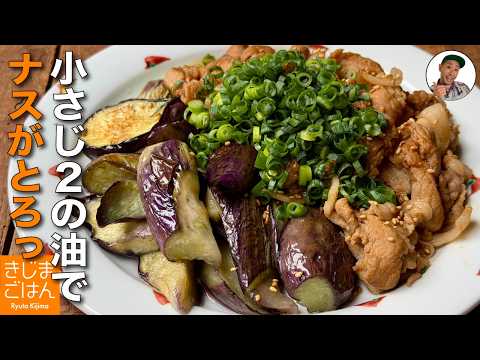
Sweet and Savory Stir-Fried Eggplant and Pork (One-Pan Recipe)
Ingredients
- 2–3eggplants (small)
- 150gthinly sliced pork
- 2tsp vegetable oil
- 1pinch salt
- 1tbsp soy sauce
- 1tbsp sake
- 1/2tbsp sugar
- Greenonions, to taste
- 1/2tbsp toasted white sesame seeds
- Gratedginger, to taste (optional)
About "Sweet and Savory Stir-Fried Eggplant and Pork"
This recipe features eggplant steam-cooked with just 2 tsp of oil to achieve an incredibly melt-in-your-mouth texture. The sliced pork is seasoned beforehand using a 'bulgogi-style' marinating method, keeping it juicy and tender while infusing it with sweet and savory flavors. The marriage of wedge-cut eggplant and tender pork is beautifully finished with green onions and white sesame seeds.
Introduction to きじまごはん 【料理家きじまりゅうた公式チャンネル】 →
Video Timestamps
Tips for Making "Sweet and Savory Stir-Fried Eggplant and Pork"
-
Prep
- Cut off the eggplant stems at the calyx boundary and roll-cut them into wedges to increase surface area. This ensures even cooking, a crisp skin, and juicy flesh.
-
Prep
- Cut the pork into bite-sized pieces using kitchen shears and massage the seasonings directly in the packaging tray. Massaging by hand helps the flavors penetrate deeply.
-
Heat control
- Using a cold-start method (heating from a cold pan) allows just 2 tsp of oil to coat the eggplant evenly, achieving a beautiful sear with minimal oil.
-
Heat control
- Arrange the eggplant skin-side down to preserve its vibrant color and prevent the skin from toughening. Slide the lid horizontally when removing to prevent oil splattering.
-
Seasoning
- Marinating the pork with soy sauce, sake, and sugar beforehand (bulgogi-style) helps the meat retain moisture during cooking, preventing it from becoming dry and tough.
-
Heat control
- Stir-fry the pork in the same pan used for the eggplant to absorb the leftover flavor and oil. Cook for about 1 minute until the sauce reduces slightly and coats the meat.
Ingredients for "Sweet and Savory Stir-Fried Eggplant and Pork"
10 items* Tap ingredient names to find on Amazon
How to Make "Sweet and Savory Stir-Fried Eggplant and Pork"
- 1
Cut off the eggplant stems at the boundary line of the calyx, and trim a small amount off the tough bottom ends.
- 2
Cut the eggplants into wedges (roll-cut: cut diagonally, rotate the eggplant, and cut diagonally again, repeating the process).
- 3
Rinse the eggplant wedges quickly in a bowl of water.
- 4
Place the lightly drained eggplant in a cold frying pan, then add 2 tsp of vegetable oil and a pinch of salt.
- 5
Without turning on the heat, thoroughly coat the eggplant with the oil and salt.
- 6
Arrange the eggplant wedges skin-side down, cover with a lid, and heat over medium-high heat.
- 7
Once you hear a sizzling sound, reduce the heat to medium-low and steam-cook for 3 minutes.
- 8
Cut the thinly sliced pork into bite-sized pieces using kitchen shears.
- 9
Add 1 tbsp soy sauce, 1 tbsp sake, and 1/2 tbsp sugar directly to the pork in its packaging tray and massage it in.
- 10
Finely slice the green onions (pushing the knife diagonally forward as you slice).
- 11
After 3 minutes, slide the lid horizontally to the side to remove it.
- 12
Flip the eggplant wedges over, cover with the lid again, and steam-cook for another 2 minutes.
- 13
Check if they have become soft and tender when pressed with chopsticks, and transfer them to a plate as they soften.
- 14
Add the pork along with all its marinating juices into the same frying pan used for the eggplant, and stir-fry over medium heat.
- 15
Stir-fry for about 1 minute until the pork changes color and the sauce coats the meat and reduces slightly.
- 16
Plate the flavorful pork along with its sauce next to the eggplant.
- 17
Sprinkle 1/2 tbsp of toasted white sesame seeds over the dish and top with a generous amount of sliced green onions to finish.
Food Science
In addition to the umami synergy between the glutamic acid in eggplant and the inosilic acid in pork, the sweet and savory seasoning of soy sauce and sugar (balancing the five basic tastes) enhances the overall flavor. Furthermore, coating the eggplant with salt before steam-cooking helps retain its internal moisture while efficiently conducting heat, achieving a melt-in-your-mouth texture. Finally, the Maillard reaction that occurs when stir-frying the pork with the seasonings generates a rich, savory aroma and deep flavor.
Detailed Commentary on "Sweet and Savory Stir-Fried Eggplant and Pork"
* Content organized by topics from the video.
Eggplant Prep and Cutting Techniques
First, we start by prepping the eggplant. We'll use 2 to 3 small eggplants for this recipe. A key tip for cutting is to slice right at the boundary line of the calyx (stem cap) to maximize the edible portion. Trim off a tiny bit of the tough bottom end as well. We will cut them into wedges (roll-cut). Cut diagonally, rotate the eggplant so the cut surface faces up, and cut diagonally again, repeating this process. Roll-cutting creates larger surface areas, which helps them cook faster. It also ensures that every bite offers both the crisp texture of the skin and the juicy flesh, making it a highly recommended cut for eggplant. Once cut, there's no need to soak them in water to remove bitterness; just give them a quick rinse in a bowl of water. This helps the eggplant release its natural moisture during cooking, resulting in a juicier finish.
Pro-Tip for Juicy Eggplant
Here is a pro-tip from culinary expert Ryuta Kijima. To make the eggplant incredibly moist and juicy, we use a cold-start technique, starting with a cold frying pan before turning on the heat. Place the lightly drained eggplant into the frying pan, then add 2 tsp of vegetable oil and a pinch of salt. Without turning on the heat yet, thoroughly coat the eggplant with the oil and salt. Eggplant absorbs oil very easily, but this method allows you to coat it evenly using just 2 tsp of oil. Once coated, make sure to arrange the eggplant skin-side down. If you don't cook the skin side first, the color won't turn out vibrant, and the skin will become tough. Once arranged, cover with a lid and start heating over medium-high heat. This is Kijima's signature technique for a juicy finish.
Pork Prep and Handy Kitchen Tools
While the eggplant is steam-cooking, we'll prep the pork. We are using 150g of thinly sliced pork. Since pre-packaged sliced pork often contains pieces of varying sizes, cut them into bite-sized pieces. A handy tool for this is a pair of slightly curved kitchen shears. By cutting the meat directly inside its packaging tray, you can avoid dirtying your cutting board or hands, and you can even use the shears like tongs. Once cut, season the meat directly in the same tray. Add 1 tbsp of soy sauce, 1 tbsp of sake, and 1/2 tbsp of sugar. If you want to keep it super simple, you can just use the tips of the shears to mix the seasonings into the meat, but massaging it thoroughly by hand will help the flavors penetrate better for a tastier result.
Why We Season the Pork First
In typical stir-fries, meat is cooked first, and seasonings are added at the end. However, this recipe uses a 'bulgogi-style' method where the pork is marinated beforehand. According to Kijima, seasoning after stir-frying causes the pork to lose moisture, making it dry and tough. By massaging in liquid (sake and soy sauce) and sugar first, then cooking it almost like a simmer-fry, the pork retains its moisture and turns out incredibly tender and juicy. While this method slightly tightens the meat fibers, the bold, sweet, and savory flavor profile pairs perfectly with the eggplant we'll combine it with later. Meanwhile, finely slice the green onions for the topping. Pushing the knife slightly diagonally forward as you cut prevents the green onions from rolling away, resulting in clean slices.
Steaming Eggplant to Melt-in-Your-Mouth Texture
Once you hear a sizzling sound from the frying pan, reduce the heat to medium-low and steam-cook for 3 minutes. After 3 minutes, remove the lid. The trick here is to slide the lid horizontally to the side; if you lift it straight up, water droplets on the lid will fall into the pan, causing the oil to splatter violently. You'll see the eggplant skin has turned a beautiful purple, looking gorgeous despite using only 2 tsp of oil. Now, flip the eggplant over, cover with the lid again, and steam-cook for another 2 minutes. Once done, check if they feel soft and tender when pressed with chopsticks. If there are any firm spots, cook those areas a bit longer, and transfer the softened pieces to a plate first. At this stage, you have perfectly tender, melt-in-your-mouth eggplant packed with concentrated flavor.
Stir-Frying Pork in the Flavor-Packed Pan
After removing the eggplant, the frying pan still holds the delicious juices and oil from the eggplant. We will use this frying pan as-is to stir-fry the pork over medium heat. Since the meat is already marinated and there is oil left in the pan, there's no need to add more oil. Pour the pork along with all its marinating juices into the frying pan and stir-fry, breaking up the pieces. If you like, you can add grated ginger for a ginger-pork (shogayaki) style twist. Stir-fry for about 1 minute until the meat changes color and the sauce coats everything and reduces slightly. Once cooked through, generously plate the flavorful pork along with its sauce right next to the eggplant we plated earlier.
Finishing Touches and Taste Test
To finish, sprinkle 1/2 tbsp of toasted white sesame seeds over the dish and top with a mountain of the sliced green onions we prepped earlier. Your 'Sweet and Savory Stir-Fried Eggplant and Pork' is complete! For the taste test, grab a bite of the melt-in-your-mouth eggplant, tender pork, and plenty of green onions all together. The eggplant, which was simply steam-cooked with just a pinch of salt, highlights the natural, juicy sweetness of the ingredient. When paired with the sweet and savory, juicy pork, it creates a perfect marriage of flavors. Kijima highly praised it, saying, 'The eggplant is seriously meltingly soft, and the meat is so tender!' It's an outstanding dish that goes perfectly with a bowl of rice or a cold glass of beer. Once you master this eggplant steam-cooking technique, you can apply it to various dishes like Mapo Eggplant, so please give it a try!
About きじまごはん 【料理家きじまりゅうた公式チャンネル】

きじまごはん 【料理家きじまりゅうた公式チャンネル】
14.7万人 subscribers ・ 家庭料理
* Opens YouTube channel
* Subscriber count is as of article creation and may differ from the current number.
