

Recipe
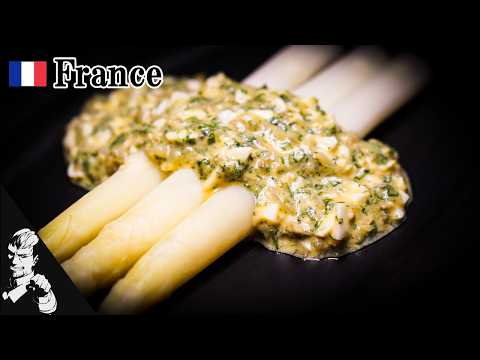
Sauce Gribiche: Why Reducing Ingredients Ruins the Balance? A Pro's Guide
Ingredients
- 2hard-boiled eggs (yolks and whites separated)
- 15gDijon mustard
- 15gred wine vinegar
- 40–80ggrapeseed oil (may separate if exceeding 80g)
- 2–3cornichons
- 15gcapers
- 40gmixed herbs (tarragon, chervil, Italian parsley, chives)
- Saltand pepper, to taste
- [Japanese-StyleTwist (À la Japonaise)]
- 2hard-boiled eggs (yolks and whites separated)
- 15gDijon mustard
- 15grice vinegar
- 40ggrapeseed oil
- Japanesepickles (takuan, rakkyo, shibazuke, etc.), to taste
- 1bunch shiso leaves
- Asmall amount of scallions
- Saltand pepper, to taste
About "Sauce Gribiche"
Sauce Gribiche is a classic French cold sauce made by emulsifying hard-boiled egg yolks with Dijon mustard. Unlike raw egg yolk-based rémoulade, it features a thick, rich texture that pairs beautifully with pork, veal, poached fish, and salmon. In this recipe, we serve it over white asparagus and introduce a Japanese-style twist, 'à la Japonaise,' using leftover ingredients from your fridge. We also explain the culinary science behind why you need plenty of mix-ins, tips for perfect emulsification, and the history and origin of Gribiche.
Introduction to フレンチシェフ高御仁のガチレシピ →
Tips for Making "Sauce Gribiche"
-
Prep
- Hard-boil the eggs and cleanly separate the yolks and whites. Finely mince the whites, cornichons, capers, and herbs.
-
Emulsification
- Thoroughly mash the yolks with a spatula into a paste, and mix in the Dijon mustard until completely smooth before proceeding.
-
Adding Acid
- Add the red wine vinegar in 2 to 3 small batches, mixing thoroughly after each addition.
-
Oil & Emulsion
- Switch to a whisk and slowly drizzle in the grapeseed oil while whisking vigorously. Limit the oil to a maximum of 80g per 2 egg yolks to prevent separation.
-
Mix-in Balance
- Do not skimp on the herbs, capers, and cornichons. Reducing these ingredients weakens the acidity and aroma, allowing the egg to overpower the sauce.
-
Finishing
- Add the herbs right before serving to prevent discoloration. Follow the same rule for the shibazuke and shiso in the Japanese-style twist.
-
Cooking Asparagus
- Boil the peeled skins in water with salt and a tiny pinch of sugar. Remove the skins, turn off the heat completely, and cook the asparagus in the residual heat for 3 minutes. The sugar tempers the bitterness of white asparagus (not needed for green asparagus).
Ingredients for "Sauce Gribiche"
17 items* Tap ingredient names to find on Amazon
- 2hard-boiled eggs (yolks and whites separated)
- 15gDijon mustard
- 15gred wine vinegar
- 40–80ggrapeseed oil (may separate if exceeding 80g)
- 2–3cornichons
- 15gcapers
- 40gmixed herbs (tarragon, chervil, Italian parsley, chives)
- Saltand pepper, to taste
- [Japanese-StyleTwist (À la Japonaise)]
- 2hard-boiled eggs (yolks and whites separated)
- 15gDijon mustard
- 15grice vinegar
- 40ggrapeseed oil
- Japanesepickles (takuan, rakkyo, shibazuke, etc.), to taste
- 1bunch shiso leaves
- Asmall amount of scallions
- Saltand pepper, to taste
How to Make "Sauce Gribiche"
- 1
[Prep] Cleanly separate the hard-boiled egg yolks and whites. Finely mince the egg whites, cornichons, capers, and herbs (tarragon, chervil, Italian parsley, and chives).
- 2
Place the egg yolks in a bowl and mash them thoroughly with a spatula until smooth.
- 3
Add the Dijon mustard and mix well until it forms a smooth paste with no lumps.
- 4
Add the red wine vinegar in 2 to 3 batches, mixing well after each addition to combine.
- 5
Season with salt and pepper.
- 6
Switch to a whisk. Slowly drizzle in the grapeseed oil in a thin stream while whisking vigorously to emulsify (up to 80g).
- 7
Once emulsified and thickened, fold in the minced egg whites, capers, and cornichons.
- 8
Just before serving, stir in the minced herbs, adjust the seasoning with salt, and it's ready.
- 9
[How to Cook White Asparagus] Peel the asparagus with a peeler, reserving the tough bottom ends to make a flavorful cooking broth.
- 10
Add the peeled skins to boiling water, along with salt and a tiny pinch of granulated sugar to extract flavor.
- 11
Remove the skins, turn off the heat completely, add the asparagus, and let them cook in the residual heat for 3 minutes.
- 12
Remove the asparagus from the water, plate them, and generously spoon the finished Sauce Gribiche over them.
- 13
[Japanese-Style Twist (À la Japonaise)] Following the basic steps, mash the egg yolks and mustard into a paste, add the rice vinegar in batches, and emulsify with grapeseed oil.
- 14
Stir in the minced egg whites and Japanese pickles (such as takuan and rakkyo).
- 15
Since shibazuke, shiso, and scallions discolor easily, fold them in just before serving. Season with salt and pepper to finish.
Detailed Commentary on "Sauce Gribiche"
* Content organized by topics from the video.
The Appeal of Traditional Sauce Gribiche
Today, we are introducing Sauce Gribiche, a traditional French cold sauce. Its defining feature is the use of hard-boiled egg yolks as the base, resulting in a rich, deeply egg-forward flavor. It is incredibly popular in France, pairing beautifully with pork, veal, poached fish, and salmon. Today, we will serve this classic sauce over seasonal white asparagus. We will share professional tips, an easy home-friendly twist, and dive into the history and culinary science behind this sauce.
Ingredients and Prep for Authentic Flavor
Here are the ingredients for an authentic Sauce Gribiche. You will need two hard-boiled eggs for the base, grapeseed oil, red wine vinegar (highly recommended for acidity), Dijon mustard, and cornichons and capers for texture and tang. For a fresh herbal aroma, we use four types of herbs: tarragon, Italian parsley, chives, and chervil. For prep, cleanly separate the egg yolks and whites, then finely mince the whites, cornichons, capers, and all the herbs. For the white asparagus, peel the stalks and save the tough bottom ends to flavor the cooking water.
Tips for Perfect Emulsification and Finishing
Start by mashing the egg yolks in a bowl with a spatula until smooth. Add the Dijon mustard and work it into a smooth paste with no lumps. Next, add the red wine vinegar in about three batches, mixing well after each. Season with salt and pepper, switch to a whisk, and slowly drizzle in the grapeseed oil in a thin stream while whisking vigorously to emulsify. Limiting the oil to a maximum of 80g for two egg yolks is key to keeping the egg flavor prominent. Once beautifully emulsified and thick, fold in the minced egg whites, capers, cornichons, and herbs. Adjust with salt to finish this wonderfully rich, thick sauce.
Pro Techniques for Cooking White Asparagus
When cooking white asparagus, professionals use a special technique. First, add the peeled asparagus skins to boiling water. The key here is to add salt and a tiny pinch of granulated sugar. The sugar rounds out the characteristic bitterness of white asparagus and enhances its natural sweetness (this is not done for green asparagus). After removing the skins, turn off the heat completely, add the asparagus, and let them cook in the residual heat for 3 minutes. This gentle cooking method heats them evenly without ruining their texture. Once cooked, remove them from the water. While soaking them in cooking water with milk or lemon juice keeps them beautifully white, we will plate them immediately since we are eating them right away.
Tasting and a Japanese-Style Leftover Twist
Spoon a generous amount of the Sauce Gribiche over the freshly cooked white asparagus. The gentle richness of the egg yolk and the juicy sweetness of the asparagus melt together, enveloped by the elegant aroma of tarragon—it is pure bliss. However, if you can't find tarragon or chives at your local store, try our Japanese-style twist, 'à la Japonaise,' using fridge leftovers. Swap the cornichons for takuan, rakkyo, and shibazuke pickles, use shiso and scallions instead of French herbs, and replace the red wine vinegar with rice vinegar. Since shibazuke and shiso discolor easily, mix them in right before serving. Served over pan-seared chicken breast, it makes an exquisite dish reminiscent of a Japanese-style tartar sauce.
Rémoulade vs. Gribiche and the Origin of the Name
Let's dive into some culinary details. People often confuse Sauce Rémoulade and Sauce Gribiche. Rémoulade is based on mayonnaise made by emulsifying raw egg yolks with oil, then adding mustard and herbs, resulting in a smooth, creamy texture. In contrast, Gribiche uses hard-boiled egg yolks as a base, emulsified with the help of mustard, giving it a distinctly thick, heavy, and rich texture. The origin of the word 'Gribiche' has several theories. One suggests it comes from an old Norman expression meaning 'grumpy old woman' or 'witch,' while another attributes it to a specific chef. It is said to have become established in culinary terminology in the late 19th century.
The Role of Herbs and the Golden Balance
In Sauce Gribiche, tarragon is the star herb that defines its elegant aroma. When fresh tarragon is hard to find, such as in winter, you can increase the ratio of parsley and chives, or use dried tarragon or tarragon preserved in vinegar. The trickiest part of this sauce is the volume of the mix-ins. If you want a vibrant, clean look, cutting the mix-ins in half might seem appealing. However, reducing them weakens the acidity and aroma of the herbs and pickles, allowing the heavy egg base to overpower the sauce and ruin the balance. The robust depth of red wine vinegar and a generous amount of mix-ins are essential to stand up to the rich oil and egg, creating a perfect golden balance.
About フレンチシェフ高御仁のガチレシピ

フレンチシェフ高御仁のガチレシピ
6,310人 subscribers ・ フランス料理
* Opens YouTube channel
* Subscriber count is as of article creation and may differ from the current number.
