

Recipe
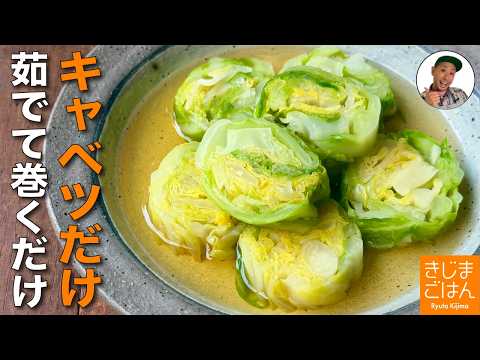
Easy Spring Cabbage Feast Recipe: Rolled Cabbage Ohitashi
Ingredients
- 1/2spring cabbage
- Salt(for boiling) to taste
- 2gbonito flakes (katsuobushi)
- 150mlhot water (taken from the boiling pot)
- 1tsp soy sauce
- 1tsp sugar
- 1/3tsp salt (for dashi)
About "Rolled Cabbage Ohitashi"
This 'Rolled Cabbage Ohitashi' is made by boiling half a spring cabbage, rolling it in a bamboo mat, and serving it with a savory dashi broth. Squeezing out the excess moisture with a bamboo mat prevents it from becoming watery and concentrates the cabbage's natural sweetness. Chef Kijima's special trick is to use the boiling water from the cabbage to make a quick, flavorful dashi with bonito flakes and seasonings. The beautiful spiral cross-section makes it perfect for entertaining. It keeps well until the next day and makes a great sake pairing.
Introduction to きじまごはん 【料理家きじまりゅうた公式チャンネル】 →
Video Timestamps
Tips for Making "Rolled Cabbage Ohitashi"
-
Prep
- Cut the cabbage core in a V-shape and remove enough of it so the leaves separate easily, making the prep work much smoother.
-
Prep
- Shave down the thick stems of the leaves with a flat knife. Thinning them makes rolling easier and ensures an even texture.
-
Boiling
- Add the cabbage to boiling salted water in this order: large outer leaves, shaved stems, then tender inner leaves. Boil for about 2 minutes.
-
Prep
- Spread the boiled cabbage on a tray without overlapping to cool. Stacking them traps heat and ruins their vibrant color.
-
Rolling
- Lay large leaves on a bamboo mat without gaps, place smaller leaves/stems on the front, roll forward once, and press down to squeeze out water.
-
Rolling
- After rolling completely, hold the mat vertically and squeeze tightly over a bowl. This thorough wringing is key to preventing wateriness.
-
Dashi
- Ladle 150ml of boiling water into a cup, add 2g of finely crushed bonito flakes, 1 tsp soy sauce, 1 tsp sugar, and 1/3 tsp salt. It should taste slightly saltier than soup.
-
Serving
- Roll the cabbage out of the mat, trim the ends, and slice into bite-sized pieces. Arrange on a plate, pour dashi over, and serve with ginger or yuzu kosho if desired.
Ingredients for "Rolled Cabbage Ohitashi"
7 items* Tap ingredient names to find on Amazon
How to Make "Rolled Cabbage Ohitashi"
- 1
Cut out the core of 1/2 spring cabbage in a V-shape, removing enough of it so that the leaves can easily separate.
- 2
Separate the cabbage leaves into outer and inner layers. Shave down the thick stem of each leaf by holding the knife flat to make them thin.
- 3
Bring a pot of water to a boil. Once boiling, ladle 150ml of the hot water into a measuring cup for the dashi.
- 4
Crush 2g of bonito flakes inside their packet with your hands into a powder, then add them to the hot water in the measuring cup. Add 1 tsp soy sauce, 1 tsp sugar, and 1/3 tsp salt, and mix well to make the dashi.
- 5
Add salt to taste to the boiling water in the pot. Add the shaved stems first, followed by the large outer leaves, and then the tender inner leaves. Boil for about 2 minutes.
- 6
Remove the boiled cabbage leaves with a strainer as they soften, and spread them out on a tray without overlapping to cool. Fan them with a hand fan to cool them quickly.
- 7
Once cooled, lay the large leaves horizontally on a bamboo rolling mat (makisu) without leaving any gaps. Place the smaller leaves and shaved stems on the side closest to you.
- 8
Lift the edge of the mat closest to you, roll it forward once, and press down firmly over the mat with your hands to squeeze out moisture. Continue rolling to the end.
- 9
Hold the rolled mat vertically over a pot or bowl and squeeze it tightly to thoroughly wring out any remaining water.
- 10
Gently roll the cabbage out of the mat, trim off the uneven ends, and cut it into bite-sized pieces.
- 11
Arrange the cabbage pieces on a plate and pour the prepared dashi generously over them. Serve with grated ginger or yuzu kosho to taste, if desired.
Detailed Commentary on "Rolled Cabbage Ohitashi"
* Content organized by topics from the video.
A Cabbage-Only Feast: Rolled Ohitashi
Hi, I'm culinary artist Ryuta Kijima. Today, I'm sharing a recipe for 'Rolled Cabbage Ohitashi' made with just spring cabbage. It's simple yet elegant enough for entertaining. First, cut out the thick core of half a cabbage in a V-shape. Removing the core deeply makes it much easier to separate the leaves. By thoroughly squeezing out the moisture, we prevent the dish from becoming watery and bring out the cabbage's natural sweetness. It's a simple yet beautiful dish that brightens up any table, so please give it a try!
Prepping and Peeling Spring Cabbage Leaves
Once the core is removed, peel the leaves, separating them into outer and inner layers. Spring cabbage has softer leaves than winter cabbage, making them slightly trickier to peel without tearing. However, their tenderness and intense sweetness make them perfect for this dish. The thick stems can be tough and hard to roll, so shave them down by holding your knife flat. Prepping and separating the leaves before boiling makes the subsequent steps much smoother.
Quick Dashi Using the Boiling Water
Here is a signature Kijima tip! We will use the boiling water from the pot to make a quick and delicious dashi broth for the ohitashi. First, ladle 150ml of boiling water into a measuring cup. Take 2g of packaged bonito flakes and crush them into a powder with your hands right inside the bag, then add them to the water. Mix in 1 tsp soy sauce, 1 tsp sugar, and 1/3 tsp salt. It should taste slightly saltier than a standard soup broth. Using powdered bonito flakes is an easy way to create a rich, premium-tasting dashi.
Boiling to Keep Colors Bright and Cooling Fast
Now, let's boil the prepped cabbage. Add salt to the boiling water, and place the large outer leaves in first. Next, add the shaved stems, and finally, the tender inner leaves. Gently press them down so they stay submerged, and boil for about 2 minutes. Once cooked, transfer them to a strainer, starting with the softest leaves. If you pile hot cabbage together, it traps heat and loses its vibrant color, so spread them out on a tray. Using a wire rack on a tray is very convenient, and fanning them with a hand fan will cool them down in just a few minutes.
Squeezing Out Moisture with a Bamboo Mat
Once the cabbage has cooled, it's time to roll. We'll use a bamboo rolling mat (makisu), which is easily found at 100-yen shops or Asian grocery stores. First, lay the large leaves horizontally on the mat, ensuring there are no gaps. Place the smaller leaves and shaved stems on the side closest to you. Lift the front edge of the mat and roll it forward once. Press down firmly over the mat to squeeze out excess water, then roll it all the way to the end. Finally, hold the mat vertically and squeeze it tightly over a bowl or sink. This is the most crucial step to prevent wateriness.
Slicing into Bite-Sized Spirals
After squeezing out the water, gently roll the cabbage out of the mat. You should have a beautifully compact cabbage roll. Slice it into bite-sized pieces. Trim off the uneven ends first; when you look at the cross-section, you'll see a beautiful spiral pattern. This round, elegant shape is easy to pick up with chopsticks. Arrange the pieces neatly on a plate and pour the flavorful dashi generously over them. You can also serve it with grated ginger or yuzu kosho to add a nice kick.
Crisp Texture and Natural Sweetness
Now, let's taste our Rolled Cabbage Ohitashi! It's easy to pick up and perfect for a single bite. The moment you eat it, you'll hear a wonderful, crisp crunch. Boiling it briefly brings out the natural sweetness unique to spring cabbage. Although the dashi is made simply with hot water and bonito flakes, it clings to the cabbage, delivering a deep, savory flavor. It's incredibly satisfying for a dish made with just cabbage, making it a perfect sake pairing. It stays delicious until the next day, so making a larger batch is highly recommended.
About きじまごはん 【料理家きじまりゅうた公式チャンネル】

きじまごはん 【料理家きじまりゅうた公式チャンネル】
14.7万人 subscribers ・ 家庭料理
* Opens YouTube channel
* Subscriber count is as of article creation and may differ from the current number.
