

Recipe
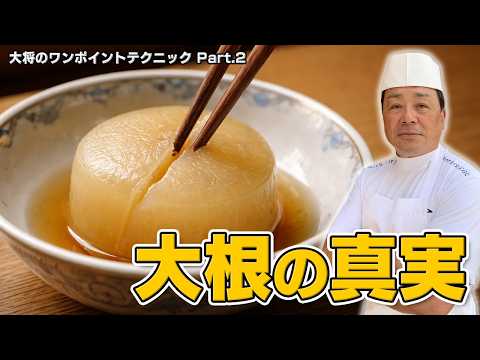
Cooking it longer won't make it delicious! The Master Chef's secret technique for Simmered Daikon Radish | Pro Tips Part 2
Ingredients
- 1Daikon radish
- Rice-washingwater (as needed)
- Asmall amount of rice
- Asmall amount of rice bran
- Rootkelp (to taste)
- Flatkelp (to taste)
- Water(as needed)
About "Simmered Daikon Radish"
A Japanese master chef shares professional techniques for making perfect simmered daikon radish. It's not just about cooking time; through proper prep like soaking, parboiling, and crushing the core, combined with a rich dashi made from root kelp and flat kelp, you can achieve an exquisitely tender, evenly cooked dish.
Tips for Making "Simmered Daikon Radish"
-
Prep
- After cutting the daikon, soak it thoroughly in water until plump to ensure a juicy and beautiful final texture.
-
Parboiling
- Parboil for about 4 hours with rice-washing water, raw rice, and rice bran to remove bitterness and off-flavors.
-
Prep
- Wrap the parboiled daikon in a cloth and use your thumb to crush the hard central core ('naka-oshi') to break the vertical fibers.
-
Seasoning
- Use both root and flat kelp, maintaining a precise heat to prevent scum while fully extracting the umami until the end.
-
Heat & Time
- Since the center remains hard even when the edges soften, boiling for another hour will cause the edges to fall apart. Proper prep is key to uniform tenderness.
Ingredients for "Simmered Daikon Radish"
7 items* Tap ingredient names to find on Amazon
How to Make "Simmered Daikon Radish"
- 1
Soaking the Daikon in Water
After cutting the daikon, soak it thoroughly in water until it plumps up. Letting the daikon absorb water until it 'cannot drink any more' ensures a juicy and beautiful final texture.
- 2
Parboiling with Rice-Washing Water and Rice Bran
In addition to the rice-washing water, add a small amount of raw rice (even if it feels a bit wasteful) and some rice bran, then simmer gently for about 4 hours to parboil. The rice bran will slightly color the parboiled daikon. This process removes the harsh bitterness and off-flavors, preparing the daikon to absorb the seasonings beautifully.
- 3
Checking Tenderness with a Bamboo Skewer
Insert a bamboo skewer into the daikon after parboiling for about 4 hours to check its tenderness. The skewer will slide easily into the outer edges, but the center contains a tough vertical fiber core known as the 'pillar' (hashira), which remains hard. This hard center prevents the daikon from cooking evenly.
- 4
Crushing the Core with Your Thumb (Naka-oshi)
Wrap the cooled daikon in a cotton cloth (sarashi) and use your thumb to firmly press and crush the central core. Don't be afraid to break the core to disrupt the vertical fibers. Although pressing it leaves a dent in the center, it will plump back up once simmered in the broth, so there is no need to worry.
- 5
Making Dashi with Root Kelp and Flat Kelp
To thoroughly infuse the daikon with kelp flavor, use two types of kelp: root kelp (ne-kombu) and flat kelp (hira-kombu). Root kelp adds a unique viscosity and deep richness to the broth. Unlike standard dashi methods, the chef's style is to leave the kelp in, maintaining a precise heat level to prevent scum while fully extracting the umami until the very end.
- 6
Simmering the Daikon in Kelp Dashi
Simmer the prepped daikon slowly in the specially prepared two-kelp dashi. Since the central core was crushed during prep, the entire piece of daikon will cook to a perfectly uniform tenderness.
Food Science
Parboiling daikon with rice-washing water or rice bran allows starch particles to adsorb harshness and bitter compounds, removing off-flavors. Additionally, the abundant glutamic acid (an umami compound) extracted from the kelp infuses into the daikon, harmonizing with its natural sweetness to create a deep flavor profile. Rather than just spending time cooking, the key to unlocking deliciousness lies in proper prep to suppress bitterness and infuse rich umami.
Detailed Commentary on "Simmered Daikon Radish"
* Content organized by topics from the video.
The Basics of Parboiling and Rehydrating Daikon
A master chef with over 50 years of experience in Japanese cuisine shares his secrets for parboiling and rehydrating daikon radish, which is at its peak flavor in October and November. In the video, he explains the process with the prep for Oden daikon in mind. To parboil the daikon, the chef uses not only rice-washing water but also adds a small amount of raw rice (even if it seems wasteful) and rice bran, simmering it gently for about 4 hours. Because of the rice bran, the parboiled daikon takes on a slight color. This slow, deliberate parboiling process removes any harsh bitterness and off-flavors, preparing the daikon to absorb the seasonings beautifully. It is a fundamental and essential step in traditional Japanese cooking to bring out the maximum flavor of the daikon.
The Bamboo Skewer Test: Finding the Core
To check the tenderness of the daikon after parboiling for about 4 hours, the camera crew tests it with a bamboo skewer. When inserting the skewer into the center of the daikon, there is some resistance and it feels hard. However, when poking the outer edge slightly away from the center, the skewer slides right through without any resistance. According to the chef, the center of the daikon contains a vertical fiber core known as the 'pillar' (hashira). Even when the outer part is perfectly tender, this central core remains tough. If you try to soften this hard center by boiling it for another hour, the outer edges will overcook and fall apart. Achieving uniform tenderness purely through cooking time is incredibly difficult.
Soaking: The Secret to Plump, Intact Daikon
The parboiled daikon is cooled in water. Here, the chef reveals a crucial step: 'soaking' before parboiling. He emphasizes the importance of soaking the cut daikon thoroughly in water beforehand. Unless you let the daikon absorb water until it is completely plump—as if it 'cannot drink any more'—before starting the parboiling process, the final dish won't turn out beautifully plump. By fully hydrating the daikon before cooking, you get a juicy, gorgeous result where the broth clings beautifully to the surface when plated. Preparing the daikon's condition to its absolute best before cooking, rather than just simmering it for a long time, is the secret to a professional finish.
Pro Technique: Crushing the Core with Cloth
To make the tough central 'pillar' uniformly tender, the chef demonstrates a professional prep trick. He wraps the cooled daikon in a cotton cloth (sarashi) and performs a technique called 'naka-oshi' (center-pressing), using his thumb to firmly press and crush the central core. By boldly breaking the core, the vertical fibers are disrupted. When testing with a bamboo skewer after crushing, it now slides effortlessly through the center. Although pressing leaves a slight dent in the middle of the daikon, it will plump back up once simmered in the broth, so there is no need to worry. This extra step ensures that when guests cut into it with chopsticks, it parts beautifully and melts in the mouth with an exquisite, spoon-tender texture.
Double Kelp Dashi: Root and Flat Kelp
To simmer the prepped daikon, the chef prepares a special kelp dashi. To deeply infuse the daikon with kelp flavor, he uses two types of kelp: 'root kelp' and 'flat kelp'. When the staff asks why, the chef replies with a smile, 'Because it's delicious!' Using root kelp in particular adds a unique viscosity and deep richness to the broth. Since the chef personally loves intense kelp umami, he intentionally chose this combination for a bolder flavor. Also, unlike standard dashi-making methods, he does not remove the kelp halfway through. His signature style is to keep the kelp in, maintaining a precise heat level to prevent any scum while fully extracting the kelp's umami until the very end.
Pairing with Saikyo Miso-Marinated Black Cod
The daikon prepared today is destined to be paired with Saikyo miso-marinated black cod (miso-cured using Kyoto miso). The grilled black cod is placed atop the daikon, which has been thoroughly infused with kelp dashi, and finished with a warm white miso sauce—creating an elegant, sophisticated 'oden-style' daikon dish. In the kitchen, the black cod and sockeye salmon are baked to plump perfection in a combi oven lined with parchment paper. The meticulous prep of the daikon, the rich kelp dashi, and the savory depth of the Saikyo-yaki come together to create an exquisite Japanese dish that is hard to replicate at home. It is a visually stunning creation filled with the chef's uncompromising craftsmanship.
About 大将に聞いてみた!
大将に聞いてみた!
2.1万人 subscribers ・ 日本料理・和食
* Opens YouTube channel
* Subscriber count is as of article creation and may differ from the current number.
