

Recipe
The Difference Between the Best and Worst Hirezake is the Prep | Scrubbing and Soaking are Key to Removing Odor
Ingredients
- Preparedblowfish (with fins)
- Blowfishmilt (for Shirakozake)
- Blowfishbones (for Kotsuzake)
- Sake(Japanese sake)
- Icewater
About "Hirezake (Blowfish Fin Sake) & Kotsuzake (Blowfish Bone Sake)"
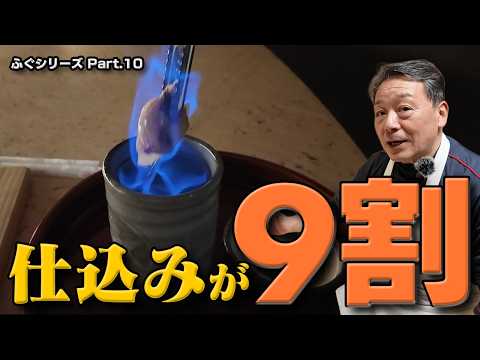
This video explains how to make the winter delicacies "Hirezake" (blowfish fin sake) and "Kotsuzake" (blowfish bone sake). The difference between delicious and disappointing hirezake lies in the prep work before roasting. A master chef with 50 years of experience demonstrates his meticulous techniques, including scrubbing with a brush to completely remove sliminess and odor, soaking in ice water to draw out impurities, and the final heating and aroma-infusing process.
Tips for Making "Hirezake (Blowfish Fin Sake) & Kotsuzake (Blowfish Bone Sake)"
-
Prep
- Thoroughly scrub the blowfish fins under running water using a scrub brush. Completely removing the sliminess and fishy odor is the most crucial step. Since roasting won't eliminate the smell, prep work before roasting is absolutely critical.
-
Prep
- After splitting the fins into small pieces, soak them in cold ice water for about half a day. This draws out blood and impurities, preventing unpleasant odors from bleeding into the sake when steeped.
-
Prep
- When using milt, make a deep cut along the thick blood vessels and wash thoroughly under running water while gently squeezing out the blood. Since odors can linger inside the surface membrane, cleaning the inside is crucial.
-
Heat control
- Heat the sake in boiling water to its absolute limit. The goal is to build up pressure inside the bottle so that the liquid expands to the absolute brim.
-
Finishing
- After pouring the hot sake, cover with a lid and steep for about 2 minutes. For Kotsuzake, steep thoroughly to draw out the rich flavor of the bones.
-
Finishing
- Finish with 'aroma infusion.' Remove the lid, light the vapors with a match, and pass the fin in and out of the flame using tongs to transfer its aroma to the sake. The goal is to lock in the savory, toasted flavor, not to burn off the alcohol.
-
Safety & Etiquette
- Pressurized sake can suddenly spray out, so never point the bottle's opening toward customers.
Ingredients for "Hirezake (Blowfish Fin Sake) & Kotsuzake (Blowfish Bone Sake)"
5 items* Tap ingredient names to find on Amazon
How to Make "Hirezake (Blowfish Fin Sake) & Kotsuzake (Blowfish Bone Sake)"
- 1
[Hirezake Prep]
- 2
Prepping and Washing the Fins
Cut the fins off the prepared blowfish and scrub them thoroughly under running water using a scrub brush. Completely removing the sliminess and fishy odor is the most crucial step. Neglecting this process is the main reason hirezake ends up smelling bad.
- 3
Splitting the Fins and Soaking in Ice Water
After removing any excess meat, use a knife to split the fins into smaller pieces. Place them in cold ice water and let them soak for about half a day. This soaking process acts as a way to draw out blood and impurities.
- 4
Drying the Fins
Thoroughly dry the soaked fins. This process creates the ultimate blowfish fins that release an exquisite aroma when steeped in hot sake.
- 5
[Shirakozake Prep]
- 6
Prepping the Milt and Removing Blood Vessels
Fresh milt has thick blood vessels running through it, which cause a fishy odor. Make a deep cut into the milt with a knife, gently squeeze out the blood around the vessels, and wash it clean under running water.
- 7
Cleaning the Milt Membrane and Finishing
Since odors can also linger inside the membrane covering the milt, make sure to cut and wash the inside thoroughly. This meticulous prep work brings out a clean, rich, and creamy flavor when prepared as tempura, salt-grilled, or used for Shirakozake.
- 8
[Finishing Hirezake & Kotsuzake]
- 9
Heating the Sake to its Limit
Heat a sealed small bottle of sake in boiling water. By heating the sake to its absolute limit, strong pressure builds up inside the bottle, causing the liquid to expand and fill the bottle to its absolute brim.
- 10
Placing Fins/Bones in the Cup and Pouring Sake
Place the fins or bones in a cup, pour in the piping hot sake, and immediately cover with a lid to steep for about 2 minutes. For Kotsuzake, steeping it thoroughly is especially important to draw out the rich flavor of the bones.
- 11
Finishing with Aroma Infusion
Remove the lid and light the vapors with a match or lighter to create a blue flame. Using tongs, pass the fin in and out of the flame to transfer its aroma to the sake. Passing the ingredient through the flame locks in the savory, toasted aroma without burning the fin.
- 12
Tips for Enjoying Tsugizake (Refill Sake)
Before finishing the first cup, pour a small amount of sake onto the thick, dish-like lid and set it aside. By pouring fresh hot sake over it later, you can enjoy a delicious second cup (tsugizake) that retains the rich umami of the first pour.
Food Science
Roasting blowfish fins and bones triggers the Maillard reaction, generating rich aromatic compounds. When these dissolve into the sake, the flavor is dramatically enhanced. Additionally, the synergistic effect of umami is created when the inosinic acid in the blowfish combines with the amino acids and succinic acid in the sake. Meticulous prep work to remove moisture and fishy odors is the key to bringing out a clean, clear taste free of impurities.
Detailed Commentary on "Hirezake (Blowfish Fin Sake) & Kotsuzake (Blowfish Bone Sake)"
* Content organized by topics from the video.
New Year's Greetings and Restaurant Intro
The video begins with New Year's greetings from Toru Wada, a master chef with 50 years of experience in Japanese cuisine. At the entrance of 'Washoku Taichi' in Nakano, Tokyo, which opened last year, there is a decorative mizuhiki knot representing auspicious cranes and tortoise shells. The master chef shares his resolution for the year: to continue sharing the fundamental techniques of Japanese cuisine and the importance of ingredients in an easy-to-understand way. The theme for this video is 'Hirezake' using blowfish, a winter delicacy. The master chef emphasizes that the ultimate difference between delicious hirezake and disappointing hirezake lies in the prep work before roasting.
The Best Hirezake Starts with Brush Scrubbing
The cooking starts with cutting the fins off the prepared blowfish. Although the blowfish fins look clean at first glance, they have a unique sliminess and a lingering fishy odor when touched. The master chef points out that this sliminess and odor are the main reasons hirezake ends up smelling bad. The most crucial part of the prep is thoroughly scrubbing the fins with a scrub brush under running water. He mentions that restaurants serving smelly hirezake often neglect this tedious but essential step. The master chef's strong commitment to serving truly delicious hirezake to his customers is evident in this meticulous process.
The Secret to Soaking and Drawing Out Impurities
After thoroughly washing the fins with a brush and removing any excess meat, the master chef uses a knife to split them into smaller pieces. The split fins are then soaked in cold ice water for about half a day. This soaking process acts as a way to draw out blood and impurities from the fins. The master chef refuses to compromise, dismissing the idea that 'roasting will get rid of the smell.' If the prep is insufficient, unpleasant odors will bleed into the sake once the fins soften in the liquid. By thoroughly drying the fins after soaking them for half a day, you get the ultimate blowfish fins that release an exquisite aroma when steeped in hot sake.
Meticulous Prep to Remove Odors from Milt
Next, the master chef explains how to prep blowfish milt for a luxurious 'Shirakozake.' Fresh milt has thick blood vessels running through it, which cause a fishy odor. The master chef makes a deep cut into the milt with a knife and gently squeezes out the blood around the vessels while washing it clean under running water. Since odors can also linger inside the membrane covering the milt, it is crucial to cut and wash the inside thoroughly. This meticulous prep work brings out a clean, rich, and creamy flavor to its fullest when prepared as tempura, salt-grilled, or used for Shirakozake.
Heating Sake Under Pressure and Pouring Etiquette
Using the prepped fins and bones, it is finally time to finish the hirezake. The master chef heats a sealed small bottle of sake in boiling water. By heating the sake to its absolute limit, strong pressure builds up inside the bottle, causing the liquid to expand and fill the bottle to its absolute brim. When opened, the cap makes a sharp 'whoosh' sound. The master chef shares a professional safety tip and etiquette: when pouring sake for customers at the counter, never point the bottle's opening toward them, as the pressurized sake could suddenly spray out.
Finishing with 'Aroma Infusion'
Place the fins or bones in a cup, pour in the piping hot sake, and immediately cover with a lid to steep for about 2 minutes. For Kotsuzake, steeping it thoroughly is especially important to draw out the rich flavor of the bones. The final step is the master chef's signature 'aroma infusion.' He removes the lid and lights the vapors with a match or lighter to create a blue flame. While many believe this is done to burn off the alcohol, the master chef's purpose is different. Using tongs, he passes the fin in and out of the flame to transfer its aroma to the sake. Passing the ingredient through the flame locks in the savory, toasted aroma without burning the fin.
Tasting the Rich Sake and Tips for Refills
The staff tasting the finished hirezake and kotsuzake rave about the rich, deep flavor, exclaiming, 'It's incredibly rich!' The master chef smiles, noting that this is the reward of meticulous prep work. He also shares an elegant tip for enjoying a second or third cup of 'tsugizake' (refill sake). The lid of the hirezake cup is thick and shaped like a small dish. Before finishing the first cup, pour a small amount of sake onto this lid and set it aside. By pouring fresh hot sake over it later, you can enjoy a delicious second cup that retains the rich umami of the first pour. Finally, he explains that he did not demonstrate Shirakozake in the video because it requires highly delicate professional techniques like straining, and he wants viewers to try it themselves first to truly appreciate its depth.
About 大将に聞いてみた!
大将に聞いてみた!
2.1万人 subscribers ・ 日本料理・和食
* Opens YouTube channel
* Subscriber count is as of article creation and may differ from the current number.
