

Recipe
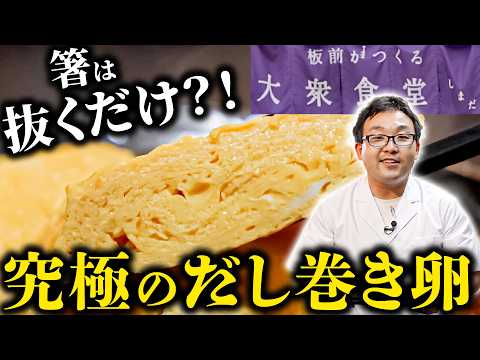
The Ultimate Dashi Maki Tamago: A Masterpiece Presented to the Emperor Emeritus | Masatoshi Shimada of Taishu Shokudo Shimada
Ingredients
- 3eggs
- Bonitoand kelp dashi, to taste
- Lightsoy sauce, to taste
- Mirin,to taste
- Oil,to taste (just enough to lightly coat the pan)
About "Dashi Maki Tamago (Japanese Rolled Omelet)"
Masatoshi Shimada, owner of 'Taishu Shokudo Shimada' in Machida, Tokyo, shares his signature Dashi Maki Tamago recipe, refined since his apprenticeship. Using a carefully brewed bonito and kelp dashi, he generously explains professional chef techniques, from mixing the egg mixture to rolling. Key tips include cutting through the egg whites to incorporate air and popping air bubbles while rolling the omelet in 5 to 6 stages. This dish embodies the skills Shimada mastered through a rigorous year of training, which began at age 16 by practicing rolling with a wet towel instead of real eggs.
Introduction to Kurashiru [クラシル] →
Tips for Making "Dashi Maki Tamago (Japanese Rolled Omelet)"
-
Prep
- Before adding seasonings, thoroughly mix only the eggs first. This prevents the whites and yolks from separating during cooking, ensuring a uniform flavor.
-
Prep
- When mixing, lift the egg whites with chopsticks and 'cut' through them to incorporate plenty of air. Stop at a moderate point, as over-mixing loses the egg's elasticity.
-
Heat control
- Maintain a steady medium heat. The guideline is for the tips of the flames to just touch the bottom of the pan.
-
Heat control
- Touch the tips of your chopsticks to the pan right before pouring; a sizzling sound indicates the perfect temperature.
-
Cooking technique
- Once you pour the egg mixture, carefully pop any air bubbles. Leaving bubbles creates gaps inside, ruining the beautiful cross-section.
-
Cooking technique
- Pour the egg mixture in 5 to 6 small batches, rolling it gradually while ensuring it cooks thoroughly.
-
Cooking technique
- Do not grip the egg tightly with chopsticks; gently 'rest' them against it. Sliding the chopsticks out quickly at the moment of rolling prevents tearing.
-
Cooking technique
- Keep the pan's handle aligned with your belly button to help shape the omelet into a beautiful rectangle.
Ingredients for "Dashi Maki Tamago (Japanese Rolled Omelet)"
5 items* Tap ingredient names to find on Amazon
How to Make "Dashi Maki Tamago (Japanese Rolled Omelet)"
- 1
Crack 3 eggs into a bowl. Before adding any seasonings, whisk only the eggs with chopsticks. Lift the egg whites with the chopsticks and mix in a cutting motion to incorporate air into the mixture. Stop mixing at a moderate point to avoid over-whisking.
- 2
Add the dashi, light soy sauce, and mirin, then mix lightly to complete the egg mixture.
- 3
Heat a tamagoyaki pan over medium heat and lightly coat it with oil. Maintain a heat level where the tips of the flames just touch the bottom of the pan.
- 4
Touch the tips of your chopsticks to the pan; a sizzling sound indicates it has reached the right temperature. Stir the egg mixture from the bottom once more right before pouring.
- 5
Pour about 1/5 to 1/6 of the egg mixture into the pan, and carefully pop any air bubbles that form on the surface using your chopsticks.
- 6
Once the egg mixture becomes half-cooked, gently place your chopsticks against it and roll from the far side toward you. Slide the chopsticks out quickly at the moment of rolling to avoid damaging the egg. Position yourself so the handle of the pan is aligned with your belly button.
- 7
Slide the rolled egg to the far side of the pan, and lightly coat the newly cleared space in the front with oil again.
- 8
Pour in another small amount of the egg mixture, tilting the pan so it flows underneath the rolled egg. Pop any air bubbles and roll toward you again.
- 9
Repeat this process 5 to 6 times in total, rolling while ensuring the egg is thoroughly cooked through.
- 10
Once cooked, transfer to a plate, slice into bite-sized pieces, and serve.
Detailed Commentary on "Dashi Maki Tamago (Japanese Rolled Omelet)"
* Content organized by topics from the video.
Open from 6 AM! Machida's Beloved Diner
Nestled in a residential area of Machida, Tokyo, 'Taishu Shokudo Shimada' is a community-focused diner run by owner Masatoshi Shimada. The diner serves breakfast from 6:00 AM to 9:00 AM and lunch from 11:00 AM to 3:00 PM. For breakfast, customers use a ticket machine to choose their number of side dishes (1, 3, or 5), with free refills on rice and miso soup. Shimada aims to create a 'home-away-from-home' diner where customers can freely serve themselves just like they would at home. During lunch, the diner offers hearty, authentic set meals featuring main dishes like ginger pork, tempura, and charcoal-grilled fish. Grounded in the precise skills of a first-class chef, Shimada prioritizes creating a warm, welcoming atmosphere where anyone can drop by, satisfying both the stomachs and hearts of the local community.
The Secret to Egg Prep: Cutting and Aerating
We introduce the recipe for 'Dashi Maki Tamago,' Shimada's starting point as a chef and a memorable dish he once presented to the Emperor Emeritus. The ingredients are simple: 3 eggs, dashi carefully brewed from bonito and kelp, light soy sauce, and mirin. The professional secret lies in thoroughly mixing only the eggs before adding any seasonings. This prevents the whites and yolks from separating during cooking, ensuring a uniform flavor. The key when mixing is not to simply stir, but to lift the whites with chopsticks and 'cut' through them. This incorporates plenty of air into the egg mixture. However, over-mixing will cause the eggs to lose their elasticity, so it is crucial to stop at the right moment. Once the eggs are well blended, add the dashi, light soy sauce, and mirin, and mix lightly to prepare the ultimate egg mixture.
Pro Rolling: Just Rest the Chopsticks Gently
During the cooking process, maintain a steady medium heat. The guideline is for the tips of the flames to just touch the bottom of the pan. Apply a thin layer of oil, and always stir the egg mixture from the bottom once more right before pouring. Touch the tips of your chopsticks to the pan; a sizzling sound is the sign of the perfect temperature. Once you pour the egg mixture, carefully pop any air bubbles. If you roll the egg with bubbles left inside, gaps will form, ruining the beautiful cross-section. When rolling, the golden rule is not to grip the egg tightly with chopsticks, but to gently 'rest' them against it. Sliding the chopsticks out quickly at the moment of rolling prevents the egg from tearing or getting damaged. Additionally, keeping the pan's handle aligned with your belly button helps shape it into a beautiful rectangle. Pouring the egg mixture in 5 to 6 small batches ensures it cooks thoroughly, making it a delicious rolled omelet that is safe and perfect even for bento boxes.
Entering the Culinary World at 16 & Towel Drills
Shimada entered the culinary path because his family ran an inn and a restaurant. Growing up as the youngest of three brothers, he often cooked in place of his working parents. The joy of hearing his brothers say 'delicious' made him love cooking for others. After graduating from junior high school, he began a live-in apprenticeship at age 16. At the time, the culinary world was a harsh environment filled with physical discipline and constant shouting. Out of 20 to 30 peers who started with him, Shimada was the only one left after six months. In such a grueling environment, his first task was practicing making rolled omelets. Since using real eggs was considered wasteful, his intense training began by placing an oil-dampened towel on the pan and rolling it as if it were an egg. Day after day, practicing silently alone in the dark kitchen late at night after business hours built Shimada's rock-solid foundation.
The Birth of the 'Dashi Maki Prince'
To serve rolled omelets to customers at his apprenticeship, Shimada needed permission from the head chef, who felt like a figure beyond the clouds. During service, the head chef would suddenly call out, 'Shimada, cook an egg.' Shimada would cook it in a state of extreme tension, but the head chef would only glance at the finished omelet and walk away without saying a word. This silence meant 'fail,' and this strict test continued about once a month for nearly a year. Finally, after a year, the head chef gave his permission with a single sentence: 'You can handle it from now on.' Once Shimada took over, the rolled omelet—which previously sold barely once a month—rapidly grew into a popular menu item with multiple orders every day. When the head chef praised him for the first time, saying, 'They've started selling since you began cooking them,' Shimada was moved to tears and gained immense confidence. This success led the waitstaff to affectionately dub him the 'Dashi Maki Prince.'
Overcoming Setbacks to See Customers' Smiles
Before turning 30, Shimada returned to his family's business to serve as head chef. However, when the COVID-19 pandemic hit, differences in direction with his family led him to leave the restaurant—a major setback. He then found work at a food outlet inside Yokohama Zoological Gardens 'Zoorasia,' spending his days making dishes entirely different from traditional Japanese cuisine, like omurice and Napolitan spaghetti. Yet, this experience profoundly changed his culinary life. In high-end Japanese restaurants, he had always stayed confined to the kitchen, never seeing the customers' faces. At Zoorasia, however, the open kitchen allowed him to directly see children and families smiling as they ate his food. Deeply moved by this sight, Shimada felt a strong desire: 'If I ever run my own place, I want to serve food across a counter, enjoying conversations while seeing my customers' faces.' This realization gave birth to his current diner style.
Tasting After 15 Years: Bittersweet Memories
Shimada tastes his freshly made, golden-yellow Dashi Maki Tamago. As he inserts his chopsticks, rich dashi juices overflow from within. Taking a bite, a broad smile spreads across his face as he says, 'This is delicious.' In fact, this was the first time in about 15 years—since his apprenticeship days—that he had eaten a Dashi Maki Tamago he made himself. 'Ah, this is the taste. It brings back so many memories,' he says thoughtfully. Memories that were once too painful to recall, like the late-night towel training and satisfying his hunger by putting ketchup on failed, flavorless omelets, have now returned as cherished memories of his youth. The ultimate flavor, harmonizing the savory depth of professional dashi with the gentle sweetness of the egg, is the very crystallization of years of hard work. Tasting his culinary roots after so long, Shimada's face was filled with warm pride.
Bringing Kaiseki Skills to Everyday Dining
Shimada's culinary foundation is built on authentic Kaiseki techniques acquired during his apprenticeship. However, he feels a sense of crisis that fewer people are becoming chefs today, leading to fewer opportunities to experience traditional Japanese culinary arts. To counter this, Shimada incorporates traditional Japanese culinary terms into his diner's menu, such as 'Pork Rikyu-yaki' or 'Chicken Kuwa-yaki.' By explaining to customers that 'Rikyu-yaki refers to dishes using sesame,' he hopes to pass down the rich culture of Japanese cuisine from the familiar setting of a casual diner. He wants his diner to be a warm, comforting spot in the neighborhood where people can drop by without a second thought when they are hungry. Shimada will continue to run his diner in Machida for many years to come, listening closely to each customer and valuing every conversation.
About Kurashiru [クラシル]

Kurashiru [クラシル]
176万人 subscribers ・ 家庭料理/多ジャンル
* Opens YouTube channel
* Subscriber count is as of article creation and may differ from the current number.
