

Recipe
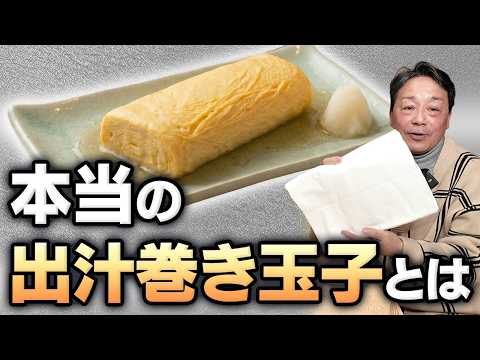
The Difference Between Dashimaki and Tamagoyaki | 50-Year Veteran Chef Explains the Essence of Dashimaki [Part 1]
Ingredients
- Eggs,to taste
- Dashi(made from kombu and bonito flakes, richer than clear soup), to taste
- Whitesoy sauce or light soy sauce, a small amount
- Vegetableoil (heated at 170°C/340°F for 7–8 minutes and cooled), to taste
- Grateddaikon radish, to taste
About "Dashimaki Tamago"
In the first part of this series, Toru Wada, a master chef with 50 years of experience in Japanese cuisine, explains the difference between Dashimaki Tamago and Tamagoyaki. He defines Dashimaki Tamago as an omelet wrapped around delicious dashi without any added sweetness. He shares three key professional secrets for the perfect finish: straining the eggs through a cotton cloth, preheating the oil to remove its raw odor, and infusing grated radish with excess dashi. This guide goes beyond a simple recipe to teach the fundamental philosophy of making authentic Dashimaki Tamago.
Tips for Making "Dashimaki Tamago"
-
Philosophy
- The essence of Dashimaki Tamago is to rely solely on the savory umami of delicious dashi, without adding any sweetness like mirin or sugar. The ideal result is an omelet so juicy that dashi seeps out from the edges.
-
Egg Prep
- Place a cotton cloth over a strainer, crack raw eggs into it, and squeeze firmly by hand to strain them about 3 times. This breaks down the egg fibers, allowing them to blend smoothly with the dashi for a fine texture.
-
Oil Prep
- Do not use raw vegetable oil straight from the bottle. Preheat it over low heat at around 170°C (340°F) for 7–8 minutes to remove its raw viscosity, then let it cool. This eliminates oily odors and enhances the aroma.
-
Dashi
- Generously use kombu and bonito flakes to brew a dashi that is richer than standard clear soup. Season only with white or light soy sauce, keeping it completely free of sweetness.
-
Grated Radish
- Instead of pouring soy sauce over grated radish, make authentic 'some-oroshi' by letting excess dashi from the pan drip onto grated radish that has been preheated in the microwave to remove its raw odor.
Ingredients for "Dashimaki Tamago"
5 items* Tap ingredient names to find on Amazon
How to Make "Dashimaki Tamago"
- 1
Heat vegetable oil over low heat at around 170°C (340°F) for 7–8 minutes to remove its raw viscosity, then let it cool.
- 2
Brew a rich dashi using kombu and bonito flakes (stronger than standard clear soup), and season only with white soy sauce or light soy sauce. Do not add any sweetness.
- 3
Place a cotton cloth (sarashi) over a strainer, crack the raw eggs into it, and squeeze firmly by hand to strain them about 3 times to break down the fibers of the whites and yolks.
- 4
Combine the strained eggs with the dashi.
- 5
Warm the grated daikon radish in a microwave or similar to remove its raw odor.
- 6
While rolling the omelet, let any excess dashi dripping from the pan fall onto the warmed grated radish to absorb it, creating authentic 'some-oroshi' (dashi-infused grated radish).
- 7
Serve the freshly cooked Dashimaki Tamago with the dashi-infused grated radish on the side.
Detailed Commentary on "Dashimaki Tamago"
* Content organized by topics from the video.
What is the Difference?
Toru Wada, a master chef with 50 years of experience in Japanese cuisine, begins by discussing the clear difference between Dashimaki Tamago and Tamagoyaki. When the interviewer, Asami, asks, 'My rough understanding is that Dashimaki has dashi in it, and Tamagoyaki doesn't...', the chef responds, 'While there is no fixed rule, there is a logical method that guarantees a delicious result.' Drawing from his decades of experience, he dives deep into the true essence of Dashimaki, offering insights that go far beyond a simple recipe.
The Essence: Wrapping with Dashi
The chef defines Dashimaki Tamago as wrapping and cooking eggs around delicious dashi. Because of this, he never adds any sweetness like mirin or sugar. His philosophy is to rely solely on the pure umami of the dashi. The ideal finish is an omelet so packed with dashi that the flavorful broth gently seeps out from the edges when cut. This is what truly defines authentic Dashimaki.
Straining Eggs with Cotton Cloth
To make a soft, dashi-rich omelet, the texture of the eggs must be extremely fine. To achieve this, the chef uses a 'sarashi' (cotton cloth). He places the cloth over a strainer, cracks the raw eggs into it, and squeezes them firmly by hand to strain them about three times. This process completely breaks down the fibers of the egg whites and yolks, allowing them to blend perfectly with the dashi. This extra step is the ultimate secret to achieving a silky-smooth texture.
The Truth About Grated Radish
While grated daikon radish served with Dashimaki is commonly topped with soy sauce, the chef points out that this is not the traditional way. Authentic 'some-oroshi' (infused radish) is made by letting the excess dashi that overflows from the pan during cooking drip onto warmed grated radish. The radish is preheated in a microwave to remove its raw odor, then infused with the rich dashi. Eating the omelet with this dashi-infused radish elevates the flavor to a whole new level.
The Importance of Preheated Oil
One detail many people overlook is the oil used for cooking the eggs. Using raw vegetable oil straight from the bottle leaves a distinct oily odor that interferes with the delicate aroma of the eggs and dashi. The chef's secret is to preheat the oil over low heat at around 170°C (340°F) for 7 to 8 minutes to break down its raw viscosity. Using this preheated and cooled oil eliminates unpleasant odors, allowing the natural, wonderful aroma of the Dashimaki to shine.
Crafting Ultra-Rich Dashi
Dashi is the lifeblood of Dashimaki. The chef generously uses kombu and bonito flakes to brew a dashi that is far richer than what you would drink as a clear soup. He seasons it only with white or light soy sauce, completely omitting any sweetness. His style is to maximize the dashi's flavor, creating an omelet so soft and juicy it almost falls apart on the plate. At the end of the video, he demonstrates how to strain the eggs using the cotton cloth, visually illustrating the importance of meticulous preparation.
About 大将に聞いてみた!
大将に聞いてみた!
2.1万人 subscribers ・ 日本料理・和食
* Opens YouTube channel
* Subscriber count is as of article creation and may differ from the current number.
