

Recipe
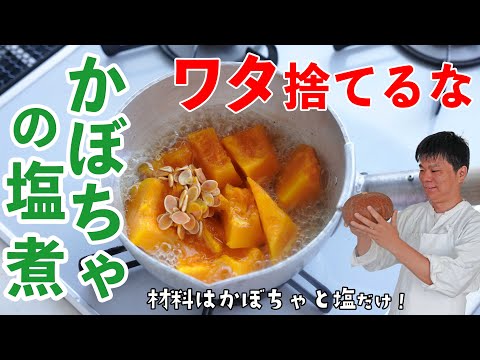
Simmer Kabocha with its Pulp and Salt! Naoya Higuchi Explains How to Make "Simmered Kabocha" #SaltSimmered #Recipe
Ingredients
- 300g–350gKabocha squash (approx. 1/4 squash, with seeds, pulp, and skin removed)
- 75ml Sake
- 125ml Water
- 1/3tsp Salt (2g)
About "Salt-Simmered Kabocha Squash"
This is a recipe for salt-simmered kabocha using standard kabocha squash. By cooking with only sake and salt—no sugar or soy sauce—it coaxes out the kabocha's natural, rich sweetness. Simmering it with the pulp (which is usually discarded) adds a natural thickness and umami. It is the perfect cooking method for modern, highly sweet kabocha squash.
Introduction to 樋口直哉の料理論[Cooking theory] →
Tips for Making "Salt-Simmered Kabocha Squash"
-
Prep
- Do not discard the kabocha pulp; gently scrape it out with a spoon and set it aside. The sweetest aroma and umami are concentrated around the pulp.
-
Prep
- Peel the skin in a striped pattern. This improves heat penetration and significantly enhances flavor absorption.
-
Heat control
- The softening temperature of kabocha is 91°C–92°C. Reduce the heat to low after boiling to maintain this temperature, preventing the pieces from breaking apart.
-
Cooking method
- Use a round-bottomed Yukihira saucepan. It promotes convection, efficiently distributing the simmering liquid throughout.
-
Cooking method
- Arrange the kabocha skin-side down with the yellow flesh facing up. Placing them skin-side up causes the sweet parts to dissolve.
Ingredients for "Salt-Simmered Kabocha Squash"
4 items* Tap ingredient names to find on Amazon
How to Make "Salt-Simmered Kabocha Squash"
- 1
Prepping the Kabocha
Use a spoon to scoop out the stem of the kabocha, then insert the tip of your knife into the hole. Use leverage to split it open and cut it into quarters. This method allows you to cut it safely without using excessive force.
- 2
Removing the Pulp
Gently scrape the pulp from the quartered kabocha using a spoon and set it aside. The area around the pulp has the sweetest aroma; adding this to the simmering liquid creates a natural thickness and rich umami.
- 3
Cutting Kabocha into Bite-Sized Pieces
Cut the deseeded kabocha into bite-sized pieces. Place your left hand on the spine of the knife and apply your body weight using leverage to cut safely without the blade slipping.
- 4
Peeling the Skin in Stripes
Peel the skin of the cut kabocha in patches to create a striped pattern. You can peel it while holding it, or place it on a cutting board and shave the skin from top to bottom. Moving the knife slightly back and forth as you cut will give the cut surfaces a clean, glossy finish.
- 5
Arranging Kabocha in the Pot
Arrange the kabocha in a single layer in an 18cm Yukihira saucepan so they do not overlap. It is crucial to place them skin-side down (yellow flesh facing up). If placed skin-side up, the sweet, delicious inner flesh will directly contact the simmering liquid and dissolve.
- 6
Adding Simmering Liquid and Pulp
Add 75 ml sake, 125 ml water, and 1/3 tsp (2g) salt to the pot, then place the reserved pulp on top. Simmering with the pulp adds a natural thickness and rich sweetness to the liquid.
- 7
Simmering (First Half)
Cover with a drop lid (aluminum foil works too) and bring to a boil over medium heat. A round-bottomed Yukihira saucepan promotes convection; the simmering liquid hits the drop lid and falls back down, efficiently distributing heat and flavor throughout.
- 8
Adjusting Heat and Simmering (Second Half)
Once boiling, reduce the heat to low. The softening temperature of kabocha is around 91°C–92°C (196°F–198°F). If the heat is too high and it keeps boiling vigorously, the pieces will bump into each other and break apart. Simmer on low for 10 minutes to maintain this softening temperature.
- 9
Checking Doneness
After 10 minutes, insert a bamboo skewer to check. If you still feel resistance in the center, simmer for another 5 minutes. If the skewer slides in effortlessly, the kabocha is perfectly cooked.
- 10
Plating and Finishing the Sauce
Gently plate the kabocha so it doesn't break. The seeds left in the pot are inedible, so remove them while squeezing the umami from the pulp into the liquid using a ladle. Pour the resulting glossy, golden, naturally thickened sauce generously over the kabocha.
Food Science
The pulp and area around the seeds of kabocha are rich in umami compounds, which infuse the entire dish when simmered together. Additionally, adding a small amount of salt triggers a 'sweetness contrast effect' that accentuates the kabocha's natural sweetness, maximizing its inherent flavor and umami without the need for sugar.
Detailed Commentary on "Salt-Simmered Kabocha Squash"
* Content organized by topics from the video.
Pro Techniques for Safely Cutting Whole Kabocha
Author and chef Naoya Higuchi introduces salt-simmered kabocha, a dish that coaxes out the absolute best of the ingredient's natural flavor. While kabocha is often sold in quarters at supermarkets, whole kabocha squash keeps incredibly well, so buying it whole and cutting it yourself is highly recommended. The trick to cutting a hard kabocha is to first scoop out the stem using a spoon. When inserting the knife, the golden rule is to 'move the blade from the softest part to the hardest part.' Insert the tip of the knife into the hollowed-out stem hole and use leverage to gradually split it open. This method allows you to safely cut it in half, and then into quarters, without needing excessive physical strength.
Don't Discard the Pulp—Turn It into Umami
The ingredients this time are incredibly simple: 300g–350g of kabocha squash (1/4 of a whole squash), 75 ml of sake, 125 ml of water, and 1/3 tsp (2g) of salt. Here, Higuchi focuses on the kabocha's pulp, which is usually thrown away. If you smell the kabocha, you will notice that the sweetest aroma actually concentrates around the pulp. This is easy to understand if you think of melons, which belong to the same family: the area around the seeds and pulp is always the sweetest and most fragrant. To utilize this wonderful aroma and umami in the dish, do not discard the pulp; gently scrape it out with a spoon and set it aside for simmering.
Bite-Sized Cutting and Striped Peeling
Next, cut the deseeded kabocha into bite-sized pieces. Once again, place your left hand on the spine of the knife and apply your body weight using leverage to cut safely without the blade slipping. The key for the skin of the cut kabocha is to peel it in patches, leaving some skin on to create a striped pattern. Peeling some of the skin improves heat penetration and significantly enhances flavor absorption. If you find it scary to peel the skin with a knife while holding it, you can place the kabocha on a cutting board and shave the skin from top to bottom. Moving the knife slightly back and forth as you cut will give the cut surfaces a clean, glossy finish.
Arranging Skin-Side Down and Simmering with Pulp
Arrange the kabocha in an 18cm Yukihira saucepan. It is crucial to arrange them in a single layer without overlapping. While traditional Japanese cooking theory often suggested simmering with the skin-side up, Higuchi recommends placing them skin-side down (yellow flesh facing up). If placed skin-side up, the sweet, delicious inner flesh directly contacts the simmering liquid and dissolves, so we prioritize flavor with this orientation. Add 75 ml of sake, 125 ml of water, and 1/3 tsp (2g) of salt to the pot, and finally place the reserved pulp on top. Simmering with the pulp adds a natural thickness and rich sweetness to the liquid. Place over medium heat, cover with a drop lid (aluminum foil works too), and bring to a boil.
The Best Pot for Simmering and Softening Science
While simmering, Higuchi explains two important cooking theories. The first is about 'the best pot for simmering.' A round-bottomed Yukihira saucepan easily creates convection in the simmering liquid; as the liquid hits the drop lid, it falls back down, efficiently distributing heat and flavor throughout. Flat pans do not create convection as easily, making round-bottomed pots far better suited for simmering. The second theory is the softening temperature. Every vegetable has a specific temperature at which it softens, and for kabocha, this is around 91°C–92°C (196°F–198°F). If the heat is too high and the liquid keeps boiling vigorously at 100°C (212°F), the kabocha pieces will bump into each other and break apart. Reducing the heat to low after boiling to maintain this softening temperature is the secret to a beautiful finish.
Checking with a Skewer and Finishing the Sauce
After 10 minutes on low heat, check the progress. Since kabocha contains a lot of moisture, it cooks thoroughly even with a small amount of liquid. Inserting a bamboo skewer reveals a bit of resistance in the center, so we decide to simmer for another 5 minutes (15 minutes in total). After another 5 minutes, the skewer slides in effortlessly, indicating it is perfectly cooked. Gently plate the kabocha so it doesn't break. Since the seeds left in the pot are inedible, remove them while using a ladle to squeeze the pulp's umami into the liquid. Pour the resulting glossy, golden, naturally thickened sauce generously over the kabocha.
Tasting and Why Salt-Simmering Fits Modern Times
Now, let's taste the finished salt-simmered kabocha. It is tender enough for chopsticks to slide right through, and upon tasting, a rich, natural sweetness fills your mouth—making it hard to believe no sugar or soy sauce was used. Traditional Japanese kabocha was watery and low in sugar, requiring a lot of sugar to simmer, but modern Western kabocha varieties are highly sweet, meaning simmering with just sake and salt highlights the ingredient's true flavor much better. If you have leftovers, simply mash them with a spatula and mix with mayonnaise to repurpose it into an exquisite kabocha salad. Simmering slowly in a pot allows more time for starches to break down into sugars compared to microwaving, fully maximizing the kabocha's sweetness.
About 樋口直哉の料理論[Cooking theory]
樋口直哉の料理論[Cooking theory]
7.9万人 subscribers ・ 家庭料理/調理科学
* Opens YouTube channel
* Subscriber count is as of article creation and may differ from the current number.
