

Recipe
[Michiba's Kelp Dishes] What is the Ultimate Way to Use Kelp? Rokusaburo Michiba's Home Cooking Recipe #147
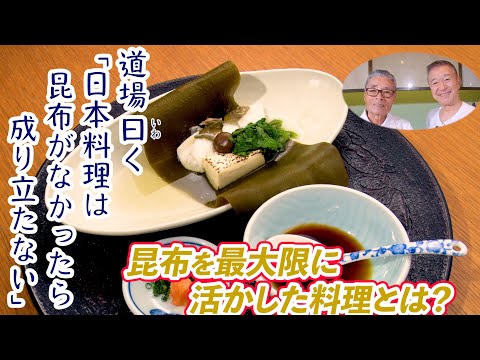
Ingredients
- Whitefish (flounder) approx. 400g
- Kelpto taste
- Saltapprox. 1 tsp (1.2–1.3% of the fish's weight)
- Sake1 tbsp
- Grilledtofu 1 block
- Shimejimushrooms approx. 100g
- Crowndaisy (shungiku) 1 bunch
- Bonitodashi approx. 500ml
- Salt(for dashi) 1/2 tsp
- Ponzuto taste
- Momijioroshi (grated daikon radish with chili) to taste
- Scallionsto taste
About "Matsumae-mushi (Kelp-Wrapped Steamed Fish)"
Matsumae-mushi, taught by Rokusaburo Michiba, is a traditional Japanese dish using kelp. White fish, salted and rinsed with sake, is wrapped in kelp and steamed together with grilled tofu, shimeji mushrooms, and crown daisy. Served with warm bonito dashi poured over it and enjoyed with refreshing ponzu, this exquisite dish allows the umami of the kelp to thoroughly penetrate all the ingredients.
Tips for Making "Matsumae-mushi (Kelp-Wrapped Steamed Fish)"
-
Prep
- Cut the white fish into bite-sized pieces, sprinkle with salt (1.2–1.3% of its weight), and let sit for 20 minutes to draw out excess moisture and odor. Rinsing it quickly with sake afterwards eliminates any fishy smell and helps the kelp's aroma penetrate.
-
Seasoning
- Prepare a mild dashi broth ('suiji shinmirime') by adding a pinch of salt to bonito dashi to adjust the salt concentration to about 1.2%. Pouring this warm broth over the steamed Matsumae-mushi creates a synergistic effect between the kelp and bonito.
-
Heat control
- Steam in a steamer for about 10 minutes. This allows the glutamic acid, the umami component of the kelp, to gradually penetrate all the ingredients.
-
How to eat
- After dipping the ingredients in ponzu, you can mix the remaining dashi on the plate with the ponzu to enjoy as 'dashi-wari.' The steamed kelp itself also becomes soft and can be eaten with ponzu.
Ingredients for "Matsumae-mushi (Kelp-Wrapped Steamed Fish)"
12 items* Tap ingredient names to find on Amazon
- Whitefish (flounder) approx. 400g
- Kelpto taste
- Saltapprox. 1 tsp (1.2–1.3% of the fish's weight)
- Sake1 tbsp
- Grilledtofu 1 block
- Shimejimushrooms approx. 100g
- Crowndaisy (shungiku) 1 bunch
- Bonitodashi approx. 500ml
- Salt(for dashi) 1/2 tsp
- Ponzuto taste
- Momijioroshi (grated daikon radish with chili) to taste
- Scallionsto taste
How to Make "Matsumae-mushi (Kelp-Wrapped Steamed Fish)"
- 1
Cut the white fish (flounder) into bite-sized pieces.
- 2
Sprinkle salt (1.2–1.3% of the fish's weight) over the fish and let it sit for about 20 minutes to draw out excess moisture and odor.
- 3
Quickly rinse the salted fish with sake to remove any remaining fishy odor.
- 4
Soak the kelp in water to soften it, then spread it out to prepare.
- 5
Place the prepared flounder on the kelp, then layer the grilled tofu, shimeji mushrooms, and quickly blanched crown daisy on top.
- 6
Gently wrap the ingredients with the kelp and secure the shape with a bamboo skewer or toothpick.
- 7
Place in a steamer and steam for about 10 minutes.
- 8
While steaming, add a pinch of salt to the bonito dashi to adjust the salt concentration to about 1.2%, creating a mild dashi broth ('suiji shinmirime').
- 9
Plate the steamed Matsumae-mushi and pour plenty of the warm bonito dashi over it.
- 10
Serve with Michiba's special ponzu on the side to complete the dish.
- 11
Remove the bamboo skewer, gently open the kelp, and dip the ingredients in the ponzu to enjoy.
- 12
After eating, mix the remaining exquisite dashi on the plate with the ponzu to drink as 'dashi-wari'.
Food Science
Salting draws out excess moisture and odor from the flounder, concentrating its umami. Additionally, combining the glutamic acid from the kelp, the inosinate from the flounder and bonito dashi, and the guanylate from the shimeji mushrooms creates an umami synergy. Finally, the acidity of the ponzu tightens the overall flavor, balancing the five basic tastes.
Detailed Commentary on "Matsumae-mushi (Kelp-Wrapped Steamed Fish)"
* Content organized by topics from the video.
Origin of Matsumae-mushi and History of Kelp
This time, Rokusaburo Michiba showcases Matsumae-mushi, a traditional home-cooked dish that maximizes the umami of kelp. In front of guest chef Tsutomu Ochiai, Michiba begins by explaining the origin of the word 'Matsumae.' 'Matsumae' refers to the former Matsumae Domain, which is present-day Hokkaido. During the Edo period, kelp, a famous product of Hokkaido, was transported nationwide via the Sea of Japan by Kitamaebune ships. As a result, in the world of Japanese cuisine, dishes using kelp came to be called 'Matsumae.' Today, we will use this historic kelp to wrap white fish and vegetables, steam them, and enjoy them with a refreshing special ponzu—a simple yet profound dish.
Prepping the Seasonal White Fish 'Flounder'
For Matsumae-mushi, it is best to choose a white fish that matches the season. According to Michiba, fish like seabass are incredibly delicious in the summer, but today we are using fresh, easily accessible flounder. First, cut the flounder into bite-sized pieces. Next, sprinkle salt (1.2% to 1.3% of the fish's weight) and let it sit for about 20 minutes to draw out excess moisture and odor. Once time is up, Michiba's signature step is to quickly rinse the flounder with sake. This extra step completely eliminates any fishy odor, allowing the delicate aroma and umami of the kelp to deeply penetrate the fish when steamed.
Traditional Kelp-Wrapping and Ingredient Pairing
Once the preparation is complete, it is time to wrap the ingredients. We use kelp that has been soaked in water to soften slightly. Spread out the kelp and place the prepared flounder on top. Then, layer the fragrant, lightly charred grilled tofu, shimeji mushrooms for a textural accent, and brightly colored, quickly blanched crown daisy in a balanced manner. Gently wrap these ingredients in the kelp and secure them with a bamboo skewer (or toothpick) so they do not fall apart. Place them in a steamer (or combi-steamer oven) and steam thoroughly for about 10 minutes. Steaming allows the glutamic acid, the umami component of the kelp, to gradually penetrate all the ingredients.
Steaming and Finishing the Mild Dashi Broth
While waiting for the dish to steam, prepare the dashi broth that will elevate the flavors. This broth, which Michiba calls 'suiji shinmirime' (mild dashi broth), is made by adding a pinch of salt to carefully brewed bonito dashi, adjusting the salt concentration to about 1.2%. This exquisite seasoning aims for the synergistic effect of 'kelp and bonito,' the foundation of Japanese cuisine. Plate the piping hot Matsumae-mushi straight from the steamer, and pour plenty of this warm dashi over it. The dashi pooling at the bottom of the plate also contains the umami released from the ingredients during steaming, making it an exquisite soup in its own right. Serve with Michiba's special ponzu to complete the dish.
Tasting: A Blissful Moment of Dashi and Ponzu
The completed Matsumae-mushi is tasted by Chef Tsutomu Ochiai and a female guest. When the bamboo skewer is removed and the kelp is gently opened, a rich ocean aroma rises with the steam, revealing the beautifully steamed flounder, grilled tofu, and crown daisy. First, dip the ingredients into the special ponzu and eat. Taking a bite, Chef Ochiai praises it highly, saying, 'It's so comforting. Eating something like this makes me truly feel glad to be Japanese.' Michiba also suggests a way to enjoy the dish after eating: mixing the remaining exquisite dashi on the plate with the ponzu to drink as dashi-wari. The dashi, concentrated with the umami of the ingredients, is so delicious you will want to drink every last drop.
The Flavor of Kelp and Its Role in Japanese Food
After enjoying the ingredients, Michiba takes out kitchen shears and cuts up the kelp that was used to wrap the ingredients. This kelp has become extremely soft from steaming and can be eaten as is by dipping it in ponzu. At his restaurant, many customers apparently tear and eat this kelp completely on their own. Finally, Michiba reflects deeply, saying, 'Japanese cuisine cannot exist without kelp.' Kelp is truly the lifeblood of Japanese food, used not only to make dashi but also to wrap ingredients to transfer its umami, and even to be eaten deliciously itself. This introduction of a wonderful home-cooked dish highlights the craftsman's dedication and the power of the ingredients precisely because of its simplicity.
About 鉄人の台所

鉄人の台所
21.2万人 subscribers ・ 和食・家庭料理
* Opens YouTube channel
* Subscriber count is as of article creation and may differ from the current number.
