

Recipe
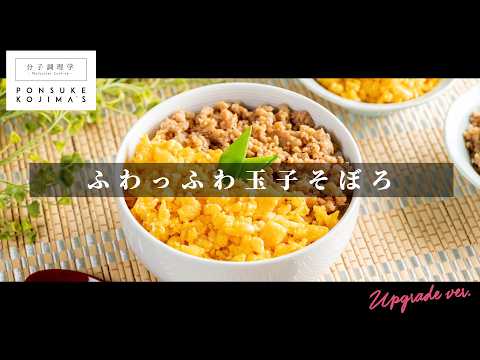
Over 100 Reviews! The Fluffiest Egg Soboro (Scrambled Egg Flakes) Ever
Ingredients
- 5eggs
- 2tbsp sugar
- 2tbsp mirin
- 2tbsp shiro-dashi (can be substituted with tsuyu/noodle soup base)
About "Egg Soboro"
A recipe for Egg Soboro made by placing 5 eggs and seasonings in a cold pan, then gently gathering and heating them over medium-low heat using a spatula. By minimizing protein coagulation and retaining moisture, this method yields the fluffiest, juiciest texture ever instead of dry, crumbly eggs. Turn off the heat when the sound changes, and break it up using residual heat to finish.
Introduction to こじまぽん助【分子調理学研究家】 →
Video Timestamps
Tips for Making "Egg Soboro"
-
Prep
- Mixing the eggs and seasonings in a cold pan first allows the eggs to fully absorb the moisture. Using shiro-dashi preserves the natural yellow color of the eggs for a beautiful presentation.
-
Heat Control
- Cook over medium-low heat. Use a heat-resistant spatula instead of chopsticks to gently scrape and gather the setting eggs to the center. This prevents excess moisture loss and keeps them fluffy.
-
Timing
- Turn off the heat the moment the sound of the pan changes from a wet 'squish' to a light 'clack'. Further heating causes proteins to shrink rapidly, squeezing out moisture and making the eggs dry.
-
Finishing
- After turning off the heat, gently break up the egg mass using the pan's residual heat. Keep slightly coarse clumps (just under 1 cm) to retain maximum juiciness.
-
Science
- Egg proteins coagulate around 60°C (140°F). Gently cooking at a low temperature keeps them soft and moist. High heat causes rapid protein shrinkage, squeezing out water and dehydrating the eggs.
Ingredients for "Egg Soboro"
4 items* Tap ingredient names to find on Amazon
How to Make "Egg Soboro"
- 1
Crack 5 eggs into a cold frying pan before turning on the heat.
- 2
Add 2 tbsp each of sugar, mirin, and shiro-dashi.
- 3
Before heating, mix the eggs and seasonings well with a spatula so the eggs thoroughly absorb the moisture from the seasonings.
- 4
Turn on the heat to medium-low.
- 5
Using a heat-resistant spatula, gently scrape the eggs that start to set on the bottom and edges of the pan, gathering them toward the center.
- 6
Turn off the heat the exact moment the sound of moving the pan changes from a wet 'squish' to a light 'clack'.
- 7
Using the residual heat of the pan, gently break up the egg clumps into fine pieces with the spatula.
- 8
Once broken down to a point where slightly coarse clumps (just under 1 cm) remain, it is done. Serve over rice along with chicken soboro.
Food Science
Mixing the seasonings with the eggs before heating controls moisture levels, preventing rapid dehydration during cooking. Additionally, heating over medium-low heat and finishing with residual heat once coagulation begins prevents over-coagulation of the egg proteins. This results in an extremely soft, fluffy texture that holds moisture gently without turning tough.
Detailed Commentary on "Egg Soboro"
* Content organized by topics from the video.
3 Key Tips to Master Egg Soboro
Hello, I'm Kojimaponsuke. Today, I'll show you how to make Egg Soboro, which is perfect to pair with the Chicken Soboro we introduced last week. Actually, the cooking method for chicken soboro and egg soboro is exactly the same. Once you master one, you can make both perfectly. Today, I will share three key tips to make your egg soboro incredibly fluffy and juicy. First, 'put everything in the pan first.' Second, 'heat while gathering'—simply put, gathering the eggs with a spatula. And third, 'break it up at the very end.' The second and third tips are the core secrets to dramatically changing the texture of your egg soboro, so please pay close attention. If you've struggled with dry, crumbly eggs in the past, this method will solve all your problems.
Why Put All Ingredients in a Cold Pan First
The first tip is to 'put everything in the pan first.' Crack 5 eggs into a cold frying pan before turning on the heat. Then, add 2 tbsp each of sugar, mirin, and shiro-dashi as seasonings. If you don't have shiro-dashi, you can substitute it with tsuyu (noodle soup base), but tsuyu will turn the final dish slightly brown. Shiro-dashi preserves the beautiful, natural yellow color of the eggs, so I highly recommend it if you want a gorgeous presentation. Once all ingredients are in, whisk the eggs before heating. This step is crucial because you aren't just mixing them; you are allowing the eggs to fully absorb the moisture from the seasonings. That is why it's best to combine everything first and then mix, rather than beating the eggs before adding the seasonings.
Benefits of Gathering Eggs with a Spatula
The second tip is to 'heat while gathering.' Now we turn on the heat, setting it to medium-low. If you are experienced, you can use high heat, but since temperature control of the eggs is key, medium-low is highly recommended to prevent mistakes. The biggest secret here is to use a spatula instead of cooking chopsticks. While cookbooks often suggest stirring rapidly with several chopsticks, using a heat-resistant spatula to gently scrape the setting eggs from the bottom and edges of the pan and gather them in the center works much better. By heating while gathering, you form a large, soft scrambled egg-like mass. This method prevents excess moisture from escaping, resulting in an incredibly fluffy and juicy finish.
The Science of How Eggs Coagulate
Let's look at why heating at a low temperature while gathering makes the eggs so fluffy from the perspective of molecular cooking science. The proteins abundant in eggs normally have a linear structure. When heated to around 60°C (140°F), they undergo thermal coagulation (denaturation) and begin to solidify. This solidification means the linear proteins tightly cluster and condense. Home stoves can reach up to 250°C (480°F), but heating rapidly at such high temperatures causes the proteins to shrink aggressively. This squeezes out all the trapped moisture, much like wringing out a sponge, resulting in dry, crumbly eggs. By gently coagulating them at a low temperature around 60°C, the eggs retain their moisture and stay incredibly soft.
Heat Control and How to Finish the Eggs
The third tip is to 'break it up at the very end.' If you try to break the eggs into fine pieces from the start, the surface area increases, causing rapid moisture evaporation and dryness. Therefore, you should first cook them into a large, scrambled egg-like mass. As you move the pan, the initial wet 'squish' sound will gradually change to a lighter 'clack' sound. The moment this sound changes is the perfect time to turn off the heat. Heating any further will cause over-dehydration, so turn off the heat completely here. After turning off the heat, use the residual heat of the pan to gently break up the egg mass with the spatula. You can adjust the fineness to your liking, but breaking them too finely loses the juiciness. Keeping slightly coarse clumps of just under 1 cm offers the best balance of texture.
Perfect Egg Soboro and Egg Recipe Showcase
Once gently broken up, the fluffiest and juiciest egg soboro ever is complete! Serve it over rice alongside chicken soboro to create a vibrant, beautiful two-color rice bowl (Sanshoku Don). One bite, and you'll be amazed by its incredible tenderness and juiciness. In the second half of the video, we feature an 'Egg Recipe Showcase' with four recipes to expand your egg repertoire: 'Almost No-Roll Tamagoyaki' which turns out fluffy with only 1.5 rolls, 'Divine Tamago Kake Gohan' made dramatically better with a simple trick, 'Divine Fried Egg Rice Bowl' using clever techniques, and 'Kansai-Style Crab Omelet (Kanitama)' that anyone can make like a pro by following the video. These are all simple and delicious recipes, so please try them along with the egg soboro in your daily meals!
About こじまぽん助【分子調理学研究家】
こじまぽん助【分子調理学研究家】
15.6万人 subscribers ・ 家庭料理
* Opens YouTube channel
* Subscriber count is as of article creation and may differ from the current number.
