

Recipe
Better than Store-Bought! How to Make 70 Servings of Homemade Miso Balls (Freezer-Friendly)
Ingredients
- Miso:650g
- Hondashi(grilled flying fish dashi) sticks: 7
- Driedwakame seaweed: 20g
- Driedburdock root: 20g
- Driedfreeze-dried tofu (Koya-dofu, 1/40 bite-size cut): 30g
- Shreddedkelp (tororo konbu): 20g
- Groundwhite sesame seeds: 40g
- Sakelees (sake kasu, optional): 100g
- Hotwater (per serving): 180ml
About "Homemade Miso Balls (Miso Dama)"
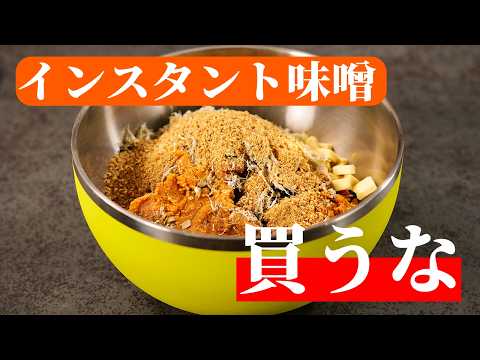
This is a bulk-prep recipe for homemade miso balls to replace store-bought instant miso soup. By mixing 650g of miso with dashi powder, dried wakame seaweed, freeze-dried tofu (Koya-dofu), shredded kelp (tororo konbu), ground sesame seeds, and sake lees (sake kasu), you can prep about 70 servings at once. They can be stored in the freezer and prepared simply by adding hot water, making them perfect for busy mornings. It's a gut-healthy recipe that makes it easy to get fermented foods and dietary fiber.
Introduction to 家族のための男飯🐒もんきち →
Tips for Making "Homemade Miso Balls (Miso Dama)"
-
Ingredients
- Using plenty of dried ingredients creates a hearty, filling soup when hot water is added.
-
Sodium Control
- When using ingredients that contain salt, like shredded kelp, be mindful of the overall sodium level.
-
Freezer Storage
- Miso does not freeze solid, so you can easily scoop it out with a spoon straight from the freezer.
-
Portioning Method
- Using a 10cc cookie scoop lets you easily portion out one serving without measuring spoons.
-
Rehydration
- Waiting 2-3 minutes for the dried ingredients to rehydrate allows you to prep other dishes in the meantime.
Ingredients for "Homemade Miso Balls (Miso Dama)"
9 items* Tap ingredient names to find on Amazon
How to Make "Homemade Miso Balls (Miso Dama)"
- 1
Mix the miso and dried wakame
Put 650g of miso in a bowl and add all 7 sticks of flying fish dashi powder. Then, add 20g of dried wakame seaweed straight from the bag.
- 2
Tear and add the shredded kelp
Tear 20g of shredded kelp (tororo konbu) into small pieces with your hands as you add it. It is important to break it up, as adding it whole makes it too long and difficult to eat.
- 3
Add the other dried ingredients
Add 30g of bite-sized freeze-dried tofu (Koya-dofu) and 20g of dried burdock root. These dried ingredients will absorb the hot water to create a hearty, filling soup.
- 4
Add ground sesame and sake lees
Add 40g of ground sesame seeds to enhance the aroma and richness. Optionally, add 100g of sake lees (sake kasu) to boost the nutritional value and warm your body. Since sake lees can cause bloating if you aren't used to it, beginners can start with a small amount or omit it entirely.
- 5
Mix everything thoroughly
Using a spatula or gloved hands, mix thoroughly until all the ingredients are evenly combined.
- 6
Store in a container
Transfer the mixed miso paste into an enamel container, airtight container, or Ziploc bag. Store it in either the freezer or refrigerator.
- 7
Scoop the miso paste into a bowl
Use a 10cc cookie scoop (disher) to scoop the miso paste and drop it into a soup bowl. This lets you easily portion out exactly one serving (2 tsp) without needing measuring spoons.
- 8
Pour hot water to finish
Pour 180ml of boiling hot water over the miso paste in the bowl. Wait 2 to 3 minutes for the dried ingredients to rehydrate.
Food Science
When the glutamic acid found in miso and shredded kelp combines with the inosinic acid in the flying fish dashi, a synergistic umami effect occurs, creating a much stronger and deeper flavor than any single ingredient could provide. Additionally, the richness of the sake lees and the earthy, nutty flavors of the burdock root and sesame seeds balance the saltiness and sweetness of the miso, rounding out the five basic tastes and adding incredible depth to the soup.
Detailed Commentary on "Homemade Miso Balls (Miso Dama)"
* Content organized by topics from the video.
The Appeal of Homemade Miso Balls & Blending
We will show you how to make homemade miso balls so you can enjoy a nutritious bowl of miso soup on busy mornings just by adding hot water. While traditional miso balls are rolled individually, this method is much easier: simply mix everything together and store it in the freezer. You can blend any leftover miso you have in your fridge. In the video, we found over 10 types of miso sleeping in the fridge, including red miso, white miso, and standard light-colored miso. Since white miso is quite sweet, it is best used by those familiar with its flavor, but generally, blending any types of miso will yield delicious results. This recipe is also a fantastic way to use up leftover miso.
Choosing Ingredients & Managing Sodium
There are no strict rules for the ingredient ratios in your miso balls. You can freely mix in your favorite ingredients, but there is one important thing to keep in mind: sodium content. For example, the shredded kelp (tororo konbu) used in this recipe contains salt. Additionally, some dashi powders contain added salt while others are sodium-free, so it is crucial to be mindful of the overall salt concentration. The sodium level of miso itself varies by product—ranging from about 10% for low-sodium varieties to 12% for stronger ones—but this won't make a massive difference in the final miso balls, so feel free to use whatever you prefer.
Freezing Miso Balls & Recommended Containers
We highly recommend storing your miso balls in the freezer. Miso actually has a unique property where it does not freeze solid, even when kept in the freezer. This means you can scoop it out with a spoon immediately after taking it out. An enamel container designed for storing miso is highly convenient, as you can mix the miso and ingredients directly inside it. If you don't have an enamel container, you can mix everything in a bowl first and then portion it into airtight containers or Ziploc bags. Choose whether to store it in the fridge or freezer based on your lifestyle and how often you use it.
The Golden Ratio Recipe for 70 Servings
This time, we will prep about 70 servings at once, scaled to a standard 650g tub of miso. Put 650g of miso into a bowl, and add one full package of Hondashi (flying fish dashi powder) (7 sticks, 56g total). Next, add 20g of dried wakame seaweed straight from the bag. Since 20g of shredded kelp (tororo konbu) can be long and difficult to eat as-is, tear it into small pieces with your hands as you add it. Then, add 30g of bite-sized freeze-dried tofu (Koya-dofu) and 20g of dried burdock root. Using plenty of dried ingredients like this ensures a hearty, ingredient-rich miso soup once hot water is added.
Nutrient-Rich Secret Ingredients
Now, we will add some special ingredients to elevate the flavor and nutritional value. First is 40g of ground sesame seeds. Adding ground sesame to miso soup dramatically improves the aroma and deepens the richness, so it is highly recommended. Next, we will optionally add 100g of health-boosting sake lees (sake kasu). Sake lees warm the body and are packed with nutrients, but since they can cause bloating if you aren't used to them, beginners can start with a small amount or skip them entirely. Once all ingredients are in the bowl, mix thoroughly with a spatula or gloved hands until completely uniform.
Using a Cookie Scoop & Taste Test
When making miso soup, the ideal amount of miso per serving is 2 tsp (about 10cc). Here, we introduce a revolutionary idea: using a 10cc cookie scoop (ice cream disher). Simply scoop the miso paste with the disher and drop it into your bowl to instantly portion out one serving without messing with measuring spoons. Add 180ml of boiling hot water to the bowl. The trick is to wait 2 to 3 minutes for the dried ingredients to fully rehydrate; you can use this time efficiently to scoop your rice or prep other side dishes. Tasting it, the occasional pleasant crunch of the burdock root is delightful, making for an exquisite bowl of miso soup that brings pure bliss to your morning routine.
About 家族のための男飯🐒もんきち

家族のための男飯🐒もんきち
32.3万人 subscribers ・ 家庭料理/腸活レシピ
* Opens YouTube channel
* Subscriber count is as of article creation and may differ from the current number.
