

Recipe
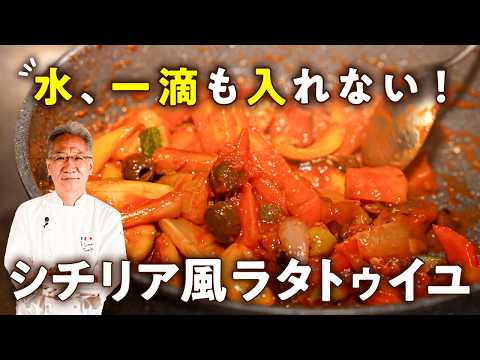
[No Water Added! Pure Bliss in One Bite] Chef's Soul! Sicilian Caponata (Ratatouille) by Renowned Chef Yahei Suzuki of Piatto Suzuki | #kurashiru #ChefRecipes
Ingredients
- Garlic(crushed) 12g
- Extravirgin olive oil 30g
- Carrot(cut into wedges) 120g
- Redonion (cut into wedges) 120g
- Eggplant(cut into wedges) 160g
- Celery(destringed and cut into bite-sized pieces) 160g
- Zucchini120g
- Redbell pepper (cut into wedges) 60g
- Yellowbell pepper (cut into wedges) 60g
- Anchovyfillets 12g
- Saltedcapers (desalted) 30g
- Greenolives 40g
- Redwine vinegar 6g
- Cannedwhole tomatoes 360g
- EVolive oil (for finishing) 15g
- Saltto taste (used each time a vegetable is added)
- Basil(for garnish) to taste
About "Sicilian Caponata (Ratatouille)"
Chef Yahei Suzuki of the renowned Italian restaurant 'Piatto Suzuki' in Azabu-Juban, Tokyo, shares his recipe for water-free Sicilian Caponata. The key feature of this dish is cooking various summer vegetables—such as eggplant, zucchini, bell peppers, and carrots—in order of cooking time to preserve their individual textures while concentrating their flavors. Seasoned deeply with anchovies, salted capers, and green olives, it is simmered with canned whole tomatoes and red wine vinegar. Delicious even when cold, this versatile make-ahead dish can also be used as a pasta sauce or a topping for meat and fish.
Introduction to Kurashiru [クラシル] →
Tips for Making "Sicilian Caponata (Ratatouille)"
-
Prep
- Rinse the salted capers quickly and soak them for 1 to 2 hours. Do not remove all the salt; leave enough saltiness to act as a seasoning.
-
Prep
- Place the zucchini in a bowl and sprinkle with salt directly to let it sweat slightly before adding it to the pan.
-
Prep
- Carefully remove the inner ribs and seeds of the bell peppers before cutting them into wedges to prevent the skins from peeling and the texture from becoming mushy.
-
Heat control
- Tilt the pan to pool the oil at the edge, and slowly transfer the garlic aroma to the oil over low heat as if shallow-frying it.
-
Heat control
- Cover and steam-cook the carrots over low heat to draw out their sweetness and flavor using their own moisture. Do not add any water.
-
Heat control
- Sauté the eggplant uncovered, letting it absorb the oil while evaporating its moisture to achieve a tender texture.
-
Heat control
- Always add the bell peppers later in the process, cover, and steam-cook briefly to preserve their vibrant color and crisp texture.
-
Heat control
- Once moisture is released from the vegetables, remove the lid and evaporate the water quickly over medium-high heat to concentrate the flavors.
-
Seasoning
- Sprinkle salt proportional to the amount of each vegetable every time you add a new one. Seasoning each ingredient individually ensures a more stable and balanced final flavor than salting everything at the end.
-
Seasoning
- Sauté the anchovies thoroughly in an empty space in the pan first to release their savory aroma before mixing them in; this prevents any fishy odor.
-
Seasoning
- Use crushed garlic to keep its aroma in a supporting role, allowing the vegetables to remain the stars of the caponata.
-
Reduction
- After adding the canned tomatoes, reduce the mixture thoroughly until it feels almost too thick. Since the vegetables will reabsorb moisture as they cool, reducing it well at this stage maintains the proper consistency even when cold.
-
Reduction
- Once the canned tomatoes are added, scrape up the flavorful browned bits stuck to the bottom and sides of the pan, dissolving them into the tomato juices.
-
Finishing
- Use red wine vinegar as a secret ingredient to tighten the overall flavor of the dish, rather than to make it sour.
-
Finishing
- Drizzle EV olive oil at the end for aroma, and garnish with fresh basil after plating.
Ingredients for "Sicilian Caponata (Ratatouille)"
17 items* Tap ingredient names to find on Amazon
- Garlic(crushed) 12g
- Extravirgin olive oil 30g
- Carrot(cut into wedges) 120g
- Redonion (cut into wedges) 120g
- Eggplant(cut into wedges) 160g
- Celery(destringed and cut into bite-sized pieces) 160g
- Zucchini120g
- Redbell pepper (cut into wedges) 60g
- Yellowbell pepper (cut into wedges) 60g
- Anchovyfillets 12g
- Saltedcapers (desalted) 30g
- Greenolives 40g
- Redwine vinegar 6g
- Cannedwhole tomatoes 360g
- EVolive oil (for finishing) 15g
- Saltto taste (used each time a vegetable is added)
- Basil(for garnish) to taste
How to Make "Sicilian Caponata (Ratatouille)"
- 1
Rinse the salted capers quickly, then soak them in water for 1 to 2 hours to desalt (do not remove all the salt; leave a moderate amount of saltiness).
- 2
Put 12g of crushed garlic and 30g of EV olive oil in a pan. Tilt the pan to pool the oil at the edge, and slowly infuse the oil with the garlic aroma over low heat as if shallow-frying it.
- 3
Once the oil starts to bubble, add 120g of wedged carrots, sprinkle with salt proportional to the amount of carrots, cover, and steam-cook over low heat (do not add any water).
- 4
Once the carrots are slightly cooked, add 120g of wedged red onion and sprinkle with salt.
- 5
Add 160g of wedged eggplant (the star of the caponata) and sprinkle with salt. Sauté the eggplant uncovered, letting it absorb the oil while evaporating its moisture.
- 6
Add 160g of destringed, bite-sized celery and sprinkle with salt. Sauté everything together thoroughly so that each vegetable gets a nice sear.
- 7
Place 120g of zucchini in a bowl, sprinkle with salt to let it sweat slightly, then add it to the pan and sauté everything together well.
- 8
Remove the inner ribs and seeds from 60g of red bell pepper and 60g of yellow bell pepper, cut them into wedges, and set them aside for now.
- 9
Once a large amount of moisture is released from the vegetables, remove the lid completely and evaporate the moisture quickly over medium-high heat.
- 10
Once the moisture has evaporated, add 12g of anchovy fillets to an empty space in the pan. Sauté them well on the side to release their savory aroma before mixing them into the rest of the ingredients.
- 11
Add 30g of desalted capers and 40g of green olives, and mix well.
- 12
Add the wedged red and yellow bell peppers, sprinkle with salt, cover, and steam-cook briefly to preserve their vibrant color and crisp texture.
- 13
Remove the lid, sauté again to evaporate any remaining moisture, then add 6g of red wine vinegar to tighten the overall flavor.
- 14
Pour in 360g of canned whole tomatoes. Simmer while scraping the bottom and sides of the pan to dissolve the flavorful browned bits into the tomato juices.
- 15
Simmer and reduce the mixture thoroughly until it feels almost too thick (as the vegetables will reabsorb moisture when cooling, it is important to reduce it well at this stage).
- 16
Drizzle 15g of EV olive oil over the top at the end for aroma.
- 17
Plate the dish and garnish with fresh basil to taste to complete.
Detailed Commentary on "Sicilian Caponata (Ratatouille)"
* Content organized by topics from the video.
Chef's Soul: Caponata with a Focus on Texture
Chef Yahei Suzuki of the long-established Italian restaurant 'Piatto Suzuki' in Azabu-Juban, Tokyo, teaches us how to make Sicilian Caponata that maximizes the flavor of vegetables without using any water. Caponata is a home-style dish originating from Sicily in southern Italy, featuring summer vegetables, primarily eggplant, simmered in tomatoes. While a typical home recipe might involve tossing all the vegetables into a pot to simmer together, this recipe showcases a professional 'chef's soul.' By deliberately staggering the cooking times for each vegetable and sautéing them slowly and carefully, we preserve their individual textures while achieving a perfect harmony in every bite. Experience this exquisite dish, simple yet packed with artisanal dedication, right in your own home.
Infusing Garlic Aroma and Steaming Carrots
We begin by building the aromatic base and cooking the vegetable that takes the longest to cook. Put 12g of crushed garlic and 30g of extra virgin olive oil in a pan, tilt it to pool the oil at the edge, and slowly infuse the oil with the garlic aroma over low heat as if shallow-frying it. While minced garlic would release too strong an aroma, we use crushed garlic here to keep it in a supporting role, ensuring the vegetables remain the stars of the caponata. Once the oil starts bubbling, add 120g of wedged carrots. Sprinkle with an appropriate amount of salt for the carrots, cover, and steam-cook over low heat. The first crucial point is to use absolutely no water, slowly drawing out the carrots' natural moisture to concentrate their sweetness and flavor.
Adding Red Onion and Eggplant: Seasoning in Steps
Once the carrots are slightly cooked, add 120g of wedged red onion. Red onions contain more moisture and are less pungent than regular white onions. After adding the onion, sprinkle with salt proportional to its amount. Chef Suzuki's signature technique is to season with salt every time a new vegetable is added. Rather than salting everything at the end, seasoning each ingredient individually ensures a consistent and well-balanced final flavor. Next, add 160g of wedged eggplant, the star of the caponata. Sprinkle with salt as well. Since eggplant contains a lot of water, sauté it uncovered rather than steaming it with a lid like the carrots and onions. This allows the eggplant to absorb the oil while evaporating its moisture, leading to an exquisitely tender texture.
Adding Celery and Zucchini for a Nice Sear
Next, add 160g of destringed, bite-sized celery. Don't forget to sprinkle with salt to season the celery as well. The goal of this step is not just to cook the vegetables, but to get a nice sear on them in the pan. Although the carrots and onions are already cooked and translucent, sautéing them further together creates a savory, browned exterior on each vegetable. Developing this deep, roasted aroma before simmering locks in rich depth and umami throughout the sauce. For the 120g of zucchini, we use a pale green variety favored by the restaurant's head chef, known for its high moisture content and tender texture. Before adding the zucchini to the pan, place it in a bowl and sprinkle with salt directly to let it sweat slightly.
Adding Bell Peppers and Evaporating Moisture
After adding the seasoned zucchini to the pan, sauté everything together thoroughly. Next, prepare 60g of red bell pepper and 60g of yellow bell pepper. To preserve their texture, carefully remove the inner ribs and seeds before cutting them into wedges. Adding the bell peppers too early would cause their skins to peel, colors to fade, and texture to become mushy, so adding them later is a professional secret. As you sauté, the vegetables will release a lot of moisture. At this point, remove the lid completely and evaporate the moisture quickly over medium-high heat. Removing this excess water concentrates the natural sweetness and umami of the vegetables in the pan, resulting in a rich, concentrated flavor without any wateriness.
Seasoning with Anchovies, Capers, and Olives
Once the moisture has evaporated, it's time for the main seasoning. First, add 12g of anchovy fillets. If you mix them in immediately, they can leave a fishy odor, so sauté them thoroughly in an empty space on the side of the pan to release their savory aroma before incorporating them. Next, add 30g of salted capers and 40g of green olives. The salted capers should be rinsed and soaked in water for 1 to 2 hours beforehand, but do not desalt them completely; leave some saltiness so they act as a seasoning. Finally, add the bell peppers, sprinkle with salt for them, cover, and steam-cook briefly. Steaming the bell peppers quickly at the very end keeps their colors vibrant and their texture crisp.
Perfect Thickness with Tomatoes and Vinegar
Once the bell peppers are lightly steamed, remove the lid and sauté again to evaporate any moisture. Add 6g of red wine vinegar. This is not to make the dish sour, but acts as a secret ingredient to tighten the overall flavor. Next, pour in 360g of canned whole tomatoes. Once added, use the moisture from the tomatoes to scrape up the flavorful browned bits stuck to the bottom and sides of the pan, dissolving them into the sauce. The reduction process from here is crucial; the chef's tip is to simmer and reduce it thoroughly until it feels almost too thick. Because the vegetables will absorb the moisture back as they cool, reducing it well at this stage ensures the perfect consistency is maintained even when cold. Finish by drizzling 15g of EV olive oil for aroma.
Tasting: A Harmonious Blend of Flavors
Beautifully plate the finished caponata and garnish with fresh basil to complete this Sicilian Caponata, packed with the concentrated flavor of summer vegetables. The restaurant's head chef, who did the tasting, smiled widely and exclaimed 'Delicious!' at the very first bite. He highly praised the perfect execution, noting that 'while the individual texture of each vegetable is preserved, they come together beautifully with the sauce as you chew.' When asked for a rating, the head chef playfully declared, 'Three stars!' bringing warm laughter to the kitchen. This caponata is excellent on its own, but also makes an outstanding pasta sauce or a topping for meat, fish, or Salisbury steak. Give it a try with your favorite vegetables!
About Kurashiru [クラシル]

Kurashiru [クラシル]
176万人 subscribers ・ 家庭料理/多ジャンル
* Opens YouTube channel
* Subscriber count is as of article creation and may differ from the current number.
