

Recipe
World's Top Gourmands Rave! The Flavor Explosion of Kusunoki's Famous 'Karasumi Tempura'
Ingredients
- Karasumi(bottarga), sliced to the thickness of about 4 sushi pieces
- Tempurabatter mix (low-gluten blend)
- Fryingoil
About "Karasumi (Bottarga) Tempura"
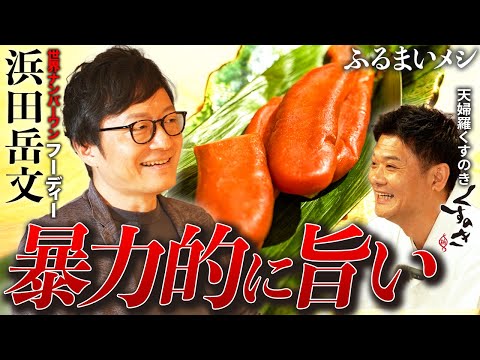
Kusunoki's signature Karasumi Tempura is a game-changing dish that takes umami-concentrated dried bottarga and deep-fries it to draw out the rich fats of the fish roe. Frying transfers some of the saltiness to the batter, mellowing out the sharp saltiness of the karasumi itself. Through precise moisture control and heat adjustment, it achieves a sublime flavor where a soft, yokan-like texture and juicy fats meld together perfectly.
Video Timestamps
Tips for Making "Karasumi (Bottarga) Tempura"
-
Ingredients
- Select karasumi with rich umami. High-quality ingredients are crucial since it is fried at a luxurious thickness equivalent to about 4 sushi pieces.
-
Moisture Control
- Frying removes moisture from the ingredient, concentrating its umami. As a style of tempura that avoids making you eat oil, the focus is on drawing out the natural flavor of the ingredient rather than relying on the taste of the oil.
-
Heat Control
- If the temperature is too low, moisture escapes and off-flavors emerge; if overcooked, it becomes oily. Control the temperature precisely so the rich fats of the karasumi are slowly coaxed out.
-
Salt Balance
- During the frying process, the fats of the fish roe transfer to the batter, and the saltiness also moves from the inside out. This mellows out the sharp saltiness of the karasumi itself.
-
How to Eat
- A single bite delivers an intense wave of umami, like being hit with a blunt object. It features a dense, soft texture like yokan and the juiciness of melted fats.
Ingredients for "Karasumi (Bottarga) Tempura"
3 items* Tap ingredient names to find on Amazon
How to Make "Karasumi (Bottarga) Tempura"
- 1
Preparing the Karasumi
Cut the karasumi to a luxurious thickness, equivalent to about 4 pieces of sushi topping. Select the highest quality karasumi packed with rich fats and umami.
- 2
Preparing the Batter
Prepare a batter with a precise blend that prevents excess gluten development. Keep it at a perfect thickness—neither too thin nor too thick—to prioritize bringing out the natural flavor of the karasumi.
- 3
Battering and Frying
Coat the karasumi in batter and place it in the oil. Control the moisture while frying, ensuring the temperature doesn't drop too low and it isn't overcooked. This slowly coaxes out the rich fats of the fish roe.
- 4
Finishing Touches
The fried karasumi achieves a dense, soft texture similar to yokan (sweet bean jelly). It is complete when the juicy, melted fats and the karasumi itself meld into a mellow, harmonious bite.
Food Science
During the drying and aging process, amino acids such as glutamic acid and other umami components become highly concentrated in karasumi. Heating it as tempura melts the lipids within, improving its melt-in-the-mouth texture and enhancing its aromatic compounds. Furthermore, because the tempura batter traps moisture, the interior undergoes a steaming effect, allowing the rich umami and deep flavor to fill the mouth.
Detailed Commentary on "Karasumi (Bottarga) Tempura"
* Content organized by topics from the video.
Frying Hadate Sea Urchin to Medium-Rare
This tempura features premium Hadate sea urchin from Shiribashijima, Hokkaido. A tiny bit of dusting flour is applied over a shiso leaf, which is then coated in a thin batter and fried. The key is to keep the temperature steady: turn off the heat the moment the sea urchin is placed in the oil, letting it fry gently using residual heat. If overcooked, the urchin turns oily; if the temperature is too low, moisture escapes and traps off-flavors, requiring exquisite control. Frying quickly flashes off only the outer moisture, leaving the center in a perfect medium-rare state at around 55°C (131°F). While sea urchin easily develops bitterness and off-flavors when heated, this method stops cooking right before those off-flavors emerge. The delicate batter—neither too thin nor too thick, and mixed to prevent excess gluten—draws out the natural, clean sweetness of the urchin, resulting in an astonishing finish where the raw flavor becomes even more concentrated.
The Logical Approach of Kusunoki Tempura
Gourmand Mr. Hamada describes Kusunoki as 'a restaurant that has reconstructed the very cooking method of tempura.' While chef Mr. Kusunoki may seem intuitive at first glance, his approach to cooking is highly logical, with a clear reason behind every single step. Mr. Kusunoki himself dislikes cooking 'by feel,' believing it is disrespectful to the ingredients. To avoid treating customers as test subjects, he believes dishes should be proudly served only after being thoroughly perfected as 'works of art.' Furthermore, Kusunoki's tempura is pursued as an 'art of moisture control.' In the past, when ingredients were of lower quality, tempura was partly about consuming the luxury of oil. Today, however, people are health-conscious and prefer to limit oil. Kusunoki focuses on 'tempura that doesn't make you eat oil,' concentrating on how to intensify the natural flavor of the ingredients themselves without relying on the taste of the oil.
The Umami Explosion of Karasumi Tempura
Kusunoki's signature Karasumi Tempura is a dish that Mr. Hamada praises as 'violently delicious' or simply 'violence.' Taking bottarga, which is already concentrated in umami from drying, and deep-frying it to concentrate the flavor even further is a game-changing technique. Mr. Kusunoki developed this dish after about four years of trial and error during a financially difficult period for his business. It is fried at a luxurious thickness equivalent to four pieces of sushi topping. Frying slowly coaxes out the rich fats of the fish roe, transferring its saltiness from the inside to the batter. This seasons the batter perfectly while mellowing out the sharp saltiness of the karasumi itself. Taking a bite delivers a massive punch of intense umami, like 'being hit on the head with a blunt object.' It offers a sublime flavor where a dense, yokan-like texture and juicy, melted fats meld into one.
Sweetfish: Yakibitashi and Tempura
Next is Ayu no Yakibitashi (sweetfish simmered in tea), a regional dish of Gifu. This is a dish Mr. Kusunoki learned from his first master, using sweetfish from the famous Wara River. Using bancha (coarse green tea), the catechins in the tea soften the bones. The process involves drawing the sweetfish's umami out into the tea, adding soy sauce, and letting the fish absorb it back in—a repetitive 'breathing' technique. The broth from this dish is saved to dip the subsequent Ayu Tempura in, creating a luxurious experience of 'eating sweetfish with sweetfish.' The golden rule for eating the tempura is to start from the tail; starting with the head allows the strong bitterness of the innards to overpower the palate. By lowering the temperature slightly and finishing with residual heat, even the head becomes soft enough to eat. Because tempura inherently incorporates a 'steaming' element within the frying process, it traps moisture inside the batter, making the flesh incredibly fluffy.
Tasting the Rare River Fish Chichiko
A dish called 'Age-daki-yaki' (fried, simmered, and grilled) featuring Chichiko (small rhinogobius, or young dark sleeper)—a rare river fish only caught in the Wara River at this time of year—is served. Locally, it is also known as 'Chichiko no Shinko.' This highly elaborate, traditional preparation involves deep-frying the chichiko, quickly simmering it with sansho pepper, and then grilling it to a fragrant finish. At about 6 to 7 cm in size, any larger and the bones would become noticeably hard. This specific size offers a unique fluffiness, a pleasant chewiness, and a springy texture. The bones are completely unnoticeable, and the concentrated umami characteristic of river fish fills the mouth. Even Mr. Hamada was surprised, admitting he 'didn't even know it existed,' making this a dish that directly conveys the wonderful flavors of river fish nurtured by Japan's pristine streams.
The Balance of Tradition and Innovation
After experiencing these traditional techniques, Mr. Hamada and Mr. Kusunoki engage in a deep conversation about the 'balance between tradition and innovation' in culinary arts. Japan possesses a rich culinary tradition, which is a massive advantage on a global scale. Having traveled the world, Mr. Hamada points out that very few countries have passed down their food culture in such a historically and culturally refined manner. Japan was highly blessed to have a period where wealth accumulated under a centralized state, allowing food to develop as a culture. While this strong tradition makes innovative challenges in Japanese cuisine extremely difficult, Kusunoki's approach is to thoroughly reflect on and re-examine the tradition of tempura, reconstructing it to fit modern needs. Their dialogue highlights the importance of finding innovation within tradition itself.
About くすのきチャンネル
くすのきチャンネル
3,270人 subscribers ・ 天ぷら/和食
* Opens YouTube channel
* Subscriber count is as of article creation and may differ from the current number.
