

Recipe
How to Choose Bonito Flakes & Make Basic Dashi: A Professional Guide! Arabushi vs. Karebushi | Naoya Higuchi

Ingredients
- 1liter water
- 15gkombu
- 15gthin-shaved bonito flakes
About "How to Make Basic Bonito Dashi (Katsuobushi Dashi)"
In this video, culinary expert Naoya Higuchi provides a professional guide to bonito flakes (katsuobushi) and dashi. He covers the production process, regional origins, differences between arabushi/karebushi and thin/thick flakes, and the pros and cons of dashi powder and dashi packs. He also explains the science of dashi strength, defined as "ingredient amount × temperature × time." Finally, he demonstrates how to make a versatile home-style dashi using 1 liter of water, 15g of kombu, and 15g of thin-shaved bonito flakes, making it easy for viewers to replicate at home.
Introduction to 樋口直哉の料理論[Cooking theory] →
Video Timestamps
Tips for Making "How to Make Basic Bonito Dashi (Katsuobushi Dashi)"
-
Ingredients
- Check the ingredient label on the back: 'Katsuo-kezuribushi' indicates arabushi, while 'Katsuo-karebushi-kezuribushi' or 'Katsuobushi-kezuribushi' indicates karebushi. Hana-katsuo is shaved arabushi.
-
Ingredients
- Flakes labeled 'chiai-nuki' (dark muscle removed) yield an exceptionally elegant dashi with reduced acidity.
-
Ingredients
- Thin-shaved flakes quickly yield an aromatic dashi, ideal for home miso soup or blended dashi. Thick-shaved flakes are best for slow-simmered noodle broths.
-
Ingredients
- Use premium pole-and-line caught flakes for special dishes like clear soups, and standard-catch flakes for everyday miso soup and simmered dishes.
-
Storage
- Once opened, bonito flakes oxidize quickly. Squeeze out the air and store in the fridge, or freeze for long-term storage.
-
Dashi Ratio
- Dashi strength depends on 'ingredient amount × temp × time.' Use 1–2% kombu and 1–3% bonito flakes relative to water. Exceeding this saturates the water, reducing efficiency.
-
Dashi Ratio
- A lower dashi concentration (1–2% bonito flakes) is preferred for miso soup, as overly strong dashi can overpower the natural aroma of the miso.
-
Prep
- Place water and kombu in a pot and let sit for 1 hour to rehydrate. If short on time, 15 minutes is fine, or leave in the fridge overnight.
-
Timing
- Add bonito flakes to the pot before heating (during the cold-soak stage) to efficiently extract flavor and aroma in a short time.
-
Heat & Skimming
- Heat over medium and carefully skim off any rising scum, which contains lipids from the flakes and causes cloudiness.
-
Timing
- Turn off the heat immediately once it reaches a full boil, then strain through a paper-towel-lined sieve. Remove the kombu first (it is still edible).
-
Squeezing
- For home cooking, feel free to squeeze the flakes firmly when straining to extract all the umami. Modern high-quality flakes won't become bitter or cloudy.
Ingredients for "How to Make Basic Bonito Dashi (Katsuobushi Dashi)"
3 items* Tap ingredient names to find on Amazon
How to Make "How to Make Basic Bonito Dashi (Katsuobushi Dashi)"
- 1
Place 1 liter of water and 15g of kombu in a pot, and let it sit for about 1 hour to rehydrate the kombu (if short on time, 15 minutes is fine, or you can leave it in the refrigerator overnight).
- 2
Once the kombu is rehydrated, add 15g of thin-shaved bonito flakes directly to the pot before turning on the heat.
- 3
Place over medium heat and carefully skim off any scum that rises to the surface.
- 4
Once the liquid comes to a full boil, turn off the heat immediately.
- 5
Remove the kombu first (it is still edible), then strain the dashi through a fine strainer lined with a paper towel. For home cooking, you can squeeze the bonito flakes firmly to extract all the umami.
Detailed Commentary on "How to Make Basic Bonito Dashi (Katsuobushi Dashi)"
* Content organized by topics from the video.
Bonito Flake Basics, Origins, and Fishing Methods
The 'fushi' in katsuobushi refers to bonito that has been headed, gutted, boiled, cooled, and then repeatedly smoked and dried (a process called 'baikan'). Shaved bonito flakes are made by shaving these dried blocks. The most famous production areas are Makurazaki and Ibusuki in Kagoshima Prefecture, and Yaizu in Shizuoka Prefecture, which together account for about 98% of domestic production. Most of the bonito used is caught near the equator in the Pacific Ocean and transported frozen. Fishing methods include standard purse seine netting and coastal pole-and-line fishing. Pole-and-line fishing is extremely rare and premium, accounting for only 1% to 2% of the total catch. Because pole-and-line caught bonito are not crushed or stressed in nets, they yield bonito flakes with less acidity and stronger umami. It is recommended to choose based on your needs: use premium pole-and-line flakes for special dishes like clear soups, and more affordable, standard-catch flakes for everyday miso soup and simmered dishes.
Male vs. Female Flakes & Storage Tips
Katsuobushi is divided into 'se-bushi' (male/back section) and 'hara-bushi' (female/belly section). Historically, taste differences between these parts were highly emphasized, but most bonito currently on the market (such as those from the South Pacific) are naturally low in fat, meaning there is little difference in fat content or taste between the back and belly. However, for fatty, coastal pole-and-line caught bonito, the differences do become noticeable. Since whole katsuobushi blocks are extremely hard and difficult to shave at home, commercially pre-shaved flakes are highly convenient. These packages are filled with nitrogen to maintain freshness, but once opened, they oxidize rapidly. To preserve their freshness, squeeze as much air out of the bag as possible and store it in the refrigerator. For long-term storage, keeping them in the freezer is the best trick.
Thin vs. Thick Flakes: Features & Uses
Shaved bonito flakes used for making dashi are mainly categorized into 'thin-shaved' (usu-giri) and 'thick-shaved' (atsu-giri). Thin-shaved flakes are shaved to under 0.2mm. Because of their large surface area, they release flavor quickly when added to hot water. The short extraction time prevents off-flavors and acidity, resulting in an elegant, highly aromatic dashi. On the other hand, thick-shaved flakes are shaved to 0.2mm or thicker (often over 1mm) and are commonly used for noodle broths like soba and udon. Thick flakes require simmering over a longer period to extract a rich, deeply savory dashi. While the long boiling time causes some aroma to evaporate, the flavor becomes highly concentrated with a robust body. For soba broth, which contains sweet mirin, the slight acidity extracted from thick flakes balances the flavor perfectly. Additionally, a milder bonito aroma allows the natural fragrance of the buckwheat noodles to shine, making thick flakes highly valued for this purpose.
Arabushi vs. Karebushi: Differences & Labels
Katsuobushi is classified into 'arabushi' and 'karebushi' based on the production process. Arabushi is made by boiling, smoking, and drying the bonito. It has a strong smoky aroma and yields a clean, light dashi. It is particularly favored in the Kansai region and is well-suited for ramen broths and miso soup. Karebushi is made by shaving the surface of arabushi and repeatedly applying a beneficial mold culture. The mold draws out moisture and breaks down proteins, significantly increasing amino acids (umami). It features an elegant aroma and deep umami, is favored in the Kanto region, and is perfect for clear soups (osuimono) and savory egg custards (chawanmushi). You can distinguish them by checking the ingredient label on the back of the package. If the product name is 'Katsuo-kezuribushi,' it is arabushi. If it says 'Katsuo-karebushi-kezuribushi' or 'Katsuobushi-kezuribushi,' it is karebushi. Additionally, 'Hana-katsuo' refers to shaved arabushi. Flakes labeled 'chiai-nuki' have had the dark, bloody muscle tissue removed, resulting in an exceptionally refined dashi with minimal acidity.
Pros & Cons of Dashi Powder and Dashi Packs
Dashi powder (granules) and dashi packs were developed for convenience. The biggest advantage of dashi powder is that it leaves no waste and dissolves instantly in hot water to provide quick umami. However, its weakness is a weak aroma, as the fragrance evaporates during manufacturing. Thus, it is best suited for simmered dishes where a strong aroma is not essential. Dashi packs, which have become popular recently, consist of finely crushed dashi ingredients packed into small non-woven fabric pouches. There are two types: those containing only natural ingredients and those with added seasonings. The main drawback of dashi packs lies in the small size of the bag. When the pouch is too small, the ingredients cannot circulate freely in the hot water, making it difficult to fully extract the flavors. Therefore, when choosing dashi packs, it is better to opt for larger pouches. In fact, since straining is not very difficult at home, adding thin-shaved bonito flakes directly to the pot is a much more efficient way to extract rich aroma and umami in a short time.
The Science of Dashi Strength and Ratios
Dashi strength is determined by the formula: 'amount of ingredients × temperature × time.' The standard ratio for kombu to water is 1% to 2%. For milder varieties like Hidaka or Rishiri, 1.5% or more is recommended, while 1% is sufficient for highly savory varieties like Ma-kombu or Rausu. The standard ratio for bonito flakes is 1% to 3%. Increasing the amount of bonito flakes beyond this point leads to saturation, making it difficult to extract further flavor. Soba shops serve highly concentrated dashi because they simmer it for a long time to concentrate the flavor, though this causes the aroma to escape. For miso soup, a dashi that is not overly concentrated is actually preferred. According to a 1987 research paper titled 'Characteristics of Miso Soup from a Culinary Perspective,' experiments showed that miso soup made with a lower concentration of dashi (around 1% to 2% bonito flakes) was the most preferred. This is because a milder dashi flavor harmonizes with the miso without overpowering its natural aroma. For a versatile, multi-purpose home dashi, using about 1% to 1.5% each of kombu and bonito flakes is the most practical ratio.
How to Make Basic Home Dashi Like a Pro
Here is how to make the most versatile '1.5 dashi' at home. The ingredients are 15g of kombu and 15g of thin-shaved bonito flakes per 1 liter of water. First, place the water and kombu in a pot and let it sit for about 1 hour to rehydrate (if you are in a hurry, 15 minutes is fine, or you can leave it in the fridge overnight). Once fully rehydrated, add the bonito flakes directly to the pot before turning on the heat. Place over medium heat and carefully skim off any scum (which contains lipids from the bonito flakes and causes cloudiness) that rises to the surface. Once it comes to a full boil, turn off the heat immediately and strain through a sieve lined with a paper towel. Remove the kombu beforehand (it is still edible). To answer the common question, 'Is it okay to squeeze the bonito flakes at the end?'—the answer is 'either is fine.' With today's high-quality bonito flakes, squeezing them will not cause cloudiness or bitterness. The rule against squeezing is a professional standard for delicate dishes like clear soups. For home cooking, feel free to squeeze them firmly to extract every last bit of umami.
About 樋口直哉の料理論[Cooking theory]
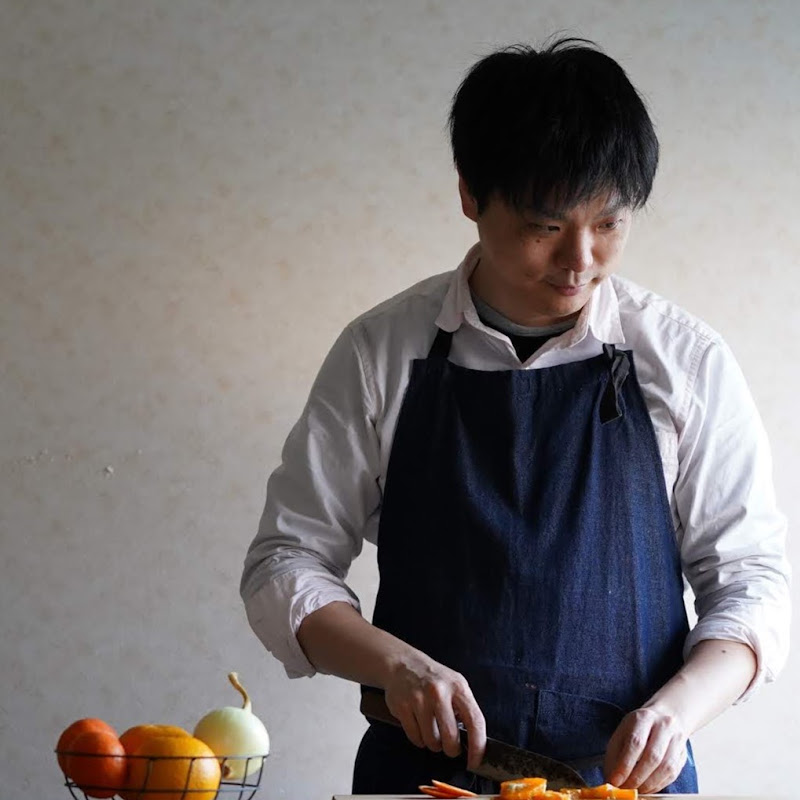
樋口直哉の料理論[Cooking theory]
7.9万人 subscribers ・ 家庭料理/調理科学
* Opens YouTube channel
* Subscriber count is as of article creation and may differ from the current number.
