

Recipe
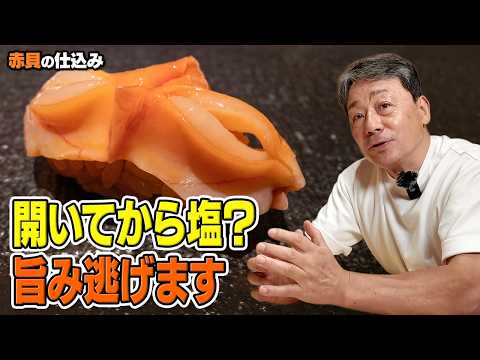
Do You Really Need Salt on Ark Shell? | Master Chef's Prep to Protect Aroma, Texture, and Umami
Ingredients
- Arkshell (such as Yuriage brand) to taste
- Salt(for removing slime from the outside) to taste
- Lightsaltwater (for final rinsing) to taste
About "Ark Shell Prep (Prep Method to Lock in Umami)"
Master chef Toru Wada, with 50 years of experience in Japanese cuisine, explains the prep method to protect the three most important elements of ark shell (Akagai): freshness, aroma, and texture. While the common method involves salting and rubbing the opened meat, Chef Wada argues that this causes moisture and umami to escape due to osmotic pressure. Instead, he salts only the outside while the shell is still in a round "ball" shape, opening it just before serving. He also discusses the deliciousness of ark shell liver, the brand value of Yuriage ark shells from Miyagi, and questions the practice of brushing soy sauce on sushi. The latter half of the video introduces the prep and organ utilization of premium kinki (channel rockfish).
Tips for Making "Ark Shell Prep (Prep Method to Lock in Umami)"
-
Prep
- While the ark shell is still in its round 'ball' shape after shucking, sprinkle salt on the outside and rub to remove unwanted slime. Do not butterfly the meat at this stage.
-
Prep
- After removing the slime, quickly rinse in light saltwater, wipe dry, and store in the refrigerator until evening.
-
Prep
- Butterfly the meat at the very last second before serving. Opening it too early weakens the shellfish, so handle it gently to avoid stress.
-
Salting
- Do not apply salt directly to the cut surfaces. If salt enters the cuts, osmotic pressure will cause moisture and umami to escape, making the meat shrink.
-
Finishing
- After butterflying the meat and removing the innards, gently rinse in thin saltwater to finish.
-
Ingredients
- Various qualities of ark shell are on the market, including Hontama, Bachitama, and frozen packs. Yuriage ark shells from Miyagi are known as the top brand in Toyosu.
-
Using Offal
- Ark shell liver is sweet and delicious before the spawning season. It can be eaten simply by removing the innards and washing in light saltwater.
-
Caution
- The chef does not recommend brushing soy sauce onto sushi, as the ark shell instantly reacts to the salt, shrinking and releasing its umami. The brush also absorbs the strong aroma, affecting other toppings.
-
Kinki Prep
- Choose Kinki that is thick-fleshed with pink gills. The liver can be drained of blood in saltwater, steamed, and seared for sushi. Belly fat adds rich flavor to simmering broth. The stomach can be blanched and sliced for a crunchy garnish.
Ingredients for "Ark Shell Prep (Prep Method to Lock in Umami)"
3 items* Tap ingredient names to find on Amazon
How to Make "Ark Shell Prep (Prep Method to Lock in Umami)"
- 1
Remove the ark shell from its shell. While it is still in a round 'ball' shape, sprinkle salt on the outside and rub to thoroughly remove the surface slime.
- 2
Quickly rinse the deslimed ark shell in light saltwater, then wipe it dry.
- 3
Store the wiped ark shell in the refrigerator and do not butterfly/open the meat until just before serving to customers.
- 4
At the very last second before serving, butterfly the meat with a knife for the first time and remove the innards.
- 5
After opening, gently rinse in light saltwater to finish and serve immediately. Do not apply salt directly to the cut surfaces.
- 6
(If using the liver) Before the spawning season, the liver can be eaten simply by removing the innards and rinsing in light saltwater.
Detailed Commentary on "Ark Shell Prep (Prep Method to Lock in Umami)"
* Content organized by topics from the video.
Three Secrets to Delicious Ark Shell
Master chef Toru Wada, with 50 years of experience in Japanese cuisine, speaks in depth about prepping ark shell. According to the chef, there are three indispensable points when handling ark shell: freshness, aroma, and texture. While choosing fresh shellfish is a given, enjoying the unique aroma and satisfying texture is the true pleasure of eating ark shell. To serve it without losing these three elements, the washing and salting methods during prep are extremely important. Based on his experience, the chef practices the optimal prep method and passionately explains how following this technique brings out 100% of the ark shell's natural appeal.
Why You Shouldn't Salt Butterflied Ark Shell
In common ark shell prep, the shucked meat is butterflied, the innards are removed, and then it is rubbed with salt. However, the chef questions this method. Ark shell has a sticky slime on its surface that causes unpleasant odors and tastes, so it must be rubbed with salt to be removed. However, if you apply salt to the freshly cut surfaces after butterflying, salt penetrates the meat. As a result, osmotic pressure causes moisture and umami to escape, causing the meat to shrink and lose its plumpness. The chef strongly insists that salt should never be applied directly to the cut surfaces to preserve the aroma and texture in their best state.
The Chef's Prep Method to Lock in Umami
The chef reveals his actual prep steps that minimize stress on the ark shell. First, while the ark shell is still in its round 'ball' shape, he sprinkles salt on the outside and rubs it to thoroughly wash away the unwanted slime. He then quickly rinses it in light saltwater, wipes it dry, and stores it in the refrigerator until evening. Only at the very last second before serving to customers does he butterfly the meat and remove the innards. Finally, by gently rinsing it in thin saltwater, he avoids putting unnecessary stress or excess salt on the ark shell, locking in the umami completely. Additionally, before the spawning season, the liver can be enjoyed simply by removing the innards and washing them in light saltwater.
The Chef's Stance on Brushing Soy Sauce
Upon tasting the ark shell prepped without salting the cut surfaces, the interviewer is amazed by its deliciousness, noting that the aroma and aftertaste still linger in the mouth. The chef explains that because no salt is applied to the cut, the ark shell's juices and umami do not escape and instead spread in the mouth. The conversation then shifts to the common sushi restaurant performance of brushing soy sauce onto sushi. When soy sauce is brushed on, the ark shell instantly reacts to the salt, shrinking and releasing its umami juices. Furthermore, the brush absorbs the strong aroma of the ark shell, which can transfer to other toppings. The chef shares his professional philosophy, stating, 'I don't like sushi that is brushed with soy sauce.'
Yuriage Ark Shells vs. Standard Varieties
The discussion covers the difference between cheap ark shells found in standard markets and those served at high-end restaurants. When the interviewer mentions seeing cheap ark shells soaked in liquid at Toyosu Market compared to the one they just ate, which costs over 1,000 yen each, the chef smiles wryly and explains the many varieties of ark shell. In the market, besides the genuine 'Hontama' (red ark shell), there are 'Bachitama' grown in different environments, as well as pre-opened frozen packs. The one used today is from Yuriage in Miyagi Prefecture, known as the top brand even in Toyosu. At specialty shellfish wholesalers, they are handled with extreme care, lined up beautifully, and their quality is in a league of their own.
Don't Waste It! The Appeal of Ark Shell Liver
The chef also speaks passionately about the deliciousness of ark shell liver. In fact, if you choose the right season, the liver is incredibly sweet and delicious enough to be the star of a dish. Having been raised with the mindset that 'ark shell liver must always be used in cooking' since his youth, the chef feels sad that liver is rarely served in modern restaurants. Although it is often discarded due to perceived risks or difficulty in handling, it offers a truly wonderful flavor when prepped correctly. The chef concludes the ark shell discussion by sharing his hope for the future of Japanese cuisine: 'One day, I want to prep a delicious dish using this liver and serve it to my customers.'
Prepping Premium Kinki and Using Its Organs
At the end of the video, the chef introduces a premium 'Kinki' (channel rockfish) he sourced. Caught by line in Hokkaido, it is a magnificent fish weighing about 800g and measuring over 30cm. The chef judges its freshness by choosing a thick-fleshed fish and checking if the gills are a beautiful pink. As a prep tip, he emphasizes that you must never throw away the organs. In particular, the large liver is exquisite when sliced, soaked in saltwater to drain blood, steamed, seared, and used as a sushi topping. Additionally, the clean fat inside the belly melts when simmered with the fish, creating an outstanding, flavorful broth. The stomach can also be blanched and sliced to enjoy as a crunchy garnish for sashimi.
About 大将に聞いてみた!
大将に聞いてみた!
2.1万人 subscribers ・ 日本料理・和食
* Opens YouTube channel
* Subscriber count is as of article creation and may differ from the current number.
