

Recipe
Edo Period Buddhist Vegetarian Cuisine: Recreating the Original Recipes
Ingredients
- Ma-kombu(Yamadashi kombu) to taste
- Sake(such as Edo-Genroku style undiluted sake) to taste
- Whiterice to taste
- Kiriboshidaikon (dried shredded radish) to taste
- Whitesesame seeds to taste
- Sansholeaves (kinome) to taste
- Whitemiso to taste
- Daikonradish to taste (cut into 6cm rounds)
- Driedshiitake mushrooms to taste
- Nama-fu(raw wheat gluten) to taste
- Soysauce to taste
- Saltto taste
- Chenpi(dried mandarin orange peel) to taste
- Cucumberto taste
- Chilipepper to taste
- Boiledbamboo shoots to taste
- Sesameoil to taste
- Grateddaikon radish to taste
- Tofuto taste
- Kyogi(thin wood shavings/sheets) to taste
- Walnutsto taste
- Whitesugar to taste
- Redmiso to taste
- Chisha(lettuce or sanchu) to taste
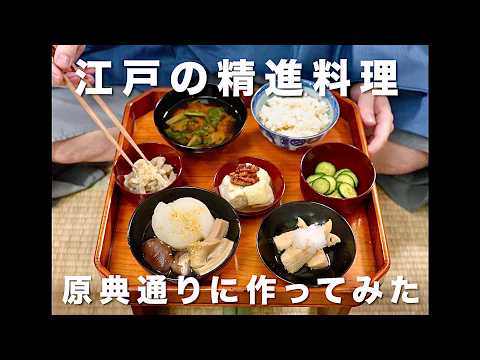
About "Edo Period Shojin Ryori (Kiriboshi Daikon with Nut & Seed Miso, Simmered Daikon & Shiitake, Lightly Pickled Cucumber, Pan-Fried Bamboo Shoots in Dashi, Pressed Tofu, and Miso Soup)"
This video faithfully recreates a Buddhist vegetarian (Shojin Ryori) menu from the 1819 historical text 'Shojin Kondai Shu'. While Shojin Ryori was originally meant for practicing monks, the recipes in this book were luxurious dishes designed to entertain the wealthy urban elite of the Edo period. Using a base dashi brewed from Ma-kombu and sake, we carefully prepare six dishes: Kiriboshi Daikon (dried shredded radish) with nut and seed miso, simmered daikon with shiitake and wheat gluten (nama-fu), lightly pickled cucumber, pan-fried bamboo shoots in dashi, pressed tofu, and miso soup. The generous use of sesame oil and chili peppers (influenced by Chinese Fucha cuisine), along with white sugar and soy sauce—which were highly expensive at the time—reveals the rich culinary culture of the Edo period.
Introduction to すいじば SUIJIBA →
Tips for Making "Edo Period Shojin Ryori (Kiriboshi Daikon with Nut & Seed Miso, Simmered Daikon & Shiitake, Lightly Pickled Cucumber, Pan-Fried Bamboo Shoots in Dashi, Pressed Tofu, and Miso Soup)"
-
Dashi
- Soak premium Ma-kombu in water, add Edo-Genroku style sake, and heat slowly to extract the dashi.
-
Kiriboshi Daikon
- After rehydrating the dried shredded radish, simmer it in dashi for about 10 minutes to retain its texture.
-
Nut & Seed Miso
- Grind white sesame seeds in a mortar, add sansho leaves, mix with white miso, and thin with the cooking liquid.
-
Daikon Prep
- Cut the daikon into exceptionally thick 6cm rounds, bevel the edges, and simmer in kombu dashi for 20 minutes.
-
Bamboo Shoots
- Pan-fry boiled bamboo shoots in sesame oil, pour dashi-soy sauce over them, and top with grated daikon.
-
Pressed Tofu
- Wrap tofu in thin wood sheets (kyogi) and bake at 250°C (480°F) for 30 minutes to dehydrate.
-
Walnut Prep
- Boil the walnuts, then carefully peel off the thin skins one by one using a toothpick (takes about 30 minutes).
-
Walnut Seasoning
- Simmer the peeled walnuts in sake, soy sauce, and white sugar until sweet and savory.
-
Miso Soup
- Blend white and red miso into dashi, add blanched chisha (lettuce), and finish with a sprinkle of chili pepper.
-
Cucumber Pickle
- Toss sliced cucumber with chili pepper and soy sauce for a spicy kick, showing Fucha Ryori's influence.
Ingredients for "Edo Period Shojin Ryori (Kiriboshi Daikon with Nut & Seed Miso, Simmered Daikon & Shiitake, Lightly Pickled Cucumber, Pan-Fried Bamboo Shoots in Dashi, Pressed Tofu, and Miso Soup)"
24 items* Tap ingredient names to find on Amazon
- Ma-kombu(Yamadashi kombu) to taste
- Sake(such as Edo-Genroku style undiluted sake) to taste
- Whiterice to taste
- Kiriboshidaikon (dried shredded radish) to taste
- Whitesesame seeds to taste
- Sansholeaves (kinome) to taste
- Whitemiso to taste
- Daikonradish to taste (cut into 6cm rounds)
- Driedshiitake mushrooms to taste
- Nama-fu(raw wheat gluten) to taste
- Soysauce to taste
- Saltto taste
- Chenpi(dried mandarin orange peel) to taste
- Cucumberto taste
- Chilipepper to taste
- Boiledbamboo shoots to taste
- Sesameoil to taste
- Grateddaikon radish to taste
- Tofuto taste
- Kyogi(thin wood shavings/sheets) to taste
- Walnutsto taste
- Whitesugar to taste
- Redmiso to taste
- Chisha(lettuce or sanchu) to taste
How to Make "Edo Period Shojin Ryori (Kiriboshi Daikon with Nut & Seed Miso, Simmered Daikon & Shiitake, Lightly Pickled Cucumber, Pan-Fried Bamboo Shoots in Dashi, Pressed Tofu, and Miso Soup)"
- 1
[Making Dashi] Soak the Ma-kombu in water, add sake, and heat slowly to extract the kombu dashi.
- 2
[Cooking White Rice] Cook simple, unseasoned white rice.
- 3
[Kiriboshi Daikon with Nut & Seed Miso 1] Rehydrate the kiriboshi daikon in water, then simmer in dashi for about 10 minutes, keeping some texture. Chop finely.
- 4
[Kiriboshi Daikon with Nut & Seed Miso 2] Grind the white sesame seeds well in a mortar, then add the sansho leaves (kinome) and grind together. Add white miso, mix well, and thin slightly with the kiriboshi daikon cooking liquid to make the dressing.
- 5
[Kiriboshi Daikon with Nut & Seed Miso 3] Add the finely chopped kiriboshi daikon to the dressing, toss to combine, and serve.
- 6
[Simmered Daikon 1] Cut the daikon into 6cm thick rounds, bevel the edges, and simmer in kombu dashi for about 20 minutes.
- 7
[Simmered Daikon 2] Add the rehydrated shiitake mushrooms and nama-fu, season with soy sauce, salt, and sake, and finish with a sprinkle of chenpi (dried mandarin orange peel).
- 8
[Lightly Pickled Cucumber] Slice the cucumber into thin rounds, then toss with chili pepper and soy sauce for a spicy kick.
- 9
[Pan-Fried Bamboo Shoots 1] Cut the boiled bamboo shoots into bite-sized pieces.
- 10
[Pan-Fried Bamboo Shoots 2] Pan-fry the bamboo shoots in sesame oil until golden.
- 11
[Pan-Fried Bamboo Shoots 3] Pour a sauce made of dashi and soy sauce over them, and top with grated daikon radish.
- 12
[Pressed Tofu 1] Wrap the tofu in kyogi (wood sheets) and bake in the oven at 250°C (480°F) for 30 minutes to dehydrate.
- 13
[Pressed Tofu 2] Boil the walnuts, then carefully peel off the thin skins one by one using a toothpick (takes about 30 minutes).
- 14
[Pressed Tofu 3] Simmer the peeled walnuts in sake, soy sauce, and white sugar until sweet, savory, and caramelized.
- 15
[Pressed Tofu 4] Slice the baked tofu, drizzle with soy sauce, and top with the sweet and savory caramelized walnuts.
- 16
[Miso Soup 1] Blend white and red miso together and dissolve into the dashi.
- 17
[Miso Soup 2] Add blanched chisha (sanchu lettuce) as the filling, and finish with a sprinkle of chili pepper.
- 18
[Plating] Arrange the white rice, kiriboshi daikon with nut & seed miso, simmered daikon and shiitake, lightly pickled cucumber, pan-fried bamboo shoots, pressed tofu, and miso soup on a serving tray.
Detailed Commentary on "Edo Period Shojin Ryori (Kiriboshi Daikon with Nut & Seed Miso, Simmered Daikon & Shiitake, Lightly Pickled Cucumber, Pan-Fried Bamboo Shoots in Dashi, Pressed Tofu, and Miso Soup)"
* Content organized by topics from the video.
History of Shojin Ryori & the Cookbook
Buddhist vegetarian cuisine (Shojin Ryori) was originally prepared and eaten by monks as part of their training, with rules based on ancient Indian Buddhist precepts. In addition to banning meat, fish, eggs, and dairy, it also forbids the 'Five Pungent Roots' (gokun) like garlic and leeks, which are believed to increase worldly desires. However, because available ingredients varied by country, the cuisine evolved uniquely. Japan, blessed with abundant water, developed a style centered on water-extracted dashi. By the Edo period, the active trade of kombu stabilized ingredient supplies. Furthermore, 'Fucha Ryori'—a lavish Chinese-style vegetarian cuisine that heavily used oil and starch—was introduced from Ming Dynasty China, dramatically expanding the scope of Shojin Ryori. The 1819 cookbook 'Shojin Kondai Shu,' which we are recreating today, was born from this historical background. The luxurious dishes featured in it were not for daily monastic training, but rather for entertaining wealthy urbanites and cultural elites.
Luxurious Dashi and White Rice Prep
We begin by preparing the dashi and rice, which form the foundation of all the dishes. For the dashi, we soak premium Ma-kombu (Yamadashi kombu) harvested near Hakodate in water, add a historic sake called 'Edo-Genroku style undiluted sake,' and heat it slowly. The use of sake in Shojin Ryori shows how rules became more relaxed over time. For the rice, we cook simple, unseasoned white rice. While we often imagine people in the past eating brown rice, the kanji for 'Sho' in Shojin Ryori is written with the characters for 'rice' and 'clear/blue,' which actually refers to polished white rice. Taking the time and effort to remove the bran and polish the rice to a pure white was itself a form of training—and a luxury—for the people of that era.
Meticulous Shojin Side Dishes
Now, we move on to preparing the specific side dishes. The first is 'Kiriboshi Daikon with Nut & Seed Miso.' We rehydrate dried shredded radish and simmer it in dashi for about 10 minutes to retain its texture. Meanwhile, we grind white sesame seeds thoroughly in a mortar, add sansho leaves (kinome) to grind together, and finally mix in white miso. We thin this paste slightly with the radish cooking liquid and toss it with the finely chopped kiriboshi daikon. The second dish is 'Simmered Daikon.' We cut the daikon into incredibly thick 6cm rounds—unthinkable by modern standards—bevel the edges, and simmer them in kombu dashi for 20 minutes. We then add shiitake mushrooms and nama-fu, season with soy sauce, salt, and sake, and finish with a sprinkle of chenpi (dried mandarin orange peel). The third dish is 'Lightly Pickled Cucumber.' We slice the cucumber into thin rounds and toss them with chili pepper and soy sauce for a spicy kick, reflecting the influence of Fucha Ryori.
Fucha-Style Frying and Pressed Tofu
The fourth dish is 'Pan-Fried Bamboo Shoots.' We cut boiled bamboo shoots and pan-fry them generously in sesame oil, which was extremely expensive at the time. We then pour a sauce of dashi and soy sauce over them and top with grated daikon. The fifth dish is 'Pressed Tofu' (Shime-dofu). We wrap tofu in thin wood sheets (kyogi) and bake it in the oven at 250°C for 30 minutes to dehydrate it, which replicates the traditional method of baking it in hot ashes. For the topping, we use walnuts, but preparing them is a laborious task. After boiling the walnuts, we must carefully peel off the thin skins one by one using a toothpick. This process takes about 30 minutes and feels like a true monastic training session. Once peeled, we simmer the walnuts in sake, soy sauce, and white sugar—another highly precious ingredient back then—until sweet and savory. We slice the baked tofu, drizzle it with soy sauce, and top it with these caramelized walnuts.
Spicy Miso Soup and Tasting
Our sixth and final dish is 'Miso Soup.' We blend white and red miso, dissolve them into the dashi, add blanched chisha (sanchu lettuce) as the main ingredient, and finish with a sprinkle of chili pepper. With this, our luxurious Shojin Ryori feast is complete. We fold our hands in gratitude, say 'Itadakimasu,' and start with the miso soup. The crisp, smooth texture of the sanchu lettuce pairs wonderfully with the miso. The sharp kick of the chili pepper is highly effective; in an era with limited spices and dashi options, this was a brilliant way to add punch to the table. Next, we try the 'Kiriboshi Daikon with Nut & Seed Miso.' The richness of the sesame, the sweetness of the white miso, and the refreshing aroma of the kinome harmonize perfectly. It is an exquisite dish that would not feel out of place in a modern high-end kaiseki restaurant.
Luxurious Tofu and Edo Elite Culture
Next, we taste the 'Pressed Tofu.' Baked slowly in the oven, the tofu has a texture reminiscent of grilled fish milt. When the rich, sweet-and-savory caramelized walnuts and the creamy tofu combine in your mouth, it tastes remarkably like Okinawa's peanut-based Jimami tofu. It is easily one of the best dishes we have made in our Edo series. The ultra-thick simmered daikon is incredibly juicy, fully infused with kombu dashi, while the shiitake mushrooms are concentrated bombs of umami. Overall, this menu—which uses sake, sugar, and soy sauce in abundance—was clearly an ultra-luxurious 'entertainment meal' for the wealthy, considering the cost of ingredients at the time. Finally, we suggest searching YouTube for videos of actual monks eating their strict meals at temples like Eihei-ji, allowing us to truly appreciate the abundance of modern food as we close the video.
About すいじば SUIJIBA
すいじば SUIJIBA
151万人 subscribers ・ 料理全般
* Opens YouTube channel
* Subscriber count is as of article creation and may differ from the current number.
