

Recipe
The Ultimate Meat Miso & How to Choose the Best Ground Meat
Ingredients
- 200gground meat
- 2tbsp mirin
- 2tbsp sake
- 1.5tbsp miso (any type except red miso)
- 1tbsp honey
- 1tsp kelp tea powder (kombucha)
- 1g(a pinch) baking soda *for prep
- 1tsp sugar *for prep
- Papertowels (4 layers x 2, for top and bottom) *for prep
About "Ultimate Meat Miso"
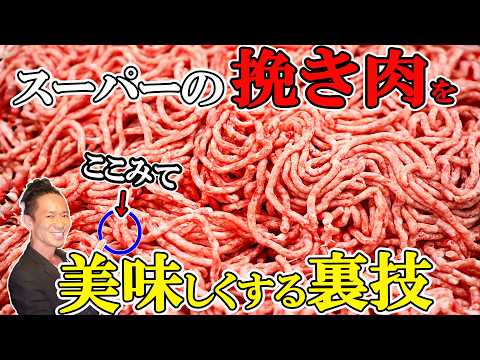
Supermarket ground meat often contains 20% to 30% excess water due to ice and phosphates used during processing. This video demonstrates an experiment using baking soda and sugar to draw out this excess moisture, comparing five types of meat: beef, pork, mixed, chicken, and hand-cut meat. Using the prepped meat, we make the 'Ultimate Meat Miso' seasoned with mirin, sake, miso, honey, and kelp tea (kombucha). It also covers key tips for choosing ground meat, such as looking for bright colors and avoiding packages with pooled liquid (drip).
Introduction to 予約7年待ち「肉の鬼才」森田隼人の料理研究所 →
Tips for Making "Ultimate Meat Miso"
-
Choosing Meat
- Choose ground meat that has no pooled liquid (drip) at the bottom of the package.
-
Choosing Meat
- Select ground meat with a vibrant color and avoid any that is discolored.
-
Prep
- Sprinkle 1g (a pinch) of baking soda and 1 tsp of sugar on one side of the meat, wrap in 4 layers of paper towels, repeat on the other side, and let sit for 5 minutes to draw out excess water.
-
Prep
- Sugar is used instead of salt to draw out excess water via osmotic pressure without letting salt penetrate the meat.
-
Prep
- Using alkaline baking soda helps retain the meat's natural moisture while efficiently expelling the excess water added during processing.
-
Cooking
- Combine the seasonings in a cold pan before turning on the heat, then heat over low to cook off the alcohol from the mirin and sake.
-
Heat Control
- Add the prepped ground meat once the seasoning mixture is bubbling gently all over.
-
Heat Control
- Turn off the heat the moment the meat absorbs the liquid and starts to release its own juices; cooking gently with residual heat keeps the meat tender and fluffy.
-
Heat Control
- If using pork or chicken, ensure it is fully cooked until the color completely changes to prevent food poisoning.
-
Seasoning
- Adding kelp tea powder as a secret ingredient dramatically boosts umami for a professional flavor.
-
Seasoning
- Use any type of miso except red miso.
Ingredients for "Ultimate Meat Miso"
9 items* Tap ingredient names to find on Amazon
How to Make "Ultimate Meat Miso"
- 1
[Prep] Sprinkle 1g (a pinch) of baking soda and 1 tsp of sugar on one side of the ground meat.
- 2
Wrap the meat in 4 layers of paper towels, flip it over, and sprinkle the other side with baking soda and sugar in the same way.
- 3
Let it sit for 5 minutes to allow the paper towels to absorb the excess moisture.
- 4
[Make the sauce] Thoroughly mix the mirin, sake, miso, honey, and kelp tea powder together.
- 5
Pour the sauce mixture into a cold (unheated) pan, then heat over low heat to cook off the alcohol from the mirin and sake.
- 6
Once the mixture starts bubbling gently, add the prepped ground meat and mix well.
- 7
Turn off the heat the exact moment the meat absorbs all the liquid and just starts to release its own juices.
- 8
Continue mixing off the heat, letting the residual heat cook the meat through (if using pork or chicken, ensure it is fully cooked and the color has completely changed).
- 9
Plate and serve.
Detailed Commentary on "Ultimate Meat Miso"
* Content organized by topics from the video.
The Secret of 'Ice' Hidden in Ground Meat
Ground meat is a budget-friendly household staple, but it hides a secret that professionals use to their advantage. The video reveals the shocking fact that ice is used during the grinding process. This isn't just to pad the weight; there is a scientific reason related to hygiene and quality. When meat is put through a grinder, intense frictional heat is generated. If the temperature rises, cell walls break down, fat melts, and the texture becomes dry and crumbly. Furthermore, temperature increases can lead to bacterial growth. Adding ice keeps the temperature near 0°C (32°F) during grinding. Thus, using ice is a crucial processing technique to preserve both flavor and safety.
The Dark Side of Phosphates
While adding ice for temperature control is necessary, the issue lies in the use of additives like phosphates to increase water retention. Mixing phosphates and ice with the meat creates a 'water pocket' effect inside, locking in moisture. This can artificially increase the weight of the meat by 20% to 30%. For example, ground meat sold at $1.28 per 100g actually costs closer to $1.60 when you factor in the excess water. Have you ever cooked hamburger patties only to see an abnormal amount of liquid and scum release, shrinking the patties to half their size? That is the water trapped by phosphates escaping.
Prepping the Moisture Experiment
In this video, we conduct an experiment to draw out and measure the moisture content in five types of meat: four store-bought ground meats (beef, pork, mixed beef/pork, and chicken) and one hand-cut lean beef. We prepare 200g of each meat from different supermarkets and use baking soda and sugar to break down their water-holding capacity. We sprinkle 1g (a pinch) of baking soda and 1 tsp of sugar on one side, wrap it in 4 layers of paper towels, flip it, repeat the process on the other side, and let it sit for 5 minutes. Using sugar instead of salt is key, as salt would penetrate the meat, whereas sugar uses osmotic pressure to draw out only the excess water. Additionally, the alkaline baking soda helps retain the meat's natural cellular moisture while efficiently expelling the artificial water added during processing.
The Mystery of Mixed Meat & Buying Tips
While waiting, we address some common questions from viewers. First: 'Why isn't there a beef and chicken ground mix?' The reason is strictly hygienic. Beef can be eaten rare, but chicken carries food poisoning risks like Campylobacter and must be fully cooked. Mixing them creates a dilemma: cooking to beef standards leaves the chicken undercooked, while cooking to chicken standards makes the beef tough and dry. Additionally, ground meat is a sustainable food that utilizes tough cuts like neck, shank, and shoulder, but fat (suet or lard) is intentionally added to prevent dryness. When shopping, the best tips for success are to choose meat with a vibrant color and avoid packages with pooled liquid (drip) at the bottom.
Results: Which Meat Had the Most Water?
After 5 minutes, we measure the moisture absorbed by the paper towels. The 8 sheets of paper towels initially weighed 15g, so any increase represents the extracted water. The results were shocking. The unprocessed hand-cut meat released only 12g of water. In contrast, the ground beef released 24g, the mixed beef/pork 22.5g, and the pork 26.2g. The clear outlier was chicken, which released a whopping 40.9g of water. This means about 20% of the 200g ground chicken was actually added water (from ice) rather than natural meat moisture. Because chicken spoils easily, it requires stricter temperature control, leading processors to use more ice during grinding. Removing this excess water beforehand is the secret to making your dishes taste dramatically better.
The Ultimate Meat Miso Recipe
Using the ground chicken and hand-cut beef with the excess water removed, we make the ultimate meat miso that stays delicious even when cold. For 200g of meat, you will need 2 tbsp sake, 2 tbsp mirin, 1 tbsp honey, 1.5 tbsp miso (any type except red), and a secret ingredient: 1 tsp of kelp tea powder (kombucha). Adding kelp tea dramatically boosts the umami for a professional flavor. To make it, combine all the seasonings in a cold pan, then heat over low heat to cook off the alcohol. Once bubbling, add the prepped meat, which has been tenderized by the baking soda. Turn off the heat the moment the meat absorbs the liquid and just starts to release its own juices. Letting it cook gently in the residual heat keeps the meat tender, resulting in an incredibly fluffy and juicy meat miso.
About 予約7年待ち「肉の鬼才」森田隼人の料理研究所
予約7年待ち「肉の鬼才」森田隼人の料理研究所
17.1万人 subscribers ・ 和牛・肉料理
* Opens YouTube channel
* Subscriber count is as of article creation and may differ from the current number.
