

Recipe
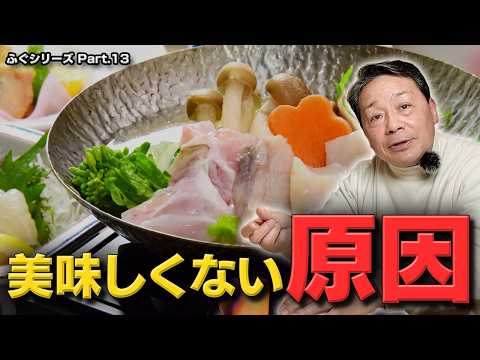
2 Reasons Fugu Hot Pot Can Taste Bland | Chef's Salt-Curing & Rich Dashi Method
Ingredients
- Wildtiger pufferfish (torafugu), to taste
- Fugumilt (shirako), to taste
- Salt,a pinch
- Kombu,to taste
- Ingredientsfor rich dashi, to taste
- Whitesoy sauce (for dehydration), to taste
- Coldwater (for cleaning milt), to taste
About "Fugu Hot Pot (Tecchiri)"
The reason fugu hot pot is sometimes called bland is because the fat-free pufferfish meat is often cooked without proper prep. The Chef's secret is to dehydrate the fugu with salt before pairing it with a rich dashi. By combining this with meticulous blood removal from the milt and selecting wild fugu, you can create a truly delicious hot pot.
Tips for Making "Fugu Hot Pot (Tecchiri)"
-
Prep
- It is crucial to lightly salt the fugu meat to thoroughly dehydrate it. Since fugu lacks fat, this pre-dehydration step is essential to draw out its natural umami.
-
Prep
- Even if the fugu milt is fresh, do not use it as-is. Slice open the membrane and thoroughly wash it in cold water to remove blood. Removing the fishy odor from the blood vessels is key to its delicious flavor.
-
Dashi
- Instead of a simple broth with a single piece of kombu, prepare a rich dashi to pair with the cured fugu. This requires precise judgment, with the chef tasting the broth to monitor flavor extraction.
-
Ingredient Selection
- Distinguish wild fugu from farmed fugu by the tail fin. Wild fugu are highly active, resulting in well-developed, frayed tail fins. Only wild fugu offers a deep, complex umami when aged.
-
Cooking Method
- Slice the fugu meat to about twice the thickness of thin sashimi and enjoy it shabu-shabu style by swishing it in hot broth. The combination of salt-curing and rich dashi is highly effective.
Ingredients for "Fugu Hot Pot (Tecchiri)"
7 items* Tap ingredient names to find on Amazon
How to Make "Fugu Hot Pot (Tecchiri)"
- 1
Selecting Wild Fugu
Check the tip of the tail fin to distinguish between wild and farmed fugu. Wild fugu are highly active, so their tail fins are well-developed and frayed. The Chef's restaurant uses only wild fugu.
- 2
Dehydrating the Fugu with Salt
Sprinkle a thin layer of salt over the fugu meat to thoroughly draw out moisture. Since fugu lacks fat, this step of removing excess water to concentrate the umami is crucial. Using white soy sauce for dehydration is also highly effective.
- 3
Slicing the Fugu
Slice the dehydrated fugu meat to about twice the thickness of flounder sashimi (usuzukuri). Even when cutting it into chunks, it is essential to prep and season it beforehand.
- 4
Cleaning the Milt
Gently slice open the membrane of the milt with a knife. Since fine blood vessels run deep inside, thoroughly wash and drain the blood in cold water. Never use it as-is, even if it is extremely fresh.
- 5
Preparing the Rich Dashi
Instead of just adding a single piece of kombu, prepare a rich, concentrated dashi. The chef tastes the broth using a small sake cup (suichoko) to monitor the flavor extraction before adding the cured fugu.
- 6
Adding Fugu to the Pot
Add the dehydrated and pre-seasoned fugu meat into the pot of rich dashi. You can also enjoy it shabu-shabu style by lightly swishing it in the hot broth. It is crucial to prep the ingredients properly before cooking.
- 7
Adding Milt to the Pot
Add the cleaned milt to the pot. Meticulous blood removal is essential to preserve the delicate, rich, and creamy flavor of the milt, which resembles fresh cream.
Food Science
Applying salt or white soy sauce draws out excess moisture and odor from the fugu through osmosis, firming the flesh and concentrating its umami. Furthermore, combining the inosinic acid found in the fugu and dashi ingredients with the glutamic acid in the kombu creates a powerful umami synergy. Controlling moisture to eliminate odors while combining different umami compounds is the secret to making fugu hot pot dramatically more delicious.
Detailed Commentary on "Fugu Hot Pot (Tecchiri)"
* Content organized by topics from the video.
Why Fugu Hot Pot Can Taste Bland
The Master Chef, with 50 years of experience in Japanese cuisine, explains why some people find fugu hot pot underwhelming. For instance, with other white fish like cod or monkfish, chefs typically salt the fish to draw out moisture (dehydration) or blanch it (shimofuri) to remove scales and slime. This draws out the fish's natural umami and flavors the broth. However, in standard fugu hot pot (tecchiri), raw chunks of fugu are often thrown straight into the pot. This fails to extract enough umami, leaving you with tasteless meat eaten only with ponzu. The Chef points out that without properly aging the fugu to the right point of umami development, it is difficult to make a truly delicious hot pot.
Chef's Method: Salt-Curing & Shabu-Shabu
The Chef shares his secrets for serving fugu hot pot at his restaurant. Instead of throwing raw chunks into the pot, he lightly salts the fugu meat to thoroughly dehydrate it. He then slices the meat to about twice the thickness of flounder sashimi and suggests eating it shabu-shabu style by lightly swishing it in the hot broth. While typical fugu restaurants use a simple broth with just a single piece of kombu, the Chef uses a uniquely crafted, rich dashi. While respecting traditional methods, he continuously refines his prep and techniques to maximize the fugu's umami, ensuring modern customers find it truly delicious.
The Challenge of Cooking Fat-Free Fish
The biggest challenge in cooking fugu is its complete lack of fat. For example, popular winter dishes like yellowtail (buri) shabu-shabu or hot pot are naturally rich in fat, making them incredibly delicious with just a simple splash of ponzu. Fugu, however, has almost no fat. If cooked incorrectly, it can easily taste bland and uninspiring. Even among white fish, summer delicacies like daggertooth pike conger (hamo) are very fatty, requiring the Chef to lightly salt and dust them with arrowroot starch (kuzuuche) for shabu-shabu. Fugu is even more delicate. It requires more than just throwing ingredients into a pot; it demands a chef's precise judgment, constantly tasting the broth to monitor flavor extraction.
Pro Technique: Umami Without Cloudy Broth
Here is a professional technique to enhance the flavor of fugu without ruining its delicate taste. To add umami without clouding the hot pot broth, the Chef suggests dehydrating the meat using white soy sauce (shiro shoyu) instead of salt. This gently seasons the fugu meat, creating a perfect harmony with the broth. Even when serving fugu in chunks, the Chef never serves it raw without prep; he always meticulously cleans and pre-seasons it first. While traditional, simple methods are wonderful, he believes chefs must constantly think about how to make dishes even better and never stop updating their techniques to match the times.
Telling Wild and Farmed Fugu Apart
The Chef shares his perspective on the differences between wild and farmed fugu. Wild fugu swim freely in the ocean, using their sharp teeth to crush shells and hunt for food. Because they are highly active, the tips of their tail fins are well-developed and frayed. On the other hand, farmed fugu raised in cramped pens have their teeth clipped to prevent them from biting and injuring each other. The Chef's restaurant refuses to use farmed fugu, sourcing only wild fugu. While farmed fugu has its merits—such as affordability and accessibility—the Chef pursues the unique firmness and overwhelming depth of umami that only aged wild fugu can offer.
Meticulous Blood Removal for Fugu Milt
Fugu milt (shirako) is a highly popular hot pot ingredient, and the Chef explains its exquisite flavor and crucial prep. While cod milt is delicious, fugu milt is incredibly rich and creamy, almost like fresh cream. However, achieving this exquisite taste requires labor-intensive prep. The inside of the milt is webbed with extremely fine blood vessels. If left untreated, they cause a strong, fishy odor. To prevent this, the Chef gently slices open the membrane and thoroughly washes out the blood in cold water. Simply throwing it into the pot because it is fresh is not enough; this meticulous cleaning is what unlocks the ultimate flavor of the milt.
Chef's Pride: Preparing Homemade Koji
At the end of the video, the Chef introduces a mini-segment showcasing his dedication to ingredients, featuring freshly delivered raw koji. This batch includes three types: brown rice koji, a custom blend of multiple kojis, and fragrant barley koji. The Chef handles these raw kojis with care, mixing them with tamari soy sauce in glass jars to age. This homemade soy sauce koji (shoyu koji) works beautifully as a sake appetizer or a seasoning to sharpen the flavors of various dishes. Having visited the market every single morning for decades to hand-select his ingredients, the Chef refuses to compromise on any part of his prep, delivering handmade deliciousness to his guests.
About 大将に聞いてみた!
大将に聞いてみた!
2.1万人 subscribers ・ 日本料理・和食
* Opens YouTube channel
* Subscriber count is as of article creation and may differ from the current number.
