

Recipe
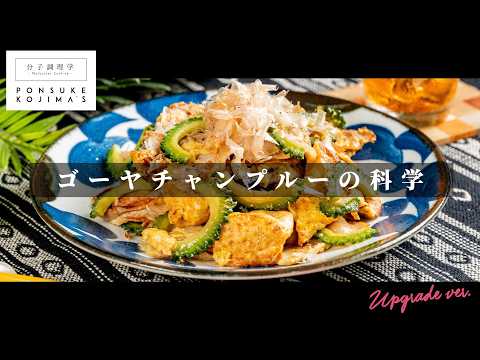
The Science of Controlling Bitterness: Goya Chanpuru (Bitter Melon Stir-Fry)
Ingredients
- 1bitter melon
- 300gpork belly
- 1block firm tofu
- 2eggs
- Bonitoflakes to taste
- Saltto taste
- 1tbsp vegetable oil
- 1tsp Japanese dashi powder
- 1tbsp soy sauce
About "Goya Chanpuru (Bitter Melon Stir-Fry)"
A molecular gastronomy-based Goya Chanpuru recipe featuring scientific bitterness control. By salting and soaking the bitter melon, we extract the bitter compound momordicin. Microwaving the tofu perfects its texture, while searing the pork on one side unleashes rich umami via the Maillard reaction. Finished with bonito flakes to absorb remaining bitterness, this simple dish is scientifically perfected.
Introduction to こじまぽん助【分子調理学研究家】 →
Video Timestamps
Tips for Making "Goya Chanpuru (Bitter Melon Stir-Fry)"
-
Prep
- The bitter compound in bitter melon, momordicin, is water-soluble. Use osmotic pressure via salting to draw out the bitterness, then soak in water to dissolve and control it.
-
Prep
- Tear tofu by hand to increase surface area, then microwave to dehydrate. This prevents sogginess during stir-frying and maintains a tender texture.
-
Heat control
- Sear the pork thoroughly on one side only. The Maillard reaction at temperatures above 140°C (284°F) unleashes rich aroma and umami.
-
Seasoning
- Searing the eggs creates a sweet, toasted aroma that enhances the overall flavor of the dish.
-
Finishing
- Bonito flakes absorb the bitter compounds of bitter melon to mellow the flavor—a brilliant piece of traditional culinary wisdom.
Ingredients for "Goya Chanpuru (Bitter Melon Stir-Fry)"
9 items* Tap ingredient names to find on Amazon
How to Make "Goya Chanpuru (Bitter Melon Stir-Fry)"
- 1
Prepping the Bitter Melon (Part 1)
Cut off both ends of the bitter melon (1) and slice it in half lengthwise. Hold a spoon upright and thoroughly scrape out the white pith. The area around the pith contains a high concentration of bitter compounds.
- 2
Slicing and Salting the Bitter Melon
Slice the bitter melon thinly into 2–3mm pieces. Sprinkle with a pinch of salt and gently rub it in. Osmotic pressure from the salt draws out the bitter compound momordicin. Let it sit for 2–3 minutes, then soak in water.
- 3
Prepping the Tofu
Tear the firm tofu (1 block) by hand into pieces slightly larger than bite-sized. Tearing it creates uneven surfaces, increasing the surface area and improving dehydration efficiency compared to cutting with a knife. Place in a microwave-safe bowl and microwave at 600W for 2 minutes. After heating, drain well with paper towels.
- 4
Searing the Tofu
Add vegetable oil (1 tbsp) to a cold frying pan and arrange the tofu before turning on the heat. This technique prevents oil splattering. Turn the heat to medium, and once it starts crackling, adjust the heat and sear slowly until the tofu develops a light golden color. Once seared, transfer to a plate and set aside.
- 5
Searing the Pork on One Side
Place the pork belly (300g) in the pan as a block, fatty side down. Heat over high heat and sear slowly on one side only, without moving it. This triggers the Maillard reaction, creating a savory aroma and deep color. Once browned, wipe away excess fat with a paper towel to prevent greasiness.
- 6
Seasoning with Salt
Once a beautiful sear forms on one side, turn off the heat. Break up the pork and season with a pinch of salt. Salting at this stage prevents the umami from escaping along with the meat's moisture.
- 7
Stir-Frying Bitter Melon and Pork
Turn the heat back to medium and add the bitter melon. Stir-fry so the bitter melon is coated in the rendered pork fat. Once the bitter melon turns a glossy, vibrant green, return the seared tofu to the pan.
- 8
Adding Tofu and Dashi
Using a spatula, gently fold from the bottom of the pan to avoid breaking the tofu. Once combined, sprinkle in the Japanese dashi powder (1 tsp). Adding bonito flavor is key to authentic Okinawan cuisine.
- 9
Adding Eggs and Searing
Pour in the beaten eggs (2). Instead of stirring immediately, wait for them to set slightly until a light sear forms on the bottom. Searing the eggs releases a sweet, savory aroma that elevates the entire dish.
- 10
Finishing with Soy Sauce
Once the eggs are softly set, drizzle soy sauce (1 tbsp) around the edges of the pan. Quickly toss to coat everything in the fragrant, slightly caramelized soy sauce, then immediately turn off the heat. Finishing with residual heat preserves the fresh aroma of the soy sauce.
- 11
Garnishing with Bonito Flakes
Plate generously and top with a heap of bonito flakes. Bonito flakes have a bitterness-absorbing effect that mellows the bitter melon, making this finish a perfect fusion of traditional wisdom and molecular gastronomy.
Food Science
Salting the bitter melon dehydrates excess moisture and bitter compounds, leaving a pleasant texture. Additionally, the intense bitterness of the melon is balanced and mellowed by the fats and sweetness of the pork and eggs, the saltiness of the salt and soy sauce, and the umami of the bonito flakes. Furthermore, the synergistic umami effect between the inosinate in the pork and bonito flakes and the glutamate in the soy sauce dramatically enhances the overall richness of the dish.
Detailed Commentary on "Goya Chanpuru (Bitter Melon Stir-Fry)"
* Content organized by topics from the video.
Molecular Gastronomy: Goya Chanpuru for Life
Hello, I'm Kojima Ponsuke! Today, I'm bringing you an upgraded, even easier-to-understand version of the Goya Chanpuru recipe video originally released in August 2023. Cooking is science. Even with everyday ingredients and techniques, approaching them through molecular gastronomy can dramatically transform your home cooking. This recipe focuses on three main pillars: first, prepping the bitter melon to control its bitterness; second, prepping the tofu to achieve the perfect stir-fry texture; and third, searing the pork to maximize its umami. Okinawan cuisine is incredibly simple, which is why these small, precise steps create a professional-grade result. At the end of the video, I have some special upgrade details that I've never shared on YouTube before, so please enjoy until the very end!
Controlling Bitterness: Prepping Bitter Melon
Let's start with our first key point: prepping the bitter melon (1). The bitterness comes from a water-soluble compound called momordicin. We will use a scientific approach to extract this bitterness. First, cut off both ends of the bitter melon and slice it in half lengthwise. We'll remove the pith with a spoon. Since the bitter compounds are concentrated around this white pith, the trick is to hold the spoon upright and scrape it out thoroughly. Next, slice it. I prefer slicing it to a thickness of 2–3mm. Slicing it thinly increases the surface area, making it easier for the bitterness to escape. Once sliced, sprinkle with a pinch of salt and gently rub it in. Salting triggers osmotic pressure, drawing out the momordicin along with the moisture. Let it sit for 2–3 minutes, then soak it in water to dissolve and wash away even more bitterness. Finally, pat it completely dry with paper towels. Any remaining moisture will cause oil to splatter during stir-frying.
Prepping Tofu: Preventing Sogginess
Our second key point is prepping the firm tofu (1 block) so it holds up in a stir-fry. If you toss tofu straight into the pan, it releases water, making the dish soggy and causing the tofu to crumble. To prevent this, first tear the tofu by hand into pieces slightly larger than bite-sized. Tearing rather than slicing with a knife creates uneven surfaces, which increases the surface area and dramatically improves dehydration. Place the torn tofu in a microwave-safe bowl and microwave at 600W for 2 minutes. Afterward, drain it thoroughly on paper towels. Next, add vegetable oil (1 tbsp) to a cold frying pan and arrange the tofu before turning on the heat. This is a crucial technique to prevent oil splattering. Once arranged, turn the heat to medium. When it starts crackling, adjust the heat and sear slowly until the tofu develops a light golden color, then set it aside.
Searing Pork on One Side for Maximum Umami
Our third key point is how we cook the pork belly (300g). To maximize the meat's umami, we use a 'one-sided sear' technique. Place the pork in the pan as a block, fatty side down. Heat over high heat and sear slowly on one side only, without breaking up the meat. The savory aroma and deep color produced here are results of the Maillard reaction, where amino acids and sugars react at temperatures above 140°C (284°F). This reaction brings deep richness and flavor to the dish. Wipe away any excess fat rendered from the pork with a paper towel to prevent greasiness. Once a beautiful sear forms on one side, turn off the heat. Now, break up the pork, sprinkle with a pinch of salt, and season. Salting at this stage prevents the meat's juices and umami from escaping, locking in the flavor perfectly.
Combining Ingredients and Searing the Eggs
After seasoning the pork, turn the heat back to medium and add the bitter melon. Stir-fry to coat the bitter melon in the remaining pork fat. Once the bitter melon turns a glossy, vibrant green, return the seared tofu to the pan. From here, the key is to fold gently from the bottom of the pan using a spatula to avoid breaking the tofu. Once everything is combined, sprinkle in Japanese dashi powder (1 tsp) to add that essential bonito flavor, which is the soul of Okinawan cuisine. Next, pour in the beaten eggs (2). Do not stir immediately; wait patiently for them to set slightly. Letting a light sear form on the bottom of the eggs releases a sweet, toasted aroma—reminiscent of freshly baked castella cake—elevating the overall flavor of the dish.
Soy Sauce Finish and the Science of Bonito Flakes
Once the eggs are softly set, drizzle soy sauce (1 tbsp) around the edges of the pan for the final touch. Let the fragrant, slightly caramelized aroma of the soy sauce coat everything, then immediately turn off the heat. Finishing with residual heat preserves the fresh aroma of the soy sauce. Plate generously and top with a heap of bonito flakes. There is actually a scientific reason for adding bonito flakes to Goya Chanpuru beyond just flavor. Bonito flakes have a 'bitterness-absorbing effect' that binds to the bitter compounds in bitter melon, mellowing them out. This dish is a beautiful fusion of traditional wisdom and molecular gastronomy, resulting in an exquisite Goya Chanpuru with a perfectly balanced bitterness. Try this scientifically perfected recipe at home and experience how a simple dish can become incredibly delicious!
About こじまぽん助【分子調理学研究家】

こじまぽん助【分子調理学研究家】
15.6万人 subscribers ・ 家庭料理
* Opens YouTube channel
* Subscriber count is as of article creation and may differ from the current number.
