

Recipe
Easy Shiro-Dashi Eggplant (The Perfect Simple Side Dish)
Ingredients
- 3Japanese eggplants
- 1L water (for saltwater)
- 2tsp salt (for saltwater)
- 4tbsp shiro-dashi (low-sodium)
- 4tbsp water (for sauce)
- Gingerto taste (for garnish)
About "Shiro-Dashi Infused Eggplant"
This is an easy recipe for dashi-soaked eggplant using shiro-dashi. By peeling the eggplant, soaking it in saltwater to remove bitterness, microwaving it, and then soaking it in shiro-dashi, you get a juicy finish that highlights the natural sweetness of the eggplant. It is a simple side dish that is ready after chilling for just 15 minutes.
Tips for Making "Shiro-Dashi Infused Eggplant"
-
Prep
- Fresh eggplants have sharp thorns, so be careful when carefully prepping the stem and surrounding calyx.
-
Prep
- Peeling with a peeler allows the dashi flavor to absorb easily and results in a beautiful pale green color when cooked.
-
Prep
- When soaking in saltwater, gently squeezing them every 3 minutes releases bitterness and helps them absorb water, resulting in a juicy finish.
-
Heating
- Placing the seam of the wrap facing down allows heat to pass through easily, and poking holes with a toothpick provides an escape for steam.
-
Heat control
- If doubling the recipe, microwave in two separate batches to prevent uneven cooking.
-
Seasoning
- Aim for a shiro-dashi concentration that is slightly saltier than soup. Do not make it too strong, as the eggplant is already lightly seasoned.
-
Chilling
- Removing the wrap while hot and using a contact wrap prevents the color from dulling and ensures the flavor absorbs evenly.
-
Finishing
- When slicing, use the weight of the knife to gently pull and cut, preventing the juicy dashi from escaping.
Ingredients for "Shiro-Dashi Infused Eggplant"
6 items* Tap ingredient names to find on Amazon
How to Make "Shiro-Dashi Infused Eggplant"
- 1
Prep the Eggplants
Cut off the very top of the eggplant stem, and use the tip of a knife to thinly peel away the tough calyx (cap) around it. Be careful, as fresh eggplants have sharp thorns.
- 2
Peel the Eggplants
Use a peeler to cleanly peel the skin off the entire eggplant. Peeling helps the dashi flavor absorb better and gives the eggplant a beautiful pale green color when cooked.
- 3
Prepare the Saltwater
Pour 1 L of water into a large bowl and add 2 tsp of salt. Stir well with your fingers to completely dissolve the salt, creating a 1% saltwater solution.
- 4
Soak in Saltwater for 10 Minutes
Place the peeled eggplants in the saltwater and let them soak for 10 minutes. Every 3 minutes, gently squeeze them by hand to release bitterness and help them absorb water. After 10 minutes, the water will turn slightly yellowish, showing that the bitterness has been successfully removed.
- 5
Drain and Wrap the Eggplants
Remove the eggplants from the saltwater and lightly pat the surface dry with a paper towel. Wrap each eggplant individually in plastic wrap on a microwave-safe plate, placing them with the crumpled seam of the wrap facing down.
- 6
Poke Holes in the Wrap
Use a toothpick to poke 5 to 6 holes through the plastic wrap. Since eggplants contain a lot of moisture, heating them without holes may cause the wrap to burst.
- 7
Microwave
Microwave at 600W for 6 minutes. After heating, gently touch the thickest part with tongs; if it feels soft and squishy, it is fully cooked.
- 8
Make the Shiro-Dashi Sauce
Put 4 tbsp of low-sodium shiro-dashi in a bowl, add an equal amount of water (4 tbsp), and mix well. Taste it; the ideal concentration should feel slightly too salty to drink as a soup.
- 9
Transfer to a Container While Hot
The microwaved eggplants are extremely hot, so handle them carefully using tongs. Unwrap them while they are still hot and arrange them in a storage container. It is crucial to transfer them while hot, as letting them cool before unwrapping will cause the color to dull.
- 10
Pour Sauce and Apply Contact Wrap
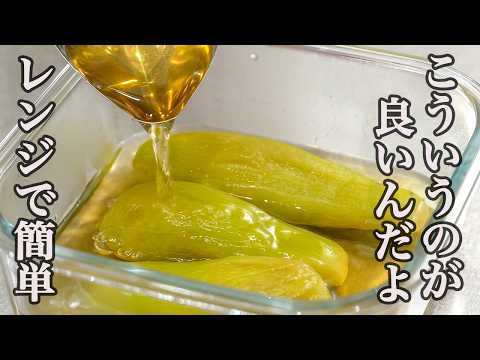
Pour the prepared sauce generously over the arranged eggplants. Place a sheet of plastic wrap directly onto the surface of the eggplants (contact wrap) so the flavor absorbs evenly, even with a small amount of sauce.
- 11
Chill in the Refrigerator
Chill in the refrigerator for at least 15 minutes. Letting it sit overnight allows the dashi to penetrate deeper, making it even more delicious.
- 12
Slice and Serve
Take out the chilled eggplant and cut it into bite-sized pieces on a cutting board. Slice gently by pulling the knife back, using its weight, to prevent the juicy dashi from squeezing out. Arrange on a plate, pour plenty of the dashi sauce over it, and garnish with ginger to taste.
- 13
Storage Guidelines
Can be stored in the refrigerator for about 2 to 3 days.
Food Science
Soaking the eggplant in saltwater draws out excess moisture through osmosis, making it easier for the dashi to absorb. Additionally, the synergistic umami effect between the glutamic acid from the kelp and the inosinic acid from the bonito flakes in the shiro-dashi creates a deep, rich flavor. Finally, the spiciness of the ginger garnish tightens the overall flavor profile, balancing the five basic tastes.
Detailed Commentary on "Shiro-Dashi Infused Eggplant"
* Content organized by topics from the video.
Eggplant Prep and Signs of Freshness
Today, we are going to make a very simple and delicious dashi-soaked eggplant using eggplants, which are coming into season. We will use 3 eggplants. If you want to double the recipe, we recommend microwaving them in two separate batches rather than all at once. Heating them all together will inevitably cause uneven cooking. First, cut off the stems of the eggplants. The key is to cut as close to the base of the stem as possible; cutting too much off wastes edible parts. Once the stem is off, use the tip of a knife to thinly peel away the tough calyx around it. Fresh eggplants have very sharp thorns that can hurt to touch, so please be careful. The speaker even let out an 'Ouch!' during cooking when pricked by a thorn—a true sign of freshness, but handle with care!
Peeling with a Peeler and Preparing Saltwater
Once prepped, use a peeler to cleanly peel the skin off the eggplants. Peeling not only helps the dashi flavor absorb better later on, but it also gives the eggplant a beautiful, cool, pale green color when cooked, making it look very refreshing. Keeping the skin on makes it harder for flavors to absorb and can cause the color to dull. After peeling, prepare the saltwater for soaking. Pour 1 L of water into a slightly large bowl and add 2 tsp of salt. This creates a roughly 1% saltwater solution. Stir thoroughly with your fingers to ensure the salt is completely dissolved. This saltwater is an important foundation for bringing out the delicious flavor of the eggplants.
Why Soak Eggplant in Saltwater for 10 Minutes
Once the saltwater is ready, submerge the peeled whole eggplants and let them soak for 10 minutes. This removes the bitterness from the eggplants while lightly seasoning them. Actually, the inside of an eggplant has a sponge-like structure containing a lot of air. To prove this, if you gently squeeze the eggplant in the saltwater, you will see bubbles rising. By releasing this air and letting the eggplant absorb the saltwater, it won't collapse or get mushy when steamed in the microwave, resulting in a plump, juicy finish. Every 3 minutes, gently squeeze them by hand to release bitterness and help them absorb water. After 10 minutes, the water will turn slightly yellowish, showing that the bitterness has been thoroughly extracted.
Wrapping Tips and Microwave Secrets
After 10 minutes, remove the eggplants and lightly pat the surface dry with a paper towel. Next, prepare a microwave-safe plate and wrap each eggplant individually in plastic wrap. An important tip here is to place them on the plate with the crumpled seam of the wrap facing down. The area in contact with the plate heats up easily, so overlapping the wrap there creates thickness, acting as a cushion to prevent overcooking. Once wrapped, use a toothpick to poke 5 to 6 holes through the wrap. Since eggplants contain a lot of moisture, heating them without holes can trap steam inside and cause the wrap to burst, so we create pathways for the air. Once ready, microwave at 600W for 6 minutes.
The Golden Ratio for Shiro-Dashi Sauce
While microwaving, prepare the sauce for soaking the eggplants. We will use shiro-dashi to make this easily and deliciously. Put 4 tbsp of low-sodium shiro-dashi into a bowl. Add an equal amount of water (4 tbsp) and mix well. Taste it; a concentration that feels slightly too salty to drink as a soup is just right for soaking the eggplants. If you are using regular shiro-dashi, which has a higher salt content, adjust by mixing 3 tbsp of shiro-dashi with about 4 to 5 tbsp of water to your preferred taste. Since the eggplants themselves are already lightly seasoned from the saltwater soak, the secret to an elegant flavor is not making the sauce too salty.
Transferring While Hot and Chilling
Once the 6-minute microwave time is up, remove them from the microwave. The plate and eggplants will be extremely hot, so always use tongs and work carefully to avoid burns. Gently touch the thickest part with tongs; if it feels soft and squishy, it is proof that it is cooked through. Unwrap them while they are still hot and arrange them in your prepared storage container. If you wait until they cool to unwrap them, the color of the eggplants will dull, so transferring them while hot is key to maintaining their beautiful color. Once arranged, pour plenty of the special sauce over them. Place a sheet of plastic wrap directly onto the surface of the eggplants (contact wrap) so the flavor absorbs evenly throughout, even with a small amount of sauce. Let it chill in the refrigerator for at least 15 minutes.
Slicing, Serving, and Storage Guidelines
After chilling in the refrigerator for about 15 minutes, the heat will be gone and it will be ready to eat. Of course, letting it sit overnight allows the dashi to penetrate even deeper, making it even more delicious. Take out the chilled eggplant and cut it into bite-sized pieces on a cutting board. The trick here is not to grip the knife tightly and press down, but to use the weight of the knife to gently pull and slice. Pressing too hard will squeeze out the juicy dashi they worked so hard to absorb. Arrange on a plate, pour plenty of the dashi sauce over it, and garnish with ginger to taste. With one bite, the eggplant juice and dashi burst in your mouth, offering a sublime flavor that maximizes the natural sweetness and umami of the eggplant. It can be stored in the refrigerator for about 2 to 3 days.
About 食事処さくらの料理教室

食事処さくらの料理教室
101万人 subscribers ・ 家庭料理
* Opens YouTube channel
* Subscriber count is as of article creation and may differ from the current number.
