

Recipe
Why the Chef Doesn't Serve Standard Courses | Tasting "Kuikiri Cuisine" Where Every Dish is the Star
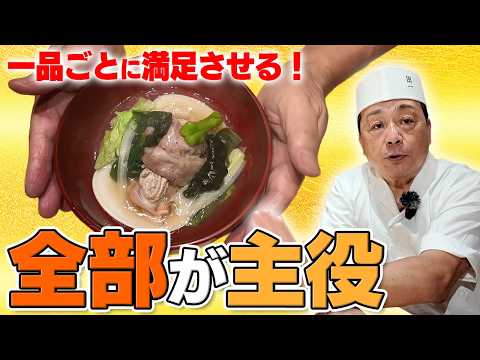
Ingredients
- Thinlysliced Wagyu beef, to taste
- Yoshinokuzu starch, to taste (for dusting the beef)
- Salt,a pinch
- Blackpepper, a pinch
- Hardclams, to taste
- Napacabbage, to taste
- Malabarspinach, to taste (leaves and stems separated)
- Yellowchives (from Okayama), to taste
- Wakameseaweed (from Sanriku, Iwate), to taste
- Onion,to taste (for broth)
- Kombukelp, to taste (for broth)
- Beefstock, to taste (for broth)
About "Wagyu Shabu-Shabu Soup Bowl (with Clams and Knotted Wakame)"
Chef Toru Wada, with 50 years of culinary experience, demonstrates his technique for serving Wagyu shabu-shabu in a "nimono-wan" (simmered soup bowl) style as part of his "kuikiri cuisine." The key step is seasoning the beef with salt and black pepper, then lightly dusting it with Yoshino kuzu starch to lock the meat's umami inside. His hospitality shines through in details like the "meoto-shiage" (married couple style) clams and "knotted wakame." The broth—a combination of onion, kombu, and beef stock—layers the flavors of each ingredient, creating a soup you will want to drink to the very last drop.
Tips for Making "Wagyu Shabu-Shabu Soup Bowl (with Clams and Knotted Wakame)"
-
Prep
- Lightly season the Wagyu beef with salt and black pepper, then dust it with Yoshino kuzu starch to lock in the umami and help the broth cling to the meat.
-
Prep
- Since the leaves and stems of Malabar spinach cook at different rates, separate and boil them individually during prep.
-
Prep
- Carefully tie the wakame seaweed into knots to make "knotted wakame" as an auspicious touch.
-
Prep
- Butterfly the clams using the "meoto-shiage" (married couple cut) technique, keeping the meat attached to the shells. Fresh clams contract and open beautifully when cut, serving as a sign of freshness.
-
Broth
- Use a special broth made of onion, kombu, and beef stock, adding the clams first to extract maximum umami.
-
Cooking & Finish
- Briefly warm the napa cabbage, knotted wakame, and Malabar spinach, then shabu-shabu the kuzu-dusted beef to medium-rare before plating and pouring the hot broth over.
-
Hospitality
- If guests have different allergies or preferences, use the same serving bowls but discreetly swap the ingredients inside to avoid making anyone feel self-conscious.
Ingredients for "Wagyu Shabu-Shabu Soup Bowl (with Clams and Knotted Wakame)"
12 items* Tap ingredient names to find on Amazon
- Thinlysliced Wagyu beef, to taste
- Yoshinokuzu starch, to taste (for dusting the beef)
- Salt,a pinch
- Blackpepper, a pinch
- Hardclams, to taste
- Napacabbage, to taste
- Malabarspinach, to taste (leaves and stems separated)
- Yellowchives (from Okayama), to taste
- Wakameseaweed (from Sanriku, Iwate), to taste
- Onion,to taste (for broth)
- Kombukelp, to taste (for broth)
- Beefstock, to taste (for broth)
How to Make "Wagyu Shabu-Shabu Soup Bowl (with Clams and Knotted Wakame)"
- 1
Separate the leaves and stems of the Malabar spinach, and parboil them separately.
- 2
Carefully tie the wakame seaweed into knots to make "knotted wakame."
- 3
Butterfly the clams using the "meoto-shiage" (married couple cut) technique, slicing them open without detaching the meat from the shells.
- 4
Lightly season the Wagyu beef with salt and black pepper, then dust the surface with a thin layer of Yoshino kuzu starch.
- 5
Combine the onion, kombu, and beef stock to make the special broth.
- 6
Add the clams to the broth to extract their umami, then transfer the clams to a serving bowl.
- 7
Briefly warm the napa cabbage, knotted wakame, and Malabar spinach in the broth, then add them to the bowl.
- 8
Shabu-shabu (quickly swish) the kuzu-dusted beef in the broth until medium-rare, then place it in the bowl.
- 9
Pour the piping hot broth into the bowl and serve immediately.
Detailed Commentary on "Wagyu Shabu-Shabu Soup Bowl (with Clams and Knotted Wakame)"
* Content organized by topics from the video.
The Philosophy of 'Kuikiri Cuisine'
Chef Toru Wada, who has been a Japanese chef for 50 years and independent for 36, has a strong passion for "kuikiri cuisine," which differs from standard course meals. In traditional Japanese multi-course dining, dishes are served in a set sequence starting with sakizuke (appetizers), hassun, and hashirai. However, the chef believes that guests are happiest when they are excited to see what comes next, with every single dish served acting as the main star. His passionate philosophy as a chef is to provide dishes that evoke an intuitive "Wow, that looks delicious!" the moment they are seen, rather than having guests analyze what they are eating.
The Ultimate Custom-Made Dining Experience
There is a clear reason why the chef's restaurant operates on a luxurious "one group per day" basis. He wants to offer a completely customized dining experience tailored solely to the guests visiting that day. For regular customers who have visited for years, he perfectly remembers not only their dislikes and favorites but also their portion sizes and drink preferences. Even for first-time guests, he researches their hometown, age, and group composition in advance through the person who referred them. Depending on their age, he even considers whether they can chew tough foods, building the menu from scratch based on that information. Because he begins prep only after thoroughly gathering guest information, it is physically impossible to host multiple groups a day.
Thoughtful Hospitality and Attention to Detail
When multiple guests dine together and have different preferences or allergies, the chef accommodates them with subtle techniques. For example, if one guest can eat red snapper but is allergic to salmon, he uses the same serving dishes for everyone so as not to make anyone feel self-conscious, while discreetly changing only the ingredients inside. He also caters thoroughly to their alcohol preferences. If he hears that a guest from Kagoshima usually drinks shochu, instead of just pouring it from the bottle, he prepares "shikomi shochu"—shochu pre-mixed with water and aged—to serve the ultimate glass in line with their local culture.
Transforming Shabu-Shabu into a Soup Bowl
For the first dish of today's kuikiri cuisine, the chef showcases shabu-shabu. However, instead of serving it as a typical hot pot dish, he elevates it into a traditional Japanese "nimono-wan" (simmered soup bowl) style. A nimono-wan requires an extremely high level of balance, as the broth must taste delicious while the ingredients inside are also cooked to perfection. If you put beef directly into a clear dashi broth, the meat's flavor will be overwhelmed by the soup. Therefore, the chef lightly seasons the beef with salt and black pepper, then dusts the surface with Yoshino kuzu starch. This prevents the beef's umami from escaping into the broth while allowing the broth to cling beautifully to the surface of the meat.
Artisanal Prep Celebrating the Bond of Marriage
The chef's craftsmanship and warm hospitality also shine in the preparation of the accompanying ingredients. He uses Malabar spinach (known for its unique slimy texture), yellow chives from Okayama, napa cabbage, and wakame seaweed from Sanriku, Iwate. Since the leaves and stems of Malabar spinach cook at different rates, he meticulously separates and boils them during the prep stage. Furthermore, because today's guests are a married couple, he carefully ties the wakame into "knotted wakame" and butterfies the clams using the auspicious "meoto-shiage" (married couple cut) technique, keeping the meat attached to both shells. When fresh clams are cut, the meat instantly tightens and opens beautifully, which also serves as an indicator of their freshness.
Tasting the Umami-Rich Shabu-Shabu Soup
After completing the prep, the cooking begins. First, large clams are added to a special broth made of onion, kombu, and beef stock to extract their umami, then they are arranged in the bowl. Next, the napa cabbage, knotted wakame, and Malabar spinach are briefly warmed in the broth. Finally, the kuzu-dusted beef is swished in the broth to a perfect medium-rare, placed in the bowl, and the piping hot soup is poured over it. Upon tasting, Mr. Asami was deeply moved by the delicious broth, which perfectly harmonized the flavors of clam, beef, and vegetables. Thanks to the Yoshino kuzu, the beef was incredibly velvety, and its thorough seasoning gave it a strong presence that held its own against the broth. The crunchy texture of the knotted wakame and the bite of the Malabar spinach were also wonderful, leaving him fully satisfied as he finished every last drop.
About 大将に聞いてみた!
大将に聞いてみた!
2.1万人 subscribers ・ 日本料理・和食
* Opens YouTube channel
* Subscriber count is as of article creation and may differ from the current number.
