

Recipe
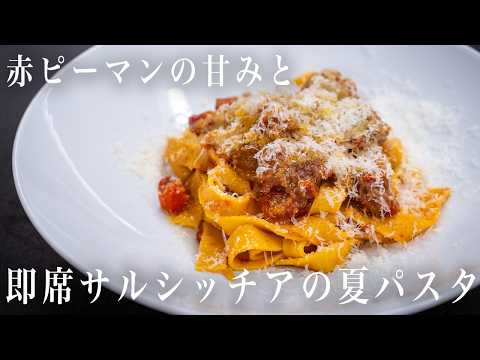
#363 Summer Pasta with Sweet Red Peppers & Quick Salsiccia | Ponte Vecchio | Italian
Ingredients
- Tagliatelle(homemade fresh pasta or store-bought) 200g
- Salsiccia(or sausage meat / a simple mix of ground meat and pancetta) 80g
- Redpepper sauce (see below) 200g
- Garlic1 clove
- Redchili pepper to taste
- Kombuwater 50g
- [RedPepper Sauce] Red bell peppers (red sweet peppers) 2
- [RedPepper Sauce] Onion 150g
- [RedPepper Sauce] Fennel (or celery) 100g
- [RedPepper Sauce] Tomato sauce 50g
- [RedPepper Sauce] Brodo (broth/bouillon) 150g
- [RedPepper Sauce] Basil 5g
- [RedPepper Sauce] Garlic 2 cloves
- Pecorinocheese to taste
- Parmigiano-Reggianocheese to taste
- Oliveoil to taste
- Saltto taste
About "Tagliatelle with Red Pepper Sauce and Quick Salsiccia"
A summer fresh pasta dish featuring a rich red pepper sauce base made by roasting red peppers in the oven, peeling them, and slowly sautéing them with fennel, onion, and garlic to concentrate their flavors. Quick salsiccia (sausage meat) is added for savory depth and richness. The chef's signature touch is using a hand blender to lightly blend the sauce, leaving some texture so it clings perfectly to the pasta. Finished with a blend of Pecorino and Parmigiano-Reggiano, and a drizzle of olive oil instead of black pepper, to maximize the natural sweetness of the ingredients.
Introduction to ポンテベッキオ山根大助の全力イタリアン →
Tips for Making "Tagliatelle with Red Pepper Sauce and Quick Salsiccia"
-
Prep
- Cut the red peppers in half, roast in a 150°C (300°F) oven for about 20 minutes, let cool, and peel. Oven-roasting is recommended over an open flame to avoid a burnt smell.
-
Prep
- Coarsely chop the onion and fennel rather than mincing them finely, keeping their texture intact. Aim for a rustic, authentic Italian feel.
-
Heat control
- Add the fennel, onion, garlic, and olive oil to a cold pan before turning on the heat. Sauté slowly until the volume is reduced by half to concentrate the umami.
-
Simmering
- Add tomato sauce, kombu water, broth, salt, and basil to the sautéed vegetables. Cover and simmer for about 35 minutes, then discard the basil.
-
Finishing
- Lightly blend the sauce with a hand mixer, leaving some texture. Making it too smooth will cause the sauce to become heavy and clumpy when tossed with the pasta.
-
Heat control
- Do not use high heat when combining the pasta and sauce. Gently toss to coat the pasta at a warm temperature, ensuring it doesn't turn into a stir-fry.
-
Seasoning
- Use a combination of Pecorino and Parmigiano-Reggiano. Pecorino alone can be overpowering, but blending it with Parmigiano adds a deep, authentic Italian flavor.
-
Seasoning
- Intentionally omit black pepper to highlight the natural sweetness of the red peppers, onion, and fennel. Finish simply with a drizzle of olive oil.
Ingredients for "Tagliatelle with Red Pepper Sauce and Quick Salsiccia"
17 items* Tap ingredient names to find on Amazon
- Tagliatelle(homemade fresh pasta or store-bought) 200g
- Salsiccia(or sausage meat / a simple mix of ground meat and pancetta) 80g
- Redpepper sauce (see below) 200g
- Garlic1 clove
- Redchili pepper to taste
- Kombuwater 50g
- [RedPepper Sauce] Red bell peppers (red sweet peppers) 2
- [RedPepper Sauce] Onion 150g
- [RedPepper Sauce] Fennel (or celery) 100g
- [RedPepper Sauce] Tomato sauce 50g
- [RedPepper Sauce] Brodo (broth/bouillon) 150g
- [RedPepper Sauce] Basil 5g
- [RedPepper Sauce] Garlic 2 cloves
- Pecorinocheese to taste
- Parmigiano-Reggianocheese to taste
- Oliveoil to taste
- Saltto taste
How to Make "Tagliatelle with Red Pepper Sauce and Quick Salsiccia"
- 1
[Prepping the Red Peppers] Cut the red peppers in half and roast them in an oven preheated to 150°C (300°F) for about 20 minutes. Remove, let cool slightly, peel off the skin, and chop into bite-sized pieces.
- 2
[Red Pepper Sauce: Sautéing Vegetables] Coarsely chop the onion and fennel (do not chop too finely). Place the fennel, onion, garlic (2 cloves), and a generous amount of olive oil into a cold pan, then turn on the heat.
- 3
Once the garlic is warm and fragrant, add the chopped red peppers. Sauté slowly, being careful not to let them burn, until the volume of the ingredients is reduced by half, evaporating the moisture to concentrate the umami.
- 4
[Red Pepper Sauce: Simmering] Add the tomato sauce, brodo (broth), kombu water, salt, and basil to the sautéed vegetables. Cover and simmer gently for about 35 minutes.
- 5
Once simmered, remove the basil and transfer the sauce to another pot. Lightly blend with a hand mixer. The key is to leave some texture rather than blending it into a completely smooth purée.
- 6
[Sautéing the Salsiccia] In a separate pan, add the crushed garlic (1 clove), red chili pepper, and a little olive oil. Tear the salsiccia into pieces, add to the pan, and sauté. If too much fat renders out, remove some of it.
- 7
[Boiling and Finishing the Pasta] Cook the tagliatelle in a generous amount of salted boiling water.
- 8
Add a little broth and the red pepper sauce to the pan with the salsiccia and warm through. Add the cooked pasta and gently toss to coat with the sauce over low heat, just enough to keep it warm without frying it.
- 9
[Plating] Plate the pasta beautifully and top with the sauce and ingredients. Grate a combination of Pecorino and Parmigiano-Reggiano over the top. Finish with a drizzle of olive oil, omitting black pepper.
Detailed Commentary on "Tagliatelle with Red Pepper Sauce and Quick Salsiccia"
* Content organized by topics from the video.
Seasonal Chat & Signature Homemade Fresh Pasta
The video starts with a casual chat about the unusually hot May weather, with temperatures exceeding 30°C. Summer vegetables like peppers, zucchini, and eggplant are coming into season, and today's dish highlights red peppers. The chef uses his signature homemade fresh pasta, made with a ratio of 5 egg yolks to 1 egg white. His unique recipe blends all-purpose flour, a bit of pastry flour, and a touch of semolina, though store-bought fresh or dry pasta works too. He also notes that adding eggplant would create a delicious, melt-in-your-mouth texture, sharing his excitement for summer pasta.
Ingredients & Chef Yamane's 47-Year Career
The star ingredient, red peppers, are cut in half, roasted in a 150°C oven for about 20 minutes, cooled, and peeled. Chef Yamane (now 65) recalls that when he entered culinary school 47 years ago at age 18, the standard method was charring them over an open flame on a fork and peeling them in water. However, because that left a burnt smell, trial and error led him to the oven-roasting method. Other ingredients include fennel (or celery), onion, salsiccia (sausage meat, or a simple mix of ground meat with pancetta/bacon), basil, tomato sauce, Pecorino and Parmigiano cheeses, garlic, and red chili pepper.
Rustic Prep for Authentic Italian Character
The onion doesn't need to be finely minced. Chef Yamane prides himself on being meticulous compared to others in the Italian culinary world, but warns that being too fussy can strip away the authentic Italian character. While French cuisine tends to favor precise, fine cuts, Italian food embraces a certain rustic charm. The fennel is chopped similarly. Although the ingredients will be simmered, they shouldn't be turned into a completely smooth purée. Chopping everything too finely ruins the flavor; the key is to leave a subtle presence of the ingredients.
Sautéing Slowly to Concentrate Umami
Place the chopped fennel, onion, garlic, and a generous amount of olive oil into a cold pan and turn on the heat. Once the garlic warms up and becomes fragrant, add the peeled and chopped red peppers. Cooking the peppers thoroughly is crucial, as Chef Yamane dislikes undercooked peppers. Sauté slowly, ensuring they don't burn, until the volume of the ingredients is reduced by half to evaporate moisture and concentrate the umami. By concentrating the flavors deeply at this stage, the core deliciousness remains intact even when liquids are added later.
Simmering & the Perfect Sauce Texture
Add a little tomato sauce, kombu water, broth, salt, and basil to the slowly sautéed vegetables, cover, and simmer gently for about 35 minutes. Once done, remove the basil and transfer the sauce to another pot. Use a hand blender to lightly blend the sauce. The secret is to leave some texture rather than puréeing it completely. Making it too smooth causes the sauce to become heavy and clumpy when tossed with the pasta, which ruins the dish. This precise texture is the chef's professional touch.
Salsiccia Umami & Finishing the Pasta
In a separate pan, sauté crushed garlic, red chili pepper, a little olive oil, and torn pieces of salsiccia. In Italy, sausage casings are often removed to use the meat in sauces, which inspired this quick, skinless salsiccia method. Boil the pasta, and if the salsiccia renders too much fat, drain some off. Combine a little broth with the simmered sauce, then add the cooked pasta. Toss gently over low heat just to keep it warm. Avoid high heat, as you want to coat the pasta with the sauce, not stir-fry it.
The Cheese Ratio & Why to Skip Black Pepper
Plate the pasta beautifully and top with the sauce and ingredients. Grate cheese over the dish; Chef Yamane's recent favorite is adding a bit of Pecorino. While Pecorino alone can be too strong, combining it with Parmigiano-Reggiano instantly creates a deep, authentic Italian flavor profile. He intentionally avoids black pepper. Adding pepper to everything is more of a French style; omitting it to highlight the natural sweetness of the ingredients is a classic Italian approach. Finish with a drizzle of olive oil.
Tasting & the Future of Italian Cuisine in Japan
Upon tasting, the mouth is filled with a gentle, rounded, yet intense sweetness drawn out by sautéing the peppers, onions, and fennel to their absolute limit. While butter would also taste delicious, the chef notes that Japan has a strong stereotype of 'Italian = olive oil, French = butter.' Italian cuisine in Japan has a history of about 55 years. Today's young chefs are starting with a 30-year advantage over his generation. While his generation had to build everything from scratch, he eagerly anticipates the future, expecting new chefs to emerge who possess authentic Italian sensibilities or even entirely new culinary perspectives right here in Japan.
About ポンテベッキオ山根大助の全力イタリアン
ポンテベッキオ山根大助の全力イタリアン
3.6万人 subscribers ・ イタリアン
* Opens YouTube channel
* Subscriber count is as of article creation and may differ from the current number.
