

Recipe
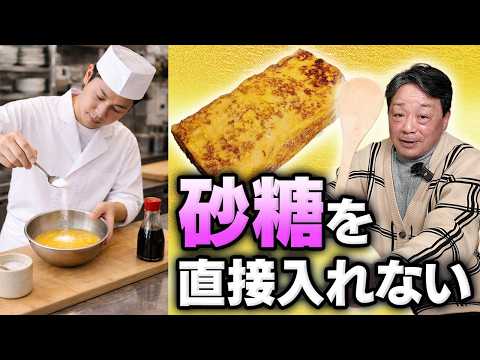
Dashimaki vs. Tamagoyaki: Seasoning Secrets & Why Not to Add Sugar Directly [Part 2]
Ingredients
- Eggs,to taste
- Sugar,to taste (dissolved beforehand as a seasoning liquid)
- Soysauce, to taste (dissolved beforehand as a seasoning liquid)
- Mirin,to taste (dissolved beforehand as a seasoning liquid)
- Nikirisake (boiled-off sake), to taste (used instead of water or dashi for bento boxes)
- Oil,to taste (preheated for 5 to 8 minutes beforehand)
About "Tamagoyaki"
A master Japanese chef with 50 years of experience explains the philosophy and techniques for making delicious Tamagoyaki. By leaving the whites and yolks partially unmixed to create a marbled ("muragumo") texture, you get a unique contrast of textures. A fundamental professional rule is to never add sugar or soy sauce directly to the eggs; instead, dissolve them beforehand into a seasoning liquid. Additionally, rather than using raw oil, heat the oil for 5 to 8 minutes to remove any raw oil smell. For bento boxes, using boiled-off sake (nikiri sake) instead of water and giving it a deep golden-brown color ensures the Tamagoyaki remains delicious and doesn't spoil easily even when cold.
Tips for Making "Tamagoyaki"
-
Mixing Method
- Mix the eggs to a marbled ("muragumo") state where the whites and yolks are not fully blended. Use tools like a wooden spatula or a batter stick instead of a whisk or chopsticks to avoid over-mixing.
-
Seasoning
- Never add sugar, soy sauce, and mirin directly to the eggs. Sugar won't dissolve in cold eggs, causing uneven flavor. Instead, prepare a separate "seasoning liquid" beforehand and mix it into the eggs.
-
Using Oil
- Do not use raw oil. Instead, use "tempered oil" heated for 5 to 8 minutes at a temperature that won't burn it. This removes the raw oil smell and highlights the natural flavor of the eggs. Avoid using too much oil, as it dilutes the flavor.
-
Browning
- Unlike Dashimaki, Tamagoyaki is lightly browned on the surface at the end to add aroma. For bento boxes, brown it thoroughly to a golden-brown color.
-
Bento Tips
- For bento boxes, use "nikiri sake" (boiled-off sake) instead of water or dashi. While water makes it spoil easily, boiled-off sake prevents spoilage, and its sweetness turns into rich umami, keeping it delicious even when cold.
Ingredients for "Tamagoyaki"
6 items* Tap ingredient names to find on Amazon
- Eggs,to taste
- Sugar,to taste (dissolved beforehand as a seasoning liquid)
- Soysauce, to taste (dissolved beforehand as a seasoning liquid)
- Mirin,to taste (dissolved beforehand as a seasoning liquid)
- Nikirisake (boiled-off sake), to taste (used instead of water or dashi for bento boxes)
- Oil,to taste (preheated for 5 to 8 minutes beforehand)
How to Make "Tamagoyaki"
- 1
Combine the sugar, soy sauce, and mirin beforehand, dissolving them well to make a seasoning liquid.
- 2
Pour oil into a frying pan or Tamagoyaki pan and heat it for 5 to 8 minutes at a temperature that won't burn it, preparing "tempered oil."
- 3
Crack the eggs and use a wooden spatula (Miyajima) or a batter mixing stick to gently and roughly mix them, leaving them partially unmixed in a marbled ("muragumo") state.
- 4
Add the prepared seasoning liquid to the eggs and mix lightly until uniform.
- 5
Lightly grease the Tamagoyaki pan with the tempered oil, heat it, pour in the egg mixture, and roll it up.
- 6
To finish, lightly brown the surface to add aroma. For bento boxes, cook until it has a deep golden-brown color.
Detailed Commentary on "Tamagoyaki"
* Content organized by topics from the video.
The Key Difference: Dashimaki vs. Tamagoyaki
In the previous episode, we explained Dashimaki Tamago in detail, but this time we focus on "Tamagoyaki." According to the chef, Tamagoyaki doesn't contain as much dashi as Dashimaki, but it is cooked by coating the eggs with a seasoning liquid. The most defining feature is the marbled ("muragumo") finish. Instead of mixing completely, leaving the whites and yolks partially unmixed creates a unique deliciousness where the pudding-like texture of the whites and the rich texture of the yolks playfully intertwine in your mouth.
Tools for Mixing and the Secret of 'Muragumo'
While many people tend to use a whisk or chopsticks to beat eggs until they are finely frothed, the chef does not do this for his Tamagoyaki. To preserve the marbled texture, he actually uses a "Miyajima" (wooden spatula) or a round batter-mixing stick typically used for tempura. Mixing with regular chopsticks blends the eggs too finely, losing the contrast between the whites and yolks. This specific mixing method is the secret to creating a texture that beautifully harmonizes in your mouth.
Never Add Sugar Directly: Seasoning Philosophy
The chef points out that the absolute worst mistake is throwing sugar, soy sauce, and mirin directly into cracked eggs. Sugar will never dissolve properly in cold eggs. This leads to uneven seasoning, making some parts sweet and others salty. As a professional, the basic rule is to prepare a separate "seasoning liquid" by thoroughly dissolving the sugar, soy sauce, and mirin beforehand, and then combining it with the eggs. This is the culinary philosophy behind making a consistently seasoned, delicious Tamagoyaki.
The Impact of 'Tempered Oil' on Flavor
To maximize the flavor of Tamagoyaki, the chef strongly insists on never using raw oil. You must heat the oil thoroughly for 5 to 8 minutes at a temperature that won't burn it to create "tempered oil." This removes the raw oil smell, highlighting the delicate flavor and umami of the eggs. If you use raw oil, the eggs will absorb it, leaving an unpleasant oily smell in your mouth. Additionally, using too much oil to prevent sticking is also a mistake, as it dilutes the overall flavor.
Browning and Tips for Bento Box Tamagoyaki
While Dashimaki Tamago is never browned to preserve the delicate aroma of the dashi, Tamagoyaki is lightly browned at the end to add a toasted aroma. Especially for bento boxes, the trick is to brown it to a deep golden color, keeping in mind that it will be eaten cold. Furthermore, the chef recommends using "nikiri sake" (boiled-off sake) instead of water or dashi for bento. While water makes the omelet spoil faster, sake prevents spoilage, and its sweetness transforms into rich umami, keeping the Tamagoyaki delicious even when cold.
Sushi-Style Tamagoyaki vs. Washoku Basics
While sushi restaurants serve a unique style of Tamagoyaki made with white fish paste, Shiba shrimp, and mountain yam to create a cake-like texture, the chef focuses here on the fundamental Japanese home-style "Tamagoyaki." Highlighting the individual flavors of the whites and yolks, seasoned with just the right amount of liquid, and rolled up—this is the ultimate Tamagoyaki the chef has perfected. At the end of the video, we also get a glimpse of the chef's daily breakfast: udon in a dashi made from bonito flakes and dried anchovies, topped with leftover thick-rolled omelet from the fridge, and served with homemade yuzu kosho.
About 大将に聞いてみた!
大将に聞いてみた!
2.1万人 subscribers ・ 日本料理・和食
* Opens YouTube channel
* Subscriber count is as of article creation and may differ from the current number.
