

Recipe
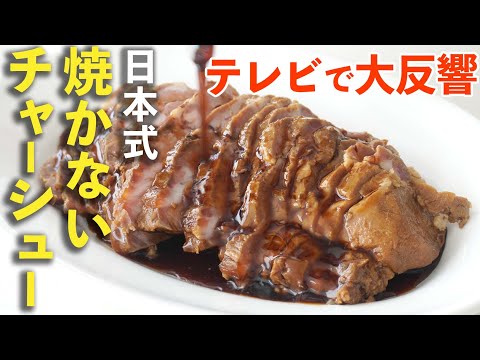
Pro Chef Explains: The Famous 'No-Bake Chashu' Recipe | Japanese Simmered Pork
Ingredients
- Porkshoulder block: 300g
- Water:1 liter
- Soysauce: 50g
- Honey:30g
- (Optional)Ginger peel and green parts of scallions: to taste
- (Optional)Hot mustard paste: to taste
About "Japanese-Style Chashu (No-Bake Simmered Pork)"
An oven-free Japanese-style chashu recipe where pork shoulder is simmered in water and then marinated in a honey-soy sauce glaze. Simmering without a lid keeps the temperature just below boiling, converting collagen into gelatin for a moist, tender finish. Using honey promotes the Maillard reaction, creating a savory, roasted aroma. Slicing the pork while cold after overnight marination ensures clean, beautiful cuts. The leftover simmering broth can be repurposed into a delicious Chinese-style soup, giving you two dishes from one recipe.
Introduction to 樋口直哉の料理論[Cooking theory] →
Tips for Making "Japanese-Style Chashu (No-Bake Simmered Pork)"
-
Ingredients
- Pork shoulder has a rich mix of lean meat, fat, and collagen, which turns into gelatin during cooking to keep it juicy.
-
Prep
- Ensure the meat is fully submerged. If it floats, cover it with a paper towel to prevent drying.
-
Heat control
- Simmering uncovered keeps the pot at around 95°C (203°F) via evaporative cooling, preventing the meat from toughening.
-
Heat control
- Slowly bring to near-boiling over medium heat, then reduce to low and simmer for 1.5 hours.
-
Odor removal
- Add ginger peel or scallion greens to help eliminate any gamey odor from the meat.
-
Seasoning
- Using honey instead of sugar triggers the Maillard reaction with meat proteins, creating a roasted aroma quickly.
-
Glazing
- Boil soy sauce and honey in a pan to make the glaze, then add the simmered pork and coat thoroughly.
-
Marinating
- Place the pork and glaze in a zipper-lock bag, remove air, and marinate in the fridge for 1–2 hours or overnight.
-
Slicing
- Slice the pork while cold; the firmed-up fat and muscle fibers allow for clean, beautiful, thin cuts.
-
Serving
- Warm in the microwave or lightly sear before serving to melt the gelatin. Top with leftover glaze and serve with hot mustard.
-
Broth reuse
- Add soy sauce, chopped scallions, bonito flakes, and dashi powder to the leftover broth to make a quick Chinese soup.
Ingredients for "Japanese-Style Chashu (No-Bake Simmered Pork)"
6 items* Tap ingredient names to find on Amazon
- Porkshoulder block: 300g
- Water:1 liter
- Soysauce: 50g
- Honey:30g
- (Optional)Ginger peel and green parts of scallions: to taste
- (Optional)Hot mustard paste: to taste
How to Make "Japanese-Style Chashu (No-Bake Simmered Pork)"
- 1
Place the pork shoulder and 1 liter of water in a pot. Ensure the meat is completely submerged; if it floats, cover it with a paper towel (drop lid). Add ginger peel or the green parts of scallions if you want to eliminate any gamey odor.
- 2
Slowly bring the temperature up to just below boiling over medium heat.
- 3
Once it reaches a boil, reduce the heat to low and simmer uncovered for about 1 hour and 30 minutes. (Leaving the lid off allows evaporative cooling to keep the pot temperature around 95°C/203°F, preventing the meat from toughening.)
- 4
Once the meat is tender, remove it from the pot. Do not discard the cooking liquid; save it to make soup.
- 5
Add 50g of soy sauce and 30g of honey to a frying pan and heat over medium. Once it bubbles and becomes fragrant, add the simmered pork.
- 6
Thoroughly coat the entire surface of the meat with the glaze.
- 7
Transfer the meat and all the glaze into a zipper-lock bag, squeeze out as much air as possible to seal, and refrigerate for at least 1 to 2 hours (preferably overnight).
- 8
Slice the pork thinly to your desired thickness while it is still cold and firm.
- 9
Just before serving, warm it in the microwave or lightly sear it in a pan to melt the fat and gelatin, making it even juicier.
- 10
Plate the sliced pork, drizzle with the remaining glaze from the bag, and serve with hot mustard paste to taste.
- 11
[Using the Broth] Heat the leftover cooking liquid with soy sauce, chopped scallions, bonito flakes, and dashi powder to make a delicious Chinese-style soup.
Detailed Commentary on "Japanese-Style Chashu (No-Bake Simmered Pork)"
* Content organized by topics from the video.
History & Benefits of Japanese Chashu
Today, we are making 'Japanese-style Chashu,' which is simmered rather than roasted. Unlike traditional Chinese barbecued pork (char siu), this style developed uniquely in Japanese ramen shops and casual Chinese diners. Even in China, this simmered version is known as 'Rishi Chashao' (Japanese-style Chashu). Making it at home offers three great benefits: it keeps well, the leftover broth can be repurposed into soups or sauces, and the incredibly tender texture pairs perfectly with ramen noodles. In this guide, I will fully explain the logical, pro-level recipe for this 'no-bake chashu' that became a huge hit when featured on the Japanese TV show 'Hirunandesu!'
Why Pork Shoulder is the Perfect Cut
The ingredients are incredibly simple. The star is a 300g block of pork shoulder (pork collar), along with 1 liter of water, 50g of soy sauce, and 30g of honey. There is a clear scientific reason for choosing pork shoulder. This cut features an intricate mix of flavorful lean meat, moderate fat, and connective tissue (collagen), giving it an exceptionally deep flavor. When simmered slowly over time, this collagen breaks down into gelatin. Gelatin holds onto moisture beautifully, preventing the meat from drying out and resulting in an incredibly juicy, tender texture. By scientifically leveraging this property, even an affordable cut of meat can be transformed into restaurant-quality chashu.
The Secret to Simmering Uncovered
The first step is placing the pork in a pot with water and heating it. The most crucial point here is ensuring the meat is completely submerged. If any part of the meat is exposed to the air, it will dry out and fail to become tender. Once it boils, immediately lower the heat and simmer gently for 1.5 hours. If the meat floats, cover it with a paper towel to keep it moist. You can also add ginger peel or scallion greens to neutralize any gamey odors. The ultimate secret is to simmer 'uncovered.' Leaving the lid off allows evaporative cooling to lower the pot's temperature, keeping it at an optimal 95°C (203°F)—just below boiling. Simmering gently at this temperature prevents the meat fibers from tightening, keeping it juicy.
The Science of Slow Heating
In one of my favorite books, 'On Food and Cooking' by Harold McGee, it is noted that the most important thing in stewing is to prevent the center of the meat from reaching boiling temperatures. Heating the meat slowly allows its natural enzymes to remain active longer. This mimics a slow aging process, naturally weakening the connective tissues and significantly reducing the time the meat spends at high temperatures where fibers squeeze out moisture. Although we are simmering in a pot rather than using an oven, we apply this exact scientific approach. Using a heavy, heat-conductive pot, we slowly raise the temperature to near-boiling over medium heat, drop it to low, and simmer uncovered to stay below boiling. This mechanism applies not just to chashu, but to beef stew, curry, and any simmered meat dish.
Finishing with a Honey Glaze
Once the meat is tender, we make the glaze in a frying pan with 50g of soy sauce and 30g of honey. Using honey instead of sugar is a professional secret. While sugar (sucrose) simply caramelizes when heated, the fructose and glucose in honey react with the meat's proteins to dramatically accelerate the Maillard reaction. This coaxes out a rich, roasted aroma in a short time, mimicking hours of slow-roasting. Once the glaze bubbles and smells fragrant, add the simmered pork and coat it thoroughly. Then, transfer the pork and glaze into a zipper-lock bag, press out the air, and seal. Letting it rest for 1 to 2 hours—or ideally overnight—allows the flavors to penetrate deep into the meat.
Slicing the Chashu After Chilling
After letting the chashu rest in the refrigerator overnight, the flavors are fully absorbed. The secret to slicing it beautifully is to do so while the meat is thoroughly chilled. When cold, the muscle fibers and fat are firm, allowing you to slice it incredibly thin without it falling apart. While it is delicious cold, warming it slightly in the microwave or lightly searing it in a pan right before serving melts the solidified fat and gelatin, making it melt-in-your-mouth tender. Arrange the slices beautifully on a plate, drizzle with the concentrated glaze left in the bag, and serve with a touch of hot mustard for a stunning, gourmet presentation.
Tasting & Repurposing the Broth
Taking a bite of this finished chashu reveals a burst of rich pork flavor combined with the deep, sweet-savory honey glaze—it is absolutely exquisite. Enjoy it as an appetizer, over warm rice as a chashu bowl, or diced up in fried rice. Best of all, you don't throw away the simmering broth. By simply adding soy sauce, chopped scallions, bonito flakes, and a pinch of dashi powder to the leftover broth, you can easily recreate that nostalgic, comforting Chinese soup served at local diners. This single recipe yields both premium chashu and a delicious soup. It takes some time, but requires very little active effort, so please give it a try!
About 樋口直哉の料理論[Cooking theory]
樋口直哉の料理論[Cooking theory]
7.9万人 subscribers ・ 家庭料理/調理科学
* Opens YouTube channel
* Subscriber count is as of article creation and may differ from the current number.
