

Recipe
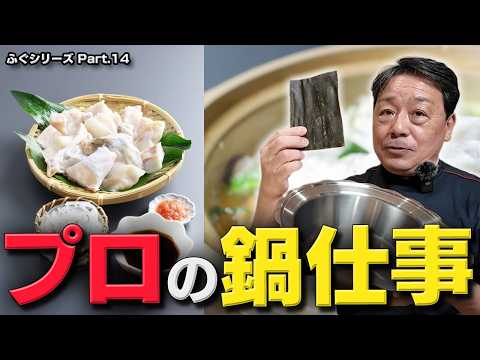
Master Chef's Fugu (Pufferfish) Hot Pot! | Never Put the Flesh in Raw: Full Prep & Dashi Guide
Ingredients
- Fugu(pufferfish, approx. 2 kg)
- Rausukelp ears (edges), large amount
- Salt
- Sake
- Lightsoy sauce
- Ponzu
About "Fugu Hot Pot"
A master Japanese chef teaches you how to make authentic Fugu (Pufferfish) Hot Pot. Instead of putting the fugu flesh directly into the pot, it is prepped by dehydrating it with salt and sake to remove any odor and draw out the umami. The base is a rich kelp dashi made generously with Rausu kelp ears (edges). The recipe also features zero-waste techniques, such as parboiling the fugu skin and sake-simmering the inner skin to make a gelatinous broth (nikogiri) that elevates the final rice porridge (zosui).
Tips for Making "Fugu Hot Pot"
-
Prep
- Do not put raw fugu flesh directly into the pot; dehydrate it with salt and sake first to remove odors and draw out umami.
-
Prep
- Parboil fugu parts (collar, backbone, throat, tail, etc.) to remove sliminess, then dehydrate them with salt and sake.
-
Dashi
- Soak a large amount of Rausu kelp ears from the day before. When heating, do not remove them before boiling; simmer thoroughly to extract all the umami.
-
Dashi
- Rausu kelp ears are the outer edges, which are young and quickly release a gentle dashi. Strong kelp umami pairs perfectly with delicate fugu.
-
Zero-Waste
- Blanch the fugu skin, swish it quickly in the hot pot, and eat with ponzu. Sake-simmer the inner skin into a gelatinous broth to add depth to the rice porridge.
-
Knife Work
- Cut each part of the fugu into bite-sized pieces and carefully prep them so no bones are left to catch in the mouth.
Ingredients for "Fugu Hot Pot"
6 items* Tap ingredient names to find on Amazon
How to Make "Fugu Hot Pot"
- 1
Dehydrate the fugu flesh with salt and sake starting the day before. Process other parts (collar, backbone, throat meat, tail, etc.) in the same way.
- 2
Parboil the fugu parts quickly in hot water and ice-shock them to remove any sliminess.
- 3
Soak the Rausu kelp ears in water starting the day before.
- 4
Heat the soaked kelp in a pot, simmering it thoroughly to extract the flavor instead of removing it right before boiling.
- 5
Once the kelp dashi is fully extracted, season it with light soy sauce.
- 6
Blanch the fugu skin separately and set aside.
- 7
Sake-simmer the fugu inner skin until it forms a gelatinous broth.
- 8
Once the kelp dashi is ready, add the prepped fugu flesh to the pot and cook.
- 9
Quickly swish the fugu skin in the hot pot and enjoy with ponzu.
- 10
When making the final rice porridge (zosui), add the sake-simmered gelatinous broth to add incredible depth of flavor.
Food Science
Dehydrating the fugu flesh with salt and sake starting the day before removes excess moisture and odors, concentrating the umami. Additionally, combining the glutamic acid in the kelp with the inosilic acid in the fugu creates an umami synergy, dramatically enhancing the flavor of the dashi. Furthermore, sake-simmering the fugu inner skin gelatinizes its collagen; adding this gelatinous broth to the rice porridge results in a rich, deeply flavorful finish.
Detailed Commentary on "Fugu Hot Pot"
* Content organized by topics from the video.
The Difficulty of Fugu Hot Pot & Prep Importance
A master chef with 50 years of experience in Japanese cuisine shares the essence of Fugu Hot Pot. While hot pot is often thought of as simply boiling ingredients together, the master chef asserts that 'it won't taste good that way.' Instead of putting raw fugu directly into the pot, he recommends dehydrating it beforehand as a prep step. This is similar to the technique used in cod hot pot to remove fishy odors and draw out umami. Adding this extra step to fugu dramatically transforms the flavor. The master chef has served fugu hot pot this way for 25 years, and in this video, he demonstrates the difference between prepped and unprepped fugu.
Exquisite Dashi from Rausu Kelp 'Ears'
Essential to a delicious fugu hot pot is a robust kelp dashi. The master chef uses the 'ears' (edges) of Rausu kelp. These are the outer edges trimmed off to make the kelp look neat for shipment; they are relatively young and release a gentle dashi quickly. They also rarely turn bitter and are reasonably priced. The master chef believes that because fugu has a delicate, clean flavor, it must be cooked in a strong, rich kelp dashi. Based on his unique theory that fugu—which grows up crunching on shells—inherently pairs perfectly with rich kelp umami, he preps a generous amount of kelp by soaking it from the day before.
The Master Chef's Rich Kelp Dashi Method
The Rausu kelp ears prepped the day before are finally heated to extract the dashi. The pot contains an astonishingly large amount of kelp, which releases a rich aroma and deep umami as it heats. The master chef has a strict rule: 'Never remove the kelp midway.' While standard Japanese cooking often dictates removing kelp right before boiling, his style is to simmer it thoroughly to extract every bit of its natural flavor. Tasting it reveals an incredibly deep richness and viscosity compared to before heating, creating an exquisite soup with just a touch of light soy sauce.
Fugu Cuts Explained & Meticulous Prep
The master chef explains the star of the dish: the fugu flesh. From a magnificent fugu weighing about 2 kg, once you set aside the portions for sashimi, the amount left for the hot pot is surprisingly small. Fugu has a very low yield, requiring nearly half of it to be discarded. On the platter, cuts like the head (collar), backbone, uguisu (throat), and tail are arranged. All of these have been parboiled to remove sliminess and dehydrated with salt and sake. The master chef also emphasizes the importance of cutting the pieces to bite-sized portions, using meticulous knife work to ensure no bones get caught in the mouth.
Zero-Waste Techniques for Fugu Skin & Inner Skin
The master chef's style is to enjoy every part of the fugu, including the skin and inner skin, without any waste. While fugu skin is typically served as a sashimi garnish or made into gelatin, the master chef suggests blanching the skin and then quickly swishing it in the hot pot to enjoy its gelatinous texture with ponzu. Furthermore, the tough inner skin removed during sashimi prep is simmered in sake (sake-iri). Once cooled, this sake-simmered inner skin turns into a gelatinous broth (nikogiri) due to fugu's naturally high gelatin content. Adding this concentrated umami broth to the final rice porridge (zosui) adds incredible depth and richness to the soup.
Cultivating Live Bacteria: Meticulous Koji Prep
In the second half of the video, the master chef introduces another of his passions: prepping koji. Using fresh, live koji sourced from his hometown in Saga Prefecture, he carefully cleans jars to prepare them. Inside the jars, he ferments brown rice koji, which has a delightful popping texture, and awase koji (a blend of rice and barley). He nurtures them lovingly, stirring them once a week to expose them to air. Furthermore, his raw koji soy sauce, aged for three and a half years, has a thick texture and highly concentrated umami. It serves as a versatile condiment that supports Japanese flavors, perfect for dipping vegetables, as a salad dressing base, or as a sauce for meat dishes.
About 大将に聞いてみた!
大将に聞いてみた!
2.1万人 subscribers ・ 日本料理・和食
* Opens YouTube channel
* Subscriber count is as of article creation and may differ from the current number.
