

Recipe
How to Make Spring Rolls | Classic Five-Ingredient Spring Rolls Recipe by a Former Hotel Chef
Ingredients
- 10spring roll wrappers
- 120gpork loin (thinly sliced for shabu-shabu)
- A:A pinch of salt
- A:A pinch of pepper
- A:1 tsp sake
- A:1/2 tsp soy sauce
- 1egg
- 2tsp potato starch
- 1tbsp vegetable oil (for shangjiang)
- B:100g cabbage
- B:70g bamboo shoots (boiled)
- B:2 shiitake mushrooms
- B:10g glass noodles
- 20ggarlic chives
- 1tbsp vegetable oil (for stir-frying)
- C:1 tbsp sake
- C:1/2 tbsp oyster sauce
- C:1/2 tbsp soy sauce
- D:200ml water
- D:2 tsp chicken bouillon powder
- D:1 tsp sugar
- D:A pinch of pepper
- 1tbsp potato starch slurry (potato starch and water mixed 1:1)
- 1tsp sesame oil
- E:1 tbsp flour (for flour paste)
- E:1 tbsp water (for flour paste)
- Vegetableoil (for deep-frying), as needed
About "Five-Ingredient Spring Rolls (Gomoku Harumaki)"
In this video, a former hotel chef shares his recipe for authentic five-ingredient spring rolls that are crispy on the outside and wonderfully juicy on the inside (makes 10 rolls). He demonstrates 'shangjiang,' a traditional Chinese technique to prep pork so it stays tender and juicy. The filling is thoroughly chilled before wrapping to prevent bursting and air bubbles during frying. By slow-cooking at a low temperature (150°C/300°F) and finishing with a high-temperature double-fry (190°C/375°F), you get an incredibly light, crispy texture.
Video Timestamps
Tips for Making "Five-Ingredient Spring Rolls (Gomoku Harumaki)"
-
Prep
- Julienning the ingredients (cabbage, bamboo shoots, shiitake, and pork) to a uniform 1 cm width ensures a pleasant mouthfeel and makes the filling easier to wrap.
-
Prep
- Rehydrate the glass noodles in boiling water, let them cool, and cut them in half before using.
-
Prep
- The white crystals seen when cutting bamboo shoots are tyrosine (an amino acid) and are harmless, but you can rinse them off with chopsticks if they bother you.
-
Prep (Shangjiang)
- Pretreat the pork using the 'shangjiang' technique in four distinct steps: 1) massage in salt, pepper, sake, and soy sauce; 2) massage in the whole egg; 3) add potato starch to create a thin coating; 4) coat with vegetable oil. Do not add all ingredients at once.
-
Thickening
- Always turn off the heat before adding the potato starch slurry. Once added, mix thoroughly, then return to medium heat and stir constantly until it boils to prevent clumping.
-
Chilling
- Spread the finished filling onto a tray to cool, then chill thoroughly in the refrigerator before wrapping. Wrapping while hot will soggy the wrappers, causing them to burst or bubble during frying.
-
Wrapping
- Place the spring roll wrappers with the smooth side facing down (outward) and the rough side facing up (inward). Be careful as raw (non-pre-cooked) wrappers tear easily.
-
Wrapping
- Make the sealing paste by mixing equal parts flour and water (rice flour or potato starch is not sticky enough). Roll once from the bottom, pull it slightly to release air, fold the sides, and roll loosely toward the top. Wrapping too tightly tears the wrapper, while trapped air causes bursting.
-
Frying
- Gently place the rolls seam-side down in 150°C (300°F) oil and fry slowly for about 4 minutes. Once lightly colored, remove them using a skimmer instead of chopsticks to avoid puncturing the wrappers.
-
Frying
- Double-frying: Raise the oil to 190°C (375°F), skim off any crumbs, and fry until golden brown. Finishing at a high temperature drains excess oil, resulting in a light, crispy texture.
-
Plating
- Score a small cut with the heel of your knife first, then slice through in one swift pulling motion to cut the spring rolls cleanly without crushing them.
Ingredients for "Five-Ingredient Spring Rolls (Gomoku Harumaki)"
27 items* Tap ingredient names to find on Amazon
- 10spring roll wrappers
- 120gpork loin (thinly sliced for shabu-shabu)
- A:A pinch of salt
- A:A pinch of pepper
- A:1 tsp sake
- A:1/2 tsp soy sauce
- 1egg
- 2tsp potato starch
- 1tbsp vegetable oil (for shangjiang)
- B:100g cabbage
- B:70g bamboo shoots (boiled)
- B:2 shiitake mushrooms
- B:10g glass noodles
- 20ggarlic chives
- 1tbsp vegetable oil (for stir-frying)
- C:1 tbsp sake
- C:1/2 tbsp oyster sauce
- C:1/2 tbsp soy sauce
- D:200ml water
- D:2 tsp chicken bouillon powder
- D:1 tsp sugar
- D:A pinch of pepper
- 1tbsp potato starch slurry (potato starch and water mixed 1:1)
- 1tsp sesame oil
- E:1 tbsp flour (for flour paste)
- E:1 tbsp water (for flour paste)
- Vegetableoil (for deep-frying), as needed
How to Make "Five-Ingredient Spring Rolls (Gomoku Harumaki)"
- 1
Rehydrate the glass noodles in boiling water. Once softened, drain and let cool, then cut them in half.
- 2
Julienne the cabbage into 4–5 cm lengths and 1 cm widths. Julienne the bamboo shoots (if you mind the white crystals, rinse them off with chopsticks). Remove the stems from the shiitake mushrooms and slice them into 5 mm thick pieces. Cut the garlic chives into 2–3 cm lengths.
- 3
Cut the pork loin into 1 cm wide strips. Place in a bowl and massage in the salt, pepper, sake, and soy sauce from A (Step 1). Next, add 1 whole egg and massage it in (Step 2). Add 2 tsp of potato starch and mix (Step 3). Finally, add 1 tbsp of vegetable oil to coat the meat (Step 4). Perform each step one by one in order.
- 4
Heat 1 tbsp of vegetable oil in a frying pan and stir-fry the seasoned pork over medium heat, breaking it up as it cooks.
- 5
Once the surface of the meat turns whitish, add the cabbage, bamboo shoots, shiitake mushrooms, and glass noodles from B. Stir-fry together over medium-high heat to cook off the moisture.
- 6
Add the sake, oyster sauce, and soy sauce from C, tossing to coat. Add the garlic chives along with the water, chicken bouillon powder, sugar, and pepper from D. Bring to a boil over medium heat and simmer for about 1 minute.
- 7
Turn off the heat, add 1 tbsp of potato starch slurry, and mix well. Turn the heat back to medium and stir constantly while heating to thicken (keep stirring until it comes to a boil).
- 8
Add 1 tsp of sesame oil and mix well. Spread the finished filling onto a tray to let it cool slightly, then chill thoroughly in the refrigerator.
- 9
Mix 1 tbsp of flour and 1 tbsp of water to make a flour paste (adjust the consistency with water if needed).
- 10
Place a spring roll wrapper with the smooth side facing down (outward). Divide the chilled filling into 10 equal portions and place one portion horizontally slightly below the center of the wrapper.
- 11
Roll once from the bottom, pull it slightly toward you to release any trapped air, apply a thin layer of flour paste to the edges, fold both sides inward, and roll loosely toward the top. Secure the end with the flour paste.
- 12
Heat the frying oil to 150°C (300°F). Gently place the spring rolls in with the seam side down and deep-fry slowly for about 4 minutes.
- 13
Once the surface is lightly colored, remove them using a skimmer.
- 14
Raise the oil temperature to 190°C (375°F), skim off any fried crumbs, put the spring rolls back in, and fry until golden brown.
- 15
Remove and drain the oil. Score a small cut with the heel of your knife, then slice through in one swift pulling motion before serving.
Detailed Commentary on "Five-Ingredient Spring Rolls (Gomoku Harumaki)"
* Content organized by topics from the video.
Prep Tips: Sizing and Prepping Ingredients
To make delicious five-ingredient spring rolls, it is important to cut all the ingredients to a uniform size. First, rehydrate the glass noodles in hot water. Remove the stems from the shiitake mushrooms and slice them into 5 mm thick pieces. While we are using fresh shiitake mushrooms here, dried shiitake mushrooms are highly recommended as they will boost the umami flavor even more. Cut the garlic chives into 2–3 cm lengths. When you cut boiled bamboo shoots in half, you might see white crystals inside (this is tyrosine, a type of amino acid and a harmless umami component); if this bothers you, rinse it off with chopsticks before julienning. Julienne the cabbage into 4–6 cm lengths and 1 cm widths to match the size of the bamboo shoots. Finally, cut the pork loin (thinly sliced for shabu-shabu) into 1 cm wide strips as well. Keeping the ingredient sizes uniform ensures a pleasant mouthfeel and makes the filling much easier to wrap.
The 'Shangjiang' Technique for Tender Meat
For prepping the meat, we use a traditional Chinese culinary technique called 'shangjiang.' This method seasons raw meat while locking in moisture and umami to keep it tender. The process is divided into four steps. In the first step, add a pinch of salt and pepper, 1 tsp of sake, and 1/2 tsp of soy sauce to the sliced pork, massaging it thoroughly to let the flavors and aromas penetrate. In the second step, add 1 whole egg and massage it in further. The egg coats the meat, making it incredibly moist and tender. In the third step, add 2 tsp of potato starch to create a thin barrier on the meat's surface, preventing the juices from escaping. Finally, in the fourth step, add 1 tbsp of vegetable oil to coat everything. This prevents the meat from drying out and stops the pieces from clumping together and turning tough when cooked.
Making and Chilling the Savory Filling
Heat 1 tbsp of vegetable oil in a frying pan and stir-fry the seasoned pork over medium heat, breaking it up. Once the surface of the meat turns whitish, add the cabbage, shiitake mushrooms, bamboo shoots, and glass noodles, and stir-fry over medium-high heat to cook off the moisture. Once the cabbage wilts, add 1 tbsp of sake, 1/2 tbsp of oyster sauce, and 1/2 tbsp of soy sauce, tossing to coat. Next, add 200 ml of water, 2 tsp of chicken bouillon powder, 1 tsp of sugar, a pinch of pepper, and the garlic chives. Bring to a boil over medium heat to let the ingredients absorb the savory broth. After simmering for about 1 minute, turn off the heat (this is crucial to prevent clumping) and add 1 tbsp of potato starch slurry. Turn the heat back to medium and stir constantly for about 1 minute to thicken. Finish by stirring in 1 tsp of sesame oil for aroma. Spread the finished filling onto a tray to cool slightly, then chill it thoroughly in the refrigerator. Wrapping the filling while it is still hot will soggy the wrappers and cause them to burst during frying, making this chilling step absolutely essential.
Wrapping Tips to Prevent Bursting
For a beautiful finish, place the spring roll wrapper with the smooth side facing down (outward) and the rough side facing up (inward). Also, note that wrappers come in pre-cooked and raw types; raw wrappers tear easily, so be mindful when purchasing. For the sealing paste, mix equal parts flour and water. Flour is best because rice flour or potato starch has weaker adhesion and can easily come undone. Divide the chilled, slightly firmed filling into 10 equal portions and place one horizontally slightly below the center of the wrapper. Roll once from the bottom, then gently pull it toward you to squeeze out any trapped air. Apply a thin layer of the flour paste along the edges, fold both sides inward, and roll loosely toward the top. Trapped air will expand and cause the rolls to burst during frying, while wrapping too tightly can tear the wrapper. The professional secret is to 'remove the air, yet roll loosely.'
IH Cooktop Features and Hands-Off Soup
For today's cooking, we are using a newly installed Panasonic IH cooktop. This IH cooktop has incredibly strong heat and a wide heating zone, ensuring even heat distribution even with a large frying pan. While wrapping the spring rolls, we will also make a Chinese-style soup using leftover bamboo shoots and frozen dumplings. Simply place water, bamboo shoots, dumplings, and seasonings in a small pot, turn on the heat, and set the IH timer. The cooktop will automatically shut off when the time is up. This 'hands-off' feature is incredibly convenient for busy mornings or bento prep, allowing you to safely and easily prepare an extra dish without having to stand over the stove.
Double-Frying for Ultimate Crispiness
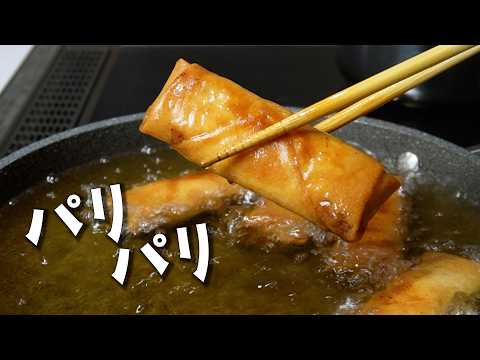
To achieve a professional finish, we will double-fry the spring rolls. Using the IH cooktop's deep-fry mode, we first set the temperature to a low 150°C (300°F). Deep-frying can be tricky to temperature-control, but the IH cooktop maintains a constant temperature at the touch of a button, ensuring success. Once the oil is hot, gently slide the spring rolls in seam-side down. Cooking the seam first prevents the wrapper from unraveling. Slow-frying at a low temperature heats the rolls through while preventing them from bursting. Once they are lightly golden, remove them. It is best to use a skimmer rather than chopsticks, as chopsticks can puncture the wrapper and cause the filling to leak. Next, raise the oil temperature to 190°C (375°F), skim off any crumbs, and put the spring rolls back in. Frying at a high temperature until deep golden brown helps drain excess oil, resulting in an incredibly light and crispy texture.
Tasting the Crispy Rolls & Cooktop Review
Now, let's cut the freshly fried spring rolls. Score a small cut with the heel of your knife first, then slice through in one swift pulling motion to keep them from collapsing. A wonderful, crispy crunch echoes as the piping hot filling is revealed. Taking a bite, the double-fried wrapper is incredibly crispy and not greasy at all, while the filling is packed with the concentrated flavors of the various ingredients. The dumpling soup, finished at the same time, provides a comforting contrast with the nice texture of the bamboo shoots. Cleanup is also a breeze; because we fried on the back zone of the IH cooktop, any oil splatters were contained to the front cooking space without reaching the floor, and a quick wipe of the glass top leaves it sparkling clean. With its high heat, precise temperature control, and effortless cleanup, this cooking session truly showcased the amazing benefits of the new IH cooktop.
About ガンガンの料理塾
ガンガンの料理塾
12.9万人 subscribers ・ 洋食/イタリアン/家庭料理
* Opens YouTube channel
* Subscriber count is as of article creation and may differ from the current number.
