

Recipe
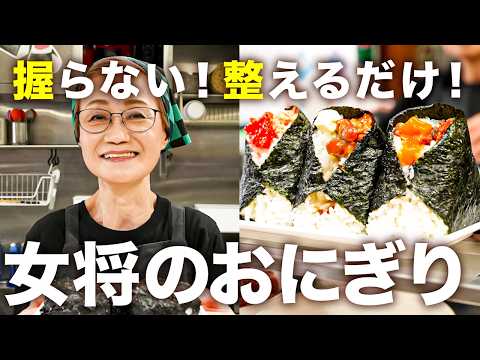
[First Reveal: Onigiri After 50 Years] From 'Worst in the World' to 'Best in Japan'. The Recipe That Supported the Owner [Bongo Yumiko Ukon] | #kurashiru #KitchenOfMemories
Ingredients
- 1cup uncooked rice (1 go)
- 1egg (for freezing)
- Soysauce, to taste
- Apinch of salt
- Sujiko(salted salmon roe), to taste (for mother's style onigiri)
About "Soy-Marinated Egg Yolk Onigiri & Salmon Roe (Sujiko) Onigiri"
Yumiko Ukon, the owner of the onigiri sanctuary 'Bongo', reveals her unpressed onigiri technique for the first time. The Soy-Marinated Egg Yolk Onigiri features frozen egg yolks marinated in soy sauce and stuffed in the center. The key to delicious rice even when cold is to wash it gently without scrubbing and let the steam escape completely. The Sujiko (Salmon Roe) Onigiri, inherited from her mother, teaches us the importance of making onigiri with love and heart.
Introduction to Kurashiru [クラシル] →
Tips for Making "Soy-Marinated Egg Yolk Onigiri & Salmon Roe (Sujiko) Onigiri"
-
Prep
- Do not 'scrub' the rice, but 'wash it gently.' Simply pour in water all at once, swirl lightly, and repeat 3 times. Over-washing damages the grains, turning them into sticky 'powdered rice'.
-
Prep
- Let the washed rice soak. Let it sit for 30 minutes in summer and 1 hour in winter.
-
Cooking
- Cook all at once using the rice cooker's quick-cook function.
-
Finishing
- As soon as it is cooked, mix with a spatula to let the steam escape completely, creating a coating on the surface of each grain. This preserves the deliciousness even when cold.
-
Prep (Egg Yolk)
- Freeze a raw egg in its shell overnight. Freezing it completely until the shell cracks ensures a round, chewy yolk upon thawing.
-
Seasoning
- Separate the egg yolk, place it in a zipper bag, and pour in soy sauce to marinate. 30 minutes is sufficient at home.
-
Shaping
- Do not 'squeeze' the onigiri, but 'shape' it. Make a well in the center of the rice, place 2 egg yolks inside, apply salt to your hands, and gently shape it only 3 times.
-
Technique
- By trapping air gently between the rice grains, the onigiri will melt-in-your-mouth the moment you take a bite.
Ingredients for "Soy-Marinated Egg Yolk Onigiri & Salmon Roe (Sujiko) Onigiri"
5 items* Tap ingredient names to find on Amazon
How to Make "Soy-Marinated Egg Yolk Onigiri & Salmon Roe (Sujiko) Onigiri"
- 1
Place the rice in a bowl, pour in water all at once, and gently swirl. Drain the water and repeat 3 times. It is important not to over-wash.
- 2
Place the washed rice in a rice cooker and let it soak. Let it sit for 30 minutes in summer and 1 hour in winter.
- 3
Cook using the quick-cook function.
- 4
As soon as it is cooked, mix the rice with a spatula to let the steam escape completely, creating a coating on each grain.
- 5
[For Soy-Marinated Egg Yolk Onigiri] Place a raw egg in its shell in the freezer overnight.
- 6
Thaw the frozen egg naturally and separate the egg yolk.
- 7
Place the egg yolk in a zipper bag, pour in soy sauce, and marinate (for about 30 minutes).
- 8
Spread out the rice, make a well in the center, and place 2 egg yolks inside.
- 9
Apply salt to your hands and gently shape the rice only 3 times to form it.
- 10
[For Sujiko Onigiri] Spread out the rice and top with a generous amount of sujiko.
- 11
Apply salt to your hands and gently shape it into a large, round ball.
Food Science
By letting the steam escape right after cooking, moisture control prevents the rice from becoming sticky and preserves the distinct texture of each grain. Additionally, freezing and thawing the egg draws out moisture from the yolk, concentrating its components for a rich, creamy texture. Furthermore, combining the sweetness of the rice with the saltiness of the soy sauce or sujiko, and the rich umami of the egg yolk or sujiko, balances the five basic tastes and enhances the overall flavor.
Detailed Commentary on "Soy-Marinated Egg Yolk Onigiri & Salmon Roe (Sujiko) Onigiri"
* Content organized by topics from the video.
History of 'Onigiri Bongo' & Owner's Journey
'Onigiri Bongo' was started in 1960 by Yumiko Ukon's husband. Moving to Tokyo from Niigata, Yumiko encountered Bongo's onigiri at age 19 and was saved by its deliciousness. She married into the family at 24, marking 50 years this year. When her husband suffered a stroke, she took over making onigiri despite being an amateur. At first, she faced constant complaints that they were the 'worst in the world' and couldn't even look customers in the eye. However, she never gave up. One day, after 10 years of practice, she suddenly felt, 'I did it!' and was able to make onigiri she was satisfied with. From then on, she began making onigiri where her feelings, technique, and heart became one as she looked at her customers' faces.
How to Wash and Cook Rice for Best Flavor
There are crucial tips to cooking delicious rice the Bongo way. First, do not 'scrub' the rice, but 'wash it gently.' Simply pour in water all at once, swirl lightly 3 times, and repeat this process 3 times. Over-washing damages the rice grains, causing them to break into 'powdered rice' and turn sticky when cooked. After washing, let the rice soak thoroughly for 30 minutes in summer and 1 hour in winter, then cook it all at once using the rice cooker's quick-cook function. As soon as it is done, mix with a spatula to let the steam escape completely. Creating a coating on the surface of each grain is the secret to making onigiri that stay delicious even when cold.
Signature Soy Egg Yolk Recipe & Shaping Technique
This is the recipe for the highly popular Soy-Marinated Egg Yolk Onigiri. First, freeze a raw egg in its shell overnight. Freezing it completely until the shell cracks is key to getting a round, chewy yolk upon thawing. After thawing, separate the egg yolk, place it in a zipper bag, and pour in soy sauce to marinate. While the shop marinates them for 4 hours due to large batches, 30 minutes is plenty at home. When shaping, make a well in the center of the rice, place 2 egg yolks inside, apply salt to your hands, and gently shape it only 3 times. The Bongo way is not to 'squeeze' the onigiri, but to 'shape' it by utilizing the natural stickiness of the rice.
Onigiri Are Made with the Heart, Not Hands
To the owner, onigiri is not just food, but 'something that connects hearts' and is her life itself. Because she bends her fingers every time she shapes an onigiri, she once suffered from severe tendonitis and trigger finger, enduring pain while constantly adapting her technique. Yet, standing in the shop instantly energizes her because of the customers' smiles. Though there were times she thought, 'I never want to do this hard work again,' an encounter with a terminal cancer patient whose final wish was to 'eat Bongo's onigiri' made her realize the true value of her work. Onigiri are not made with the hands, but with the heart.
Sujiko Onigiri Filled with Mother's Love
We recreate the owner's culinary roots: her 'mother's onigiri.' The filling is large sujiko (salted salmon roe). Although her usually frugal mother always told her to 'eat it sparingly,' the onigiri her mother sent when she was feeling lonely in Tokyo was packed with an unbelievable amount of sujiko. Spread out the rice, top with plenty of sujiko, apply salt to your hands, and shape it into a large, round ball. Since plastic wrap and containers didn't exist back then, the finished onigiri were wrapped in newspaper for transport. To the owner, that large onigiri wrapped in newspaper smelling of ink was the most delicious thing in the world—a symbol of her mother's irreplaceable love.
Dandelion Project: Passing on the Joy of Food
In today's world filled with endless food choices, the owner wants to preserve the 'spirit of a mother's onigiri' for the future. Onigiri represents the origin of deliciousness, filled with the joy of eating together and the warmth of thinking of someone. Thus, she advocates the 'Dandelion Project' to share the joy of food through onigiri. Like dandelion fluff, she hopes the seeds she sows will reach children, so that when they become parents, they will enjoy making onigiri at home. Wishing for such warm family scenes to be passed down to the next generation and beyond, she continues to make onigiri with her heart today.
About Kurashiru [クラシル]

Kurashiru [クラシル]
176万人 subscribers ・ 家庭料理/多ジャンル
* Opens YouTube channel
* Subscriber count is as of article creation and may differ from the current number.
