

Recipe
[Pro Yakitori Techniques] Everything About 'Seseri' (Chicken Neck), the Popular Yakitori Menu Item
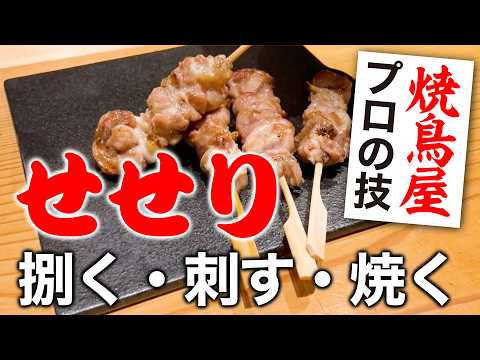
Ingredients
- Chickencarcass (with neck attached) 1
- Saltto taste
- Sakea small amount
About "Yakitori Seseri (Chicken Neck Skewers)"
The owner of Nonotory, a yakitori restaurant group in Osaka and Tokyo, shares everything about the popular menu item 'seseri' (chicken neck). From the origin of its name and how to butcher it from the carcass, to its characteristics as a rare cut, the 'wrap-skewering' technique, and grilling methods that lock in the umami, he explains the professional secrets in detail. Learn how to perfectly prepare this rare cut, of which only 25 to 30g can be harvested from a single chicken.
Introduction to 【野乃鳥】野網厚詞の鳥、まるごと。 →
Tips for Making "Yakitori Seseri (Chicken Neck Skewers)"
-
Prep
- Remove the small lymph nodes from the carcass and cut along the slope of the bone. For the front side, press the knife firmly to lift and peel the meat off the sloping bone; for the back side, slide the knife along the shoulder blade to remove it.
-
Skewering
- Thread the meat by wrapping it around for easy grilling. Portion the top to 7 cm, halve the middle, and group thin parts. Secure both sides through the center of the skewer, placing the largest piece at the tip so it plumps up over the highest heat.
-
Seasoning
- For a simple salt-grilled finish, season generously with salt for a professional taste. Spray with sake before grilling.
-
Heat control
- Avoid over-searing the surface at first. Leave the crisping for later so the meat can plump up. Once it plumps, move it to a lower heat zone and let the residual heat cook it through.
-
Characteristics
- Only 25 to 30g can be harvested from a single chicken carcass. When cooked, it becomes light and plump with a springy texture.
Ingredients for "Yakitori Seseri (Chicken Neck Skewers)"
3 items* Tap ingredient names to find on Amazon
How to Make "Yakitori Seseri (Chicken Neck Skewers)"
- 1
Prepare a chicken carcass with the internal organs removed.
- 2
Remove the small lymph nodes at the base of the neck.
- 3
Insert the knife along the slope of the bone on the front side of the seseri (neck muscle), peeling the meat off to lift it.
- 4
Remove the back side of the seseri by sliding the knife along the shoulder blade.
- 5
Portion the cut seseri: about 7 cm for the top piece, cut the middle in half, and arrange the thin parts together.
- 6
Thread the meat onto the skewer by wrapping it around, securing both sides through the center of the skewer.
- 7
Finish skewering so that the largest piece of meat is at the tip.
- 8
Spray sake over the entire skewer.
- 9
Season generously with salt.
- 10
Lightly sear the surface over high heat first, then move it to a lower heat area once the meat plumps up.
- 11
Let it cook through gently using residual heat.
- 12
It is done when the meat feels light and has a plump, springy texture.
Food Science
Spraying sake and salting helps eliminate gamey odors and retain moisture in the meat. Additionally, quickly searing the surface over high heat triggers the savory Maillard reaction, while subsequent gentle cooking using residual heat prevents rapid protein coagulation. This minimizes the loss of meat juices, resulting in a juicy and tender texture.
Detailed Commentary on "Yakitori Seseri (Chicken Neck Skewers)"
* Content organized by topics from the video.
The Origin of 'Seseri' from a 28-Year Pro
With 28 years of experience in the yakitori industry, Mr. Noami, the representative of Nonotory, introduces the appeal of the highly popular cut 'seseri' (chicken neck). While many people always order seseri at yakitori restaurants, do you know where the name comes from? It actually comes from the Japanese word 'seseru' (meaning to pick or scrape), as the meat is scraped off the bones with a knife. In this video, he demonstrates and explains everything from how to butcher and skewer seseri to the professional grilling techniques that make it delicious.
Butchering Seseri from a Dinosaur-Like Carcass
To harvest seseri, we start with a chicken carcass with the internal organs removed. Since birds are descendants of dinosaurs, their skeletal structure looks remarkably like a dinosaur's. Seseri is the neck muscle, located on both the front and back sides of the neck. First, remove the small lymph nodes (a rare cut known as 'ris de veau' or sweetbreads) at the base, then insert the knife along the slope of the bone. Since the front bone slopes, press the knife firmly against the bone to lift and peel the meat off. For the back side, make an incision near the shoulder blade and slide the knife along the bone to cleanly remove the meat.
Only 30g per Chicken! Rare Cuts in the Carcass
By carefully butchering the carcass, you can extract various other rare cuts besides seseri. Cuts like 'harami' (diaphragm), 'bonjiri' (tail), and 'segimo' (kidneys) yield only tiny amounts per chicken. Seseri itself yields only about 25 to 30 grams per carcass, meaning one single skewer of yakitori represents an entire chicken. While seseri lovers can easily eat 5 or 10 skewers on their own, seseri from free-range heritage chickens (Jidori) is especially hard to source. Mr. Noami hopes diners will savor each bite, appreciating the rarity of this delicacy harvested in such small amounts from each bird.
The Art of 'Wrap-Skewering' for Even Cooking
The process of skewering the portioned seseri involves precise calculations unique to professionals. The key is to thread the meat by wrapping it around so it grills beautifully. Cut the top portion of the meat to about 7 cm, halve the middle section, and arrange the thin parts together. Skewer them in a straight line, ensuring both sides of the wrapped meat are pierced through the center of the skewer. Gradually increase the size of the meat pieces so the largest piece is at the tip. This ensures that the largest piece sits over the hottest part of the grill, plumping up to a juicy, springy texture.
Grilling Secrets to Keep the Meat Plump
Once skewered, it's time to grill. Spray the skewers with sake and finish them with a simple salt seasoning. Seasoning generously with salt is the secret to a professional flavor. The most crucial point when grilling is to let the meat plump up. If you sear the surface too much at the beginning, the meat won't expand easily, so leave the crisping for later. Because seseri is wrapped and skewered, it is relatively thin and cooks quickly. If you keep grilling after the meat plumps, the juices will escape and the meat will shrink. The secret is to move it to a cooler zone or an upper rack of the grill as soon as it plumps, letting the residual heat gently cook it through.
Juicy Bites and Highballs: The Ultimate Pairing
The grilled seseri is light to hold and has a wonderfully plump, springy texture. Today, we taste it paired with a highball made from Suntory's 'Royal' whisky. With the first bite, a pleasant elasticity and savory aroma fill your mouth, with the bold saltiness perfectly elevating the umami of the seseri. The fibers are finer than thigh meat, and it is far juicier than breast meat, releasing delicate juices with every chew. Savoring this bite while knowing it takes an entire chicken to make just one skewer is the ultimate adult luxury. It pairs beautifully with alcohol, making it the perfect way to end the day.
About 【野乃鳥】野網厚詞の鳥、まるごと。
【野乃鳥】野網厚詞の鳥、まるごと。
7,210人 subscribers ・ 焼き鳥
* Opens YouTube channel
* Subscriber count is as of article creation and may differ from the current number.
