

Recipe
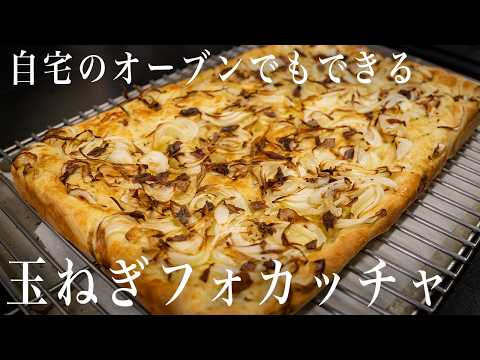
#357 Bake at Home! Onion Focaccia | Homemade Bread | Snack | Spring Onion | Italian
Ingredients
- 250gbread flour
- 250gcake flour
- 375mlmilk
- 8gsalt
- 4gsugar
- 5gdry yeast
- 1.5gmalt syrup
- 3spring onions (or sweet onions)
- 30ganchovies
- 40gcultured butter
- Extravirgin olive oil, to taste
About "Onion Focaccia"
This rich focaccia features a dough made from equal parts bread flour and cake flour kneaded with milk, malt syrup, and cultured butter. It is topped generously with sliced spring onions, anchovies, and olive oil for a flavorful finish. Baked at 170°C (340°F) for about 20 minutes, it is best enjoyed after cooling slightly. Rolling the dough thin with a rolling pin creates a less puffy, denser texture. Inspired by the slab-cut focaccia sold at Italian bars, it makes a perfect snack or table bread.
Introduction to ポンテベッキオ山根大助の全力イタリアン →
Tips for Making "Onion Focaccia"
-
Dough Blend
- Mixing bread flour and cake flour in a 1:1 ratio creates a balance similar to all-purpose flour, ideal for focaccia.
-
Dough Blend
- Kneading the dough with milk instead of water yields a much richer flavor.
-
Fermentation
- Adding a small amount of malt syrup promotes fermentation and helps maintain freshness after baking. Honey can be used as a substitute, though its antibacterial properties may slightly hinder fermentation.
-
First Rise
- Ferment the dough at room temperature for about 2 hours, and use it once it has doubled in size.
-
Shaping
- To achieve a thinner crust, a rolling pin is used. However, the chef notes that rolling applies heavy pressure, which can leave the baked crust slightly tough.
-
Pricking
- After pressing the dough into the pan, prick it thoroughly with a dough docker to release excess air and prevent it from puffing up too much during baking.
-
Second Rise
- Allowing a brief second rise in the pan improves the final texture of the bread.
-
Toppings
- Slice the spring onions 2–3 mm thick and pile them on generously, as they shrink when baked. Regular onions can also be used.
-
Toppings
- Since anchovies are very salty, tear them by hand and scatter them sparingly to avoid over-salting.
-
Baking
- Bake at 170°C (340°F) with 10% humidity for about 20 minutes. The moisture from the onions requires a longer bake time than usual; rotate the pan halfway for even browning.
-
Finishing
- Drizzle with finishing olive oil, then cover with parchment paper for 5–10 minutes to retain moisture while cooling. It tastes best when slightly cooled rather than piping hot.
Ingredients for "Onion Focaccia"
11 items* Tap ingredient names to find on Amazon
How to Make "Onion Focaccia"
- 1
Combine the bread flour and cake flour, then add the salt, sugar, dry yeast, and malt syrup and mix.
- 2
Add the milk and knead the dough. Once it comes together, add the cultured butter and knead further.
- 3
Let the dough undergo its first rise at room temperature for about 2 hours until doubled in size (only half of the dough is used for this recipe).
- 4
Slice the spring onions into 2–3 mm thick slices.
- 5
Transfer the risen dough to a work surface and punch it down to release the gas.
- 6
Use a rolling pin to roll the dough out thinly and evenly, then fit it snugly into the baking pan, ensuring an even thickness.
- 7
Let the dough undergo a brief second rise in the pan.
- 8
Press down firmly across the entire surface of the dough with your fingers, then prick it thoroughly using a dough docker (pique).
- 9
Generously spread the sliced spring onions all over the dough.
- 10
Tear the anchovies by hand and scatter them evenly over the onions.
- 11
Drizzle olive oil over the top and dot with small pieces of torn cultured butter.
- 12
Bake in an oven preheated to 170°C (340°F) with 10% humidity for about 20 minutes, rotating the baking sheet halfway through.
- 13
Once baked, drizzle with finishing olive oil, cover with parchment paper, and let rest for 5–10 minutes to cool slightly. Cut into bite-sized pieces and serve.
Detailed Commentary on "Onion Focaccia"
* Content organized by topics from the video.
Italian Bar-Style Onion Focaccia
In this video, we build on our highly popular previous focaccia recipe to make an Italian bar-style 'onion focaccia' sold by the slice. We combine equal parts bread flour and cake flour to achieve a balance similar to all-purpose flour. A key feature of our restaurant's recipe is kneading the dough with milk instead of water, which yields a rich flavor. Along with salt, dry yeast, and a touch of sugar, we add a small amount of malt syrup to promote fermentation and keep the bread delicious after baking. While honey can substitute for malt syrup, its antibacterial properties might slightly hinder fermentation. We also prepare a bit of butter, which pairs beautifully with onions, and some lacto-fermented anchovies for seasoning. The dough is fermented at room temperature for about 2 hours until it doubles in size before use.
Shaping and Pricking for a Thinner Crust
For the topping, slice the spring onions to a thickness of 2 to 3 mm. The chef notes that slicing them to this exact thickness is actually harder than slicing them paper-thin. We only use half of the dough from the first rise for this recipe. Place the dough on the work surface and punch it down to prevent it from rising too much. While we usually stretch pizza dough by hand without a rolling pin, we intentionally use a rolling pin here to keep this focaccia thinner than usual. Roll the dough out and fit it snugly into the baking pan, ensuring an even thickness. Letting it undergo a brief second rise in the pan improves the texture. Next, press down firmly on the dough with your fingers and prick it thoroughly with a dough docker (pique). This pricking releases excess air during baking, preventing the dough from puffing up too much.
Generous Spring Onion & Anchovy Toppings
Spread the sliced spring onions generously over the shaped dough. Since onions shrink when baked, the key is to pile on so many that you might wonder, 'Is this too much?' Regular onions work wonderfully too if spring onions aren't available. Next, tear the anchovies by hand and scatter them around. Since anchovies are quite salty, distribute them carefully without overdoing it. Finish by drizzling olive oil over everything and dotting with small pieces of butter. While some recipes include potatoes, doing so makes it feel too much like a meal and weakens its identity as a 'bread.' We keep it simple with just onions so it can be enjoyed purely as a bread or snack.
Baking Slowly at 170°C
Once topped, bake the focaccia in an oven preheated to 170°C (340°F) for about 20 minutes. Because the onions release moisture, it requires a slightly longer baking time than standard focaccia. To ensure even browning, rotate the baking sheet halfway through. Set the oven humidity to 10%. Once baked, drizzle with finishing olive oil and let it rest for 5 to 10 minutes. The secret here is to cover it with a sheet of parchment paper to prevent it from drying out while it cools. Unlike pizza, which is best eaten piping hot, this is closer to a bread, so it tastes best once it has cooled down slightly.
Tasting and the Impact of the Rolling Pin
Once cooled slightly, cut the focaccia into bite-sized pieces and taste it with director Mr. Ishikawa. The saltiness of the anchovies and the sweetness of the spring onions match perfectly, making it an ideal snack or table bread. Chef Yamane then shares a professional insight regarding the texture. While standard focaccia is stretched by hand, we used a rolling pin to make it thin. He points out that this applied strong pressure to the dough, leaving a slight toughness (dough strength) in the finished bread. 'There is a good reason why we don't use rolling pins for pizza or focaccia. It's delicious, but the dough's strength came through. It's a constant learning process,' he says, showing his endless culinary curiosity.
40th Anniversary Event & Lighting Design
At the end of the video, the chef announces the 'Ponte Vecchio 40th Anniversary and Contemporary Master Craftsman Award Celebration' to be held on June 24, 2026, at the Rihga Royal Hotel Osaka. The event will feature a special menu, a live performance by Koba, and a performance by the chef's own band. He also chats about how the new YouTube shooting lights make his face look brighter, leading to a passionate discussion on the importance of lighting in restaurants. The table lighting at Ponte Vecchio is carefully designed to make the food look delicious, the glasses sparkle, and ultimately, to make women look beautiful. To ensure guests don't feel self-conscious if their faces flush slightly from drinking wine, a soft, gently diffusing light is used to create the perfect atmosphere.
About ポンテベッキオ山根大助の全力イタリアン
ポンテベッキオ山根大助の全力イタリアン
3.6万人 subscribers ・ イタリアン
* Opens YouTube channel
* Subscriber count is as of article creation and may differ from the current number.
