

Recipe
Kuzu on Pufferfish? | How Yoshino Kuzu Transforms the Texture and Absorbs the Broth
Ingredients
- Pufferfish(cured/dehydrated), to taste
- Yoshinokuzu starch, to taste
- Pufferfishhot pot broth (kombu dashi base infused with pufferfish flavor), to taste
- Ponzu,to taste
- Greenonions, to taste
- Napacabbage, to taste
- Yuzupeel, a small amount
- Roundmochi (for the finishing porridge), to taste
- Pufferfishskin (mikawa, collagen-rich part, parboiled with sake), to taste
- Egg(beaten, for the porridge), to taste
About "Steamed Yoshino Kuzu-Coated Pufferfish & Pufferfish Broth Mochi Rice Porridge"
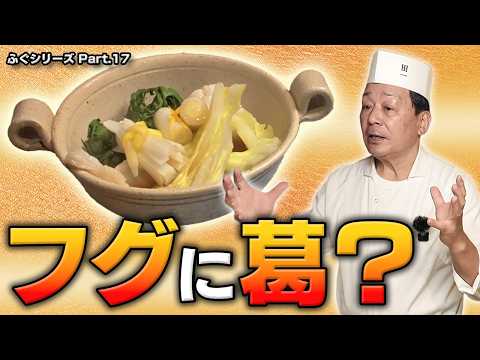
Our head chef, with 50 years of culinary experience, introduces "steamed pufferfish" (fugu) coated in a thin layer of Yoshino kuzu starch after being cured and dehydrated. By coating it with kuzu, the fish absorbs the pufferfish broth, creating an incredibly smooth, exquisite texture completely different from a standard hot pot. He pours a piping hot, drinkable soup made from the rich pufferfish broth and ponzu over the dish, finishing it with yuzu peel. For the finale, he uses the remaining broth to make a mochi rice porridge (ojiya) with round mochi, pufferfish skin (mikawa), and beaten egg. This video showcases the master chef's dedication, demonstrating how proper prep work like dehydration defines the depth of flavor in the final dish.
Tips for Making "Steamed Yoshino Kuzu-Coated Pufferfish & Pufferfish Broth Mochi Rice Porridge"
-
Prep
- Pre-cure the pufferfish (dehydrate with salt, etc.) to firm up the flesh. This ensures the Yoshino kuzu adheres perfectly and prevents the soup from becoming diluted.
-
Prep
- Lightly seasoning the fish during the curing process helps the flavors come together without needing a heavy soup.
-
Kuzu Coating
- Gently apply a thin, even coat of Yoshino kuzu starch to the surface of the pufferfish using a brush.
-
Steaming
- Place the kuzu-coated pufferfish in the steamer, and add vegetables like green onions and napa cabbage midway through, timing it to finish together.
-
Seasoning
- Transfer the base hot pot broth to a small pot, heat it, and add ponzu to make a light, drinkable soup. The rich pufferfish dashi provides plenty of umami even with light seasoning.
-
Plating
- Plate the steamed pufferfish and vegetables in a shallow dish, pour a generous amount of hot soup over them, and garnish with a touch of yuzu peel.
-
Texture & Flavor
- Once steamed, the kuzu turns into a glossy, silky coating that absorbs the soup, allowing the umami to gently spread in your mouth (what the chef calls 'drinkable ponzu').
-
Finishing Porridge
- Add round mochi and sake-parboiled skin (collagen-rich part) to the pufferfish broth, then gently swirl in beaten egg to finish the mochi porridge.
Ingredients for "Steamed Yoshino Kuzu-Coated Pufferfish & Pufferfish Broth Mochi Rice Porridge"
10 items* Tap ingredient names to find on Amazon
- Pufferfish(cured/dehydrated), to taste
- Yoshinokuzu starch, to taste
- Pufferfishhot pot broth (kombu dashi base infused with pufferfish flavor), to taste
- Ponzu,to taste
- Greenonions, to taste
- Napacabbage, to taste
- Yuzupeel, a small amount
- Roundmochi (for the finishing porridge), to taste
- Pufferfishskin (mikawa, collagen-rich part, parboiled with sake), to taste
- Egg(beaten, for the porridge), to taste
How to Make "Steamed Yoshino Kuzu-Coated Pufferfish & Pufferfish Broth Mochi Rice Porridge"
- 1
Pre-cure the pufferfish by dehydrating it to firm up the flesh and lightly season it.
- 2
Using a brush, gently and evenly coat the surface of the cured pufferfish with a thin layer of Yoshino kuzu starch.
- 3
Place the kuzu-coated pufferfish into a steamer and begin steaming.
- 4
Calculate the timing so everything finishes together, adding vegetables like green onions and napa cabbage to the steamer midway through.
- 5
Transfer some pufferfish hot pot broth to a small pot, heat it up, and add ponzu to create a light, drinkable soup.
- 6
Beautifully arrange the steamed pufferfish and vegetables in a shallow bowl, then pour a generous amount of the hot soup over them.
- 7
Garnish with a small piece of yuzu peel to complete the steamed pufferfish.
- 8
[Finishing Dish: Mochi Porridge] Heat the remaining pufferfish broth, then add the round mochi and sake-parboiled skin.
- 9
Once the soup is hot, gently swirl in the beaten egg, bring to a brief boil, and the mochi rice porridge is ready.
Detailed Commentary on "Steamed Yoshino Kuzu-Coated Pufferfish & Pufferfish Broth Mochi Rice Porridge"
* Content organized by topics from the video.
Steamed Pufferfish: Coating Cured Fish with Kuzu
The head chef proposes serving pufferfish not just as a large communal hot pot, but as individually portioned, refined dishes. He uses pufferfish that has been pre-cured (dehydrated) to firm up the flesh. He then uses a brush to carefully apply a thin, even coat of Yoshino kuzu starch. Because the fish has been cured, the starch adheres beautifully. "Grilled pufferfish is delicious, but today we are making a 'steamed pufferfish' that resembles a hot pot," the chef says as he places the kuzu-coated fish into the steamer. This step highlights the professional's dedication to bringing out the best in pufferfish, breaking away from standard concepts like hot pot, deep-frying, or sashimi.
The Art of Timing and Seasoning the Broth
The cooking process is meticulously timed, working backward from the final presentation. Estimating when the pufferfish will be fully steamed, the chef adds vegetables like green onions and napa cabbage to the steamer. Meanwhile, he transfers some of the base hot pot broth to a small pot, warming it up while adding ponzu to create a light, drinkable soup. "Unlike dashi made from just a single piece of kombu, this broth is packed with flavor extracted from the pufferfish, so the soup itself is incredibly delicious," the chef guarantees. While eating it with a strong ponzu dipping sauce is good, serving it in a light, dashi-forward soup is an excellent approach that lets you directly experience the pufferfish's natural umami.
Elegant Plating and Finishing with Hot Soup
Next, the steamed ingredients are plated. The pufferfish, coated in Yoshino kuzu and steamed, loses its powdery appearance and transforms into a glossy, silky texture. The chef beautifully arranges the fish and perfectly steamed vegetables in a dish, then pours a generous amount of the piping hot broth over them. Garnish with a touch of fragrant yuzu peel, and the visually stunning steamed pufferfish dish is complete. While you could serve this in a bowl, presenting it in a shallow dish filled with broth elevates it into a special, celebratory feast.
An Out-of-This-World Texture! Tasting Session
It's time to taste the completed steamed pufferfish. Taking a bite, the assistant, Asami-san, praises it highly: "The Yoshino kuzu is amazing. It gives the pufferfish an indescribable texture." The chef smiles and agrees, "It really is delicious." As the Yoshino kuzu absorbs the broth and melds with the pufferfish, it creates an incredibly smooth, exquisite mouthfeel that is completely different from simply boiling it in a hot pot. The chef explains the versatility of this dish: "For older guests or customers who want to try a little bit of everything, presenting it like this in a course menu is highly effective. Pufferfish changes its character completely depending on how you cook it."
The Secret of the Broth-Absorbing Kuzu Starch
The secret behind why this dish tastes so incredible even with a light soup lies in the synergy between the prep work and the Yoshino kuzu. Because the pufferfish is cured and pre-seasoned, there is no need to make the soup itself overly strong. Furthermore, the kuzu coating on the surface absorbs and holds onto the soup, allowing the umami to gently spread the moment it enters your mouth. The chef describes this as "drinkable ponzu," explaining that it is finished so you can gulp down the soup along with the fish using a spoon. He emphasizes that if you skip the prep work and use watery pufferfish, the soup will become diluted, and you will never achieve this delicate, profound flavor.
Customers Have Sharper Palates Than Chefs
The chef remarks, "Customers who pay to eat out have far sharper palates than the chefs themselves." Chefs often get so focused on the act of cooking that they rarely taste their own food in the actual environment where customers eat, which can lead to self-indulgent flavors. This is why the chef constantly urges his apprentices to "go out and eat." Drawing from his decades of experience, he passionately speaks about the importance of pursuing genuine deliciousness rather than being misled by superficial presentation.
Mochi Porridge and Training Days in Akasaka
To finish the meal, the chef makes a "mochi porridge" (ojiya) using the concentrated pufferfish broth. He places soft round mochi into the heated broth and adds the sake-parboiled skin (a collagen-rich part) to lock in the flavor. Then, he gently pours in the beaten egg to create a fluffy texture. While preparing this porridge, the chef reminisces about his training days at "Kikumi," a traditional ryotei restaurant in Akasaka where he first moved after graduating from junior high school. Back then, the nakai (waitresses) would prepare the porridge in the private rooms using miso, adjusting the strength of the flavor to match each guest's preference. Reminiscing about the good old ryotei culture of the Showa 40s (1960s/70s), this ultimate bowl of porridge is completed.
About 大将に聞いてみた!
大将に聞いてみた!
2.1万人 subscribers ・ 日本料理・和食
* Opens YouTube channel
* Subscriber count is as of article creation and may differ from the current number.
