

Recipe
No-Fail Japanese Pancakes: The Science of Fluffy Hotcakes | Naoya Higuchi
Ingredients
- Pancakemix: 150g
- Milk:100ml
- Egg:1
- [Forhomemade mix] Cake flour: 100g
- Granulatedsugar: 2 tbsp (26g)
- Salt:a pinch
- Bakingpowder: 1 tsp
- [Forhomemade mix] Egg: 1
- [Forhomemade mix] Milk: 100ml
About "Japanese Hotcakes (Pancakes)"
Chef and culinary writer Naoya Higuchi explains the science and tips for baking beautifully fluffy Japanese hotcakes. The three keys to success are not resting the batter, not overmixing, and keeping the pan temperature at 160°C (320°F). By understanding the role of each ingredient—egg proteins, the Maillard reaction from milk, and the two-stage expansion of baking powder—anyone can consistently bake delicious hotcakes. Leftovers can be wrapped in plastic wrap, frozen, and reheated in a 600W microwave for about 1 minute to enjoy them just like they were freshly made.
Introduction to 樋口直哉の料理論[Cooking theory] →
Video Timestamps
Tips for Making "Japanese Hotcakes (Pancakes)"
-
Prep
- Whisk the liquids (egg and milk) together in the bowl before adding the flour. Adding the flour first leads to overmixing to remove lumps, which overdevelops gluten and prevents a good rise.
-
Mixing
- Once the pancake mix is added, gently fold it in with a whisk using a cutting motion rather than stirring. Stop mixing while it is still lumpy and slightly powdery for a fluffy finish.
-
Prep
- Cook the batter immediately after mixing. Baking powder reacts at room temperature to produce carbon dioxide, so resting the batter allows the air bubbles to escape, preventing a fluffy rise.
-
Heat control
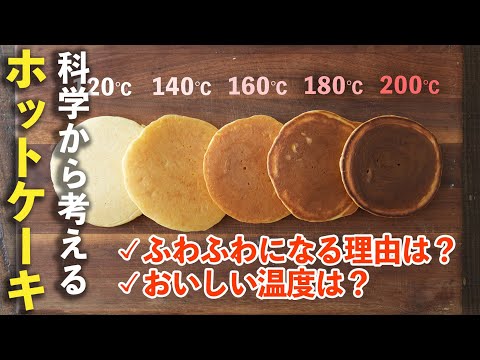
- The optimal pan temperature is 160°C (320°F). Preheat over medium heat for about 1 minute to reach 160°C, then reduce to low to cook. Below 140°C (284°F) won't brown and results in thin pancakes, while above 180°C (356°F) burns the surface.
-
Heat control
- No oil is needed if using a non-stick frying pan. Once the batter is poured in, cook over low heat for about 3 minutes.
-
Cooking
- When small bubbles begin to pop on the surface and the top is still slightly wet, flip quickly. Cook for another 2 minutes after flipping.
-
Storage
- Wrap leftover hotcakes individually in plastic wrap and freeze. Reheat in a 600W microwave for about 1 minute to enjoy them close to their freshly baked state.
Ingredients for "Japanese Hotcakes (Pancakes)"
9 items* Tap ingredient names to find on Amazon
How to Make "Japanese Hotcakes (Pancakes)"
- 1
In a bowl, combine 1 egg and 100ml of milk, and whisk well.
- 2
Once the liquid is uniform, add 150g of pancake mix.
- 3
Gently mix with a whisk using a cutting motion. Stop mixing while it is still lumpy and slightly powdery (do not overmix).
- 4
Once mixed, proceed immediately to cooking (do not rest the batter).
- 5
Preheat a non-stick frying pan over medium heat for about 1 minute until the surface temperature reaches at least 160°C/320°F (do not grease the pan).
- 6
Reduce the heat to low, then pour a portion of the batter (for one pancake) into the pan.
- 7
Cook on low heat for about 3 minutes. When small bubbles begin to pop on the surface and the top is still slightly wet, flip it quickly.
- 8
Cook for another 2 minutes after flipping, then remove from the pan. Repeat for the remaining batter (makes 3 pancakes).
- 9
Plate the pancakes, top with butter, drizzle with maple syrup, and enjoy while warm.
Detailed Commentary on "Japanese Hotcakes (Pancakes)"
* Content organized by topics from the video.
The Science Behind Perfect Hotcakes
Writer and chef Naoya Higuchi explains the scientific secrets to baking delicious hotcakes. The word 'pancake' comes from cooking in a pan, while 'hotcake' refers to eating them while they are still hot. The secret to baking fluffy hotcakes without fail lies in two key rules: 'do not rest the batter' and 'do not overmix.' By understanding the chemical reactions happening inside the batter, anyone can bake perfect hotcakes. In this video, we will first look at the science of ingredients and temperature, and then move on to the practical cooking demonstration in the kitchen.
How Eggs and Milk Transform the Batter
Eggs and milk play crucial scientific roles in pancake making. Eggs add rich flavor, fluffiness, and a melt-in-the-mouth texture. Egg proteins solidify when heated, trapping air bubbles inside the batter, but using too much can make the pancakes tough. If you don't have eggs, you can substitute them with about 40ml of water, but without the structural support of eggs, the pancakes will be less fluffy and more chewy. Meanwhile, milk is responsible for the beautiful golden color. The lactose in milk undergoes a 'Maillard reaction' with the proteins in the flour and eggs when heated, creating an appetizing golden-brown color and a rich aroma.
The Two-Stage Power of Baking Powder
The main ingredients in commercial pancake mix are flour, sugar, and baking powder. Baking powder is the star ingredient that makes the batter rise. It is a mixture of baking soda (sodium bicarbonate), an acid, and starch, which reacts with water and heat to produce carbon dioxide. In the video's experiment, adding baking powder to water triggers an immediate first reaction (at room temperature), and heating it in the microwave triggers a second, more vigorous reaction as the temperature rises. Because of this 'two-stage reaction,' it is crucial to cook the batter immediately after mixing. If you let the batter rest, the carbon dioxide generated at room temperature will escape, and the pancakes won't rise to be thick and fluffy.
Balancing Flour and Sugar for Texture
The proteins in flour (glutenin and gliadin) form a gluten network when mixed with water. This gluten acts like a balloon, trapping the air bubbles produced by the baking powder and helping the batter rise. Increasing the ratio of flour makes the pancakes thicker and rise more, but the texture becomes slightly heavy. Conversely, reducing the flour and increasing the liquid yields a lighter, melt-in-the-mouth texture. Different brands recommend different amounts of milk because they aim for different ideal textures. Sugar not only adds sweetness but also enhances browning and retains moisture to keep the pancakes soft. However, too much sugar causes them to burn easily, so it is best to keep the sugar in the batter moderate and add sweetness with syrup when serving.
The Science of Temperature: Cook at 160°C
To bake beautiful, fluffy hotcakes, the surface temperature of the pan is extremely important. According to Higuchi's temperature comparison experiment, cooking below 140°C (284°F) results in no browning, and the air bubbles escape before the batter sets, leading to thin pancakes. On the other hand, exceeding 180°C (356°F) burns the surface before the inside is cooked. The optimal temperature derived from this experiment is 160°C (320°F). If using an electric griddle, set it to 160–170°C (320–338°F). If using a frying pan, preheat it thoroughly before cooking. In the past, when cast iron pans were common, it was standard practice to cool the pan on a wet towel to lower the temperature; this was a highly logical, scientific approach to control the pan's temperature to the optimal 160°C.
Step-by-Step Guide to No-Fail Pancakes
Now, let's bake the hotcakes. The ingredients are 150g of pancake mix, 100ml of milk, and 1 egg. The first key point is to thoroughly mix the liquids (egg and milk) in the bowl first. If you add the flour first, you will end up overmixing to get rid of lumps, which develops too much gluten and prevents a good rise. Once the liquids are combined, add the pancake mix and gently fold it in with a whisk using a cutting motion rather than stirring. Stop mixing while it is still lumpy and slightly powdery; this is the secret to a fluffy texture. Preheat the pan over medium heat for about 1 minute to reach 160°C (320°F) or higher, then reduce to low. If using a non-stick pan, no oil is needed. Pour in the batter and cook on low for about 3 minutes. When small bubbles start to appear on the surface and the top is still slightly wet, flip quickly. Cook for another 2 minutes, and you're done.
Fluffy Results and Smart Storage Tips
Plate the freshly baked hotcakes, top with butter while warm, and drizzle with plenty of maple syrup. When you slice into them, you will see an incredibly thick and fluffy cross-section calculated by science, offering a wonderful softness that melts in your mouth. Baking is made of simple, classic ingredients like eggs, flour, and sugar. Once you understand the scientific role of each ingredient and the basic rules, you can easily adapt and apply them. If you have leftover hotcakes, we recommend wrapping them individually in plastic wrap and freezing them. To eat, simply microwave at 600W for about 1 minute to restore their freshly baked deliciousness, making them perfect for busy mornings.
About 樋口直哉の料理論[Cooking theory]
樋口直哉の料理論[Cooking theory]
7.9万人 subscribers ・ 家庭料理/調理科学
* Opens YouTube channel
* Subscriber count is as of article creation and may differ from the current number.
