

Recipe
Beyond Vongole! A Chef's Ultimate Hamaguri Clam Peperoncino
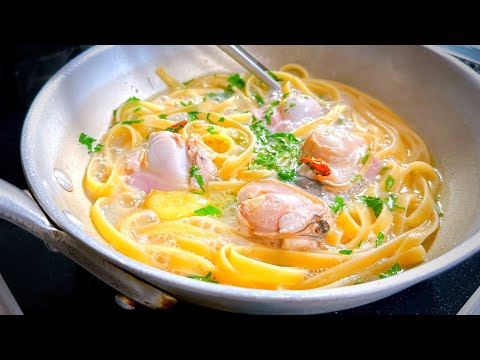
Ingredients
- 4Hamaguri clams (large and meaty, preferably from Kashimanada)
- Linguine,to taste
- 1clove garlic (crushed)
- Oliveoil, to taste
- Italianparsley (stems and leaves), to taste
- Sake(preferably Tsukinoi Junmai Ginjo), to taste
- Water,to taste
- Hitachinokuniwhitebait (shirasu), to taste
- Ichimichili powder, a pinch
- 30gsalt (for 2 liters of boiling water)
About "Hamaguri Clam Peperoncino"
In this collaboration with Ibaraki Prefecture, we present an ultimate peperoncino featuring magnificent Hamaguri clams from Kashimanada. Unlike common Manila clams, Hamaguri clams offer an elegant, deep umami. To maximize this flavor, we steam them in local sake to extract a rich broth, then emulsify a luscious clam liver paste into the sauce. Topped with Hitachinokuni whitebait, this is a luxurious pasta dish that showcases the finest ingredients of Ibaraki.
Introduction to ファビオ飯 /イタリア料理人の世界 →
Video Timestamps
Tips for Making "Hamaguri Clam Peperoncino"
-
Prep
- While the steamed clams are still warm, quickly clean and separate them into the adductor muscle, mantle, and liver. Press the liver through a fine-mesh strainer with a spoon to make a smooth paste.
-
Heat control
- Avoiding overcooking the clam meat is key to preserving its exquisite texture. After adding the meat, keep the heat very low just to coat it with the garlic oil, and remove the meat to a tray as soon as the steaming liquid is added and comes to a boil.
-
Heat control
- After transferring the pasta to the sauce pan, cook over medium heat for about 1 minute to let it absorb the broth. Turn off the heat before adding the liver paste, and gently dissolve it like miso to achieve a beautiful emulsion.
-
Flavoring
- The clam steaming liquid contains highly concentrated clam essence and serves as the crucial base for the pasta sauce, so be sure to save it.
-
Tips
- Cook the pasta in 2 liters of water with 30g of salt (1.5% salt concentration). Linguine is a thicker pasta that pairs perfectly with seafood sauces and holds the rich flavors well.
Ingredients for "Hamaguri Clam Peperoncino"
10 items* Tap ingredient names to find on Amazon
- 4Hamaguri clams (large and meaty, preferably from Kashimanada)
- Linguine,to taste
- 1clove garlic (crushed)
- Oliveoil, to taste
- Italianparsley (stems and leaves), to taste
- Sake(preferably Tsukinoi Junmai Ginjo), to taste
- Water,to taste
- Hitachinokuniwhitebait (shirasu), to taste
- Ichimichili powder, a pinch
- 30gsalt (for 2 liters of boiling water)
How to Make "Hamaguri Clam Peperoncino"
- 1
Place 4 Hamaguri clams in a small frying pan, add sake, water, and Italian parsley stems, then cover with a lid.
- 2
Steam over high heat. As soon as the shells open, transfer the clams to a tray. Save the remaining steaming liquid in the pan, as it will be used later.
- 3
While still warm, remove the clams from their shells and carefully separate them into the adductor muscle, mantle (string), and liver.
- 4
Make shallow scores (hidden cuts) on the thick parts of the clam meat, and cut the mantles to match the length of the linguine.
- 5
Press the clam livers through a fine-mesh strainer using a spoon to create a smooth liver paste.
- 6
In a cold frying pan, combine the crushed garlic, parsley stems, and olive oil. Heat gently over low heat to infuse the oil with the garlic aroma.
- 7
Once the garlic is lightly golden, remove the parsley stems. Add the clam meat and mantles, and cook over very low heat just enough to coat them with the garlic-infused oil.
- 8
Once coated in oil, turn the heat to medium and pour in all of the reserved clam steaming liquid at once.
- 9
Once the broth comes to a boil, use a mesh skimmer to remove only the clam meat from the pan and set it aside on a tray.
- 10
Cook the linguine in 2 liters of boiling water with 30g of salt.
- 11
Transfer the cooked linguine to the frying pan with the sauce. Cook over medium heat for about 1 minute, allowing the pasta to thoroughly absorb the clam broth.
- 12
Add plenty of finely chopped Italian parsley and the strained clam liver paste.
- 13
Turn off the heat and gently dissolve the liver paste into the sauce (as if dissolving miso) to emulsify the mixture.
- 14
Return the plump clam meat to the pan and quickly toss to coat with the sauce.
- 15
Plate the pasta, top generously with Hitachinokuni whitebait, and sprinkle with a pinch of ichimi chili powder to finish.
Food Science
The synergistic effect of succinic acid from the Hamaguri clams and inosinic acid from the whitebait creates a powerful umami. Combined with the bitterness of the liver and the heat of the ichimi chili powder, this balances the five (and six) basic tastes to create a deep flavor profile. Additionally, removing the clams as soon as they open prevents excessive thermal coagulation of proteins, retaining moisture within the meat for a plump, tender texture.
Detailed Commentary on "Hamaguri Clam Peperoncino"
* Content organized by topics from the video.
The Elegant Appeal of Hamaguri Clams
In this collaboration with Ibaraki Prefecture, we are making an ultimate peperoncino featuring magnificent Hamaguri clams from Kashimanada. While 'Vongole Bianco' made with Manila clams is a classic Italian seafood pasta, Manila clams and Hamaguri clams actually have very different profiles. Manila clams have a direct, robust umami, whereas Hamaguri clams are characterized by a highly elegant and deep flavor. Simply swapping Manila clams for Hamaguri would result in a somewhat flat dish. Therefore, this special recipe maximizes the elegant umami of Hamaguri clams and pairs them with the perfectly matching 'Hitachinokuni whitebait.' We will start cooking with carefully selected ingredients, including linguine—a thicker pasta that holds the rich flavors beautifully—and local sake.
Steaming Large Clams with Local Sake
The Hamaguri clams from Kashimanada, Ibaraki Prefecture, are typically as large as a chef's fist, boasting a thick and meaty texture. For this recipe, we have selected slightly smaller ones that pair perfectly with pasta. We begin by steaming them. Place four clams in a small frying pan and add 'Tsukinoi' Junmai Ginjo, brewed by a local sake brewery in Oarai. Since we are using wonderful ingredients from Ibaraki, we want to stick to local sake as well. Add the sake, water, and Italian parsley stems, cover, and steam over high heat. The key is to remove the clams to a tray as soon as they open to prevent them from overcooking and shrinking. The steaming liquid left in the pan is packed with concentrated clam essence and serves as the crucial base for our pasta sauce, so be sure to save every drop.
Prep Work and Rich Clam Liver Paste
While the steamed clams are still warm, we quickly clean and prep them. Remove the meat from the shells and carefully separate it into the adductor muscle, mantle, and liver. In Ibaraki Prefecture, strict resource management rules are enforced by three local fisheries (Oarai, Kashimanada, and Hasaki) operating on a rotation system. They avoid harvesting small clams and only land fully grown ones, which is why such magnificent Hamaguri clams reach the market. To make the meat easier to chew, we make shallow scores on the thick parts and cut the mantles to match the length of the linguine. The liver, which dramatically boosts the richness of the sauce, can have a rough texture if used as-is. To prevent this, we press it through a fine-mesh strainer with a spoon. This smooth, specialized liver paste adds an exquisite depth and richness to the entire sauce.
Pro Heat Control: Keeping Clams Plump
Next, we prepare the aglio e olio base for the pasta sauce. In a cold frying pan, combine the crushed garlic, parsley stems, and olive oil, then heat gently over low heat to infuse the oil with the garlic aroma. Once lightly golden, remove the parsley stems and add the prepped clam meat and mantles. The most crucial point here is to avoid overcooking the clams. Since Hamaguri clams toughen quickly when overheated, keep the heat on very low and simply toss them to coat with the garlic-infused oil. Once coated, turn the heat to medium and pour in the reserved clam steaming liquid all at once. As soon as the broth boils, use a mesh skimmer to immediately remove the clam meat and set it aside on a tray. This extra step is the secret to preserving their wonderfully plump texture.
Emulsifying the Sauce with Liver Paste
Cook the linguine—which pairs beautifully with seafood sauces—in boiling water with a 1.5% salt concentration (30g of salt per 2 liters of water). Transfer the cooked pasta to the sauce pan and cook over medium heat for about 1 minute, allowing the pasta to thoroughly absorb the exquisite clam broth. Once the pasta has absorbed the broth perfectly, add plenty of finely chopped Italian parsley and the rich, strained liver paste. Turn off the heat and gently dissolve the liver paste into the sauce, as if dissolving miso. Mixing after turning off the heat allows the oil, broth, and liver to emulsify beautifully, creating a wonderful gloss and richness. Finally, return the plump clam meat to the pan, toss quickly with the sauce, and it is ready.
Topping with Hitachinokuni Whitebait
Plate the pasta beautifully, top it generously with Ibaraki's pride, 'Hitachinokuni whitebait,' and finish with a sprinkle of ichimi chili powder. With the first bite, the elegant umami of the Hamaguri clams and the gentle saltiness of the whitebait harmonize, delivering a sensational flavor that feels like the bounty of Ibaraki's sea condensed into a single dish. The 'Hitachinokuni whitebait' topping holds a fascinating secret: the freshness of whitebait can be determined by its shape when boiled. When freshly caught whitebait is boiled immediately, it curls backward into the shape of the Japanese hiragana character 'shi' (し). In Ibaraki, this is known as the 'shi-curve rate,' and only premium whitebait with a rate of 95% or higher can carry this brand name. You can learn more about the stories behind these meticulously selected ingredients on the 'Eat Ibaraki' website.
About ファビオ飯 /イタリア料理人の世界

ファビオ飯 /イタリア料理人の世界
131万人 subscribers
* Opens YouTube channel
* Subscriber count is as of article creation and may differ from the current number.
