

Recipe
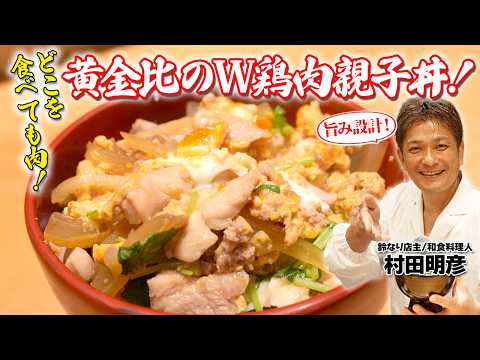
Umami Design! Meat in Every Bite: Golden Ratio Double Chicken Oyakodon
Ingredients
- 250gchicken thigh
- 100gground chicken
- 1onion
- 4eggs
- 1large sheet nori seaweed
- Mitsuba(Japanese wild parsley), to taste
- 300mldashi stock
- 60mlsoy sauce
- 60mlmirin
- 20gsugar
- 1tsp sake
- Apinch of salt (about 1/4 tsp)
About "Double Chicken Oyakodon"
To solve the common issue of running out of chicken halfway through your oyakodon, this Double Chicken Oyakodon combines chicken thigh and ground chicken. With key techniques like pre-treating the chicken, adjusting the onion's texture, simmering to preserve the soy sauce aroma, and achieving the perfect soft-cooked egg, this recipe ensures rich chicken umami is evenly distributed from the first bite to the last.
Introduction to 【荒木町鈴なり】村田明彦の煮るなり焼くなり →
Tips for Making "Double Chicken Oyakodon"
-
Prep
- Cutting the chicken thigh into thin, bite-sized pieces helps it cook quickly and makes it easy to eat with a spoon. Keep the skin on as it is packed with umami.
-
Pre-treatment
- Massaging the chicken thigh with a pinch of salt and 1 tsp sake removes gamey odors and locks in moisture for a plump, juicy finish.
-
Heat control
- Adding the ground and thigh chicken after the boiling subsides (once the onion is cooked) prevents the meat from turning tough.
-
Seasoning
- Adding the 60ml soy sauce in two batches—most at the start and the reserved portion at the end—prevents the aroma from evaporating and enhances the savory fragrance.
-
Egg-binding
- Lightly beat the eggs to leave some thick white, and pour in two batches to achieve a beautiful visual contrast and the perfect soft-cooked texture.
-
Plating
- Spreading a large sheet of torn nori over the rice creates a savory aroma that pairs beautifully with the broth.
Ingredients for "Double Chicken Oyakodon"
12 items* Tap ingredient names to find on Amazon
How to Make "Double Chicken Oyakodon"
- 1
Cut the onion and mitsuba
Cutting the onion against the grain yields a soft texture, while cutting along the grain helps it retain its bite. Cut it into wedges here for uniform shape. Roughly chop the mitsuba.
- 2
Cut and prep the chicken
Cut the chicken thigh into bite-sized pieces; thin and small pieces are recommended. Check for any remaining bones. Place the cut chicken in a bowl, add a pinch of salt and 1 tsp sake, and massage gently by hand.
- 3
Combine dashi and seasonings, then heat
Add 300ml dashi, 60ml mirin, and 20g sugar to a pan. Reserve about 1 tbsp of the 60ml soy sauce, and add the rest to the pan. Turn on the heat to dissolve the sugar.
- 4
Add the onion and cook
Add the onion to the heated dashi mixture and simmer until cooked through.
- 5
Add the chicken
Once the onion is tender, turn off the heat. After the boiling subsides, crumble in the ground chicken and arrange the chicken thigh pieces. Turn the heat back on, and add the reserved soy sauce to adjust the flavor.
- 6
Pour in the eggs
Lightly beat 4 eggs so the whites and yolks are not fully blended. Pour the eggs in two batches. For the first batch, pour in a circular motion from the outer edge, gently drawing it toward the center with chopsticks to let it cook through. Once mostly set, pour in the second batch to create a runny, soft-cooked texture.
- 7
Finish cooking
Scatter the mitsuba, turn off the heat immediately, cover with a lid, and let steam briefly. If any parts look too raw, bring to a quick boil over high heat, then turn off the heat.
- 8
Serve
Spread torn pieces of the large nori sheet over warm rice in a bowl. Generously ladle the toppings and broth from the pan over the nori.
Food Science
Combining the inosinate in chicken with the glutamate and guanylate found in dashi, soy sauce, onion, and nori creates an umami synergy that dramatically boosts deliciousness. Additionally, pairing the saltiness and umami of soy sauce with the sweetness of mirin and sugar balances the five basic tastes, resulting in a deep, well-rounded flavor.
Detailed Commentary on "Double Chicken Oyakodon"
* Content organized by topics from the video.
Meat in Every Bite! The Double Chicken Secret
Chef Akihiko Murata introduces a twist on the classic Oyakodon (chicken and egg rice bowl). He was always frustrated that in standard oyakodon, the chicken runs out first, leaving only onions and eggs at the end. To ensure you taste chicken from the first bite to the last, he came up with the 'Double Chicken' concept, combining chicken thigh and ground chicken. This recipe serves 4. Prepare 250g chicken thigh, 100g ground chicken, 1 onion (using half here as it is large), 4 eggs, 1 large sheet of nori, and mitsuba to taste. For seasonings, you will need 300ml dashi, 60ml soy sauce, 60ml mirin, and 20g sugar, along with 1 tsp sake and a pinch of salt for prepping the chicken.
Cutting Techniques to Maximize Texture
Start by cutting the ingredients. Use half an onion (about 180g). Cutting onion against the grain makes it soft, while cutting along the grain helps it retain texture. Here, cut it in half and then into wedges for uniform shape. Roughly chop the mitsuba. For the star ingredient, chicken thigh, the key is to cut it slightly thinner than standard bite-sized pieces. Chicken shrinks and thickens when cooked, so cutting it thin beforehand ensures it cooks quickly and is easy to eat with a spoon. Keep the skin on, as it is packed with umami.
Pre-Treating Chicken to Unlock Umami
Before cooking, give the cut chicken thigh a careful pre-treatment. In a bowl, add a pinch of salt (about 1/4 tsp) and 1 tsp sake to the chicken. Massaging this in thoroughly by hand not only removes any gamey chicken odor but also locks in moisture, ensuring a plump and juicy finish when cooked. This simple step dramatically improves tenderness. Just a tiny amount of salt is enough so it doesn't taste overly salty. Once prepped, it's time to move on to the cooking process.
Simmering Secrets to Preserve Aroma
Add 300ml cold dashi, 60ml mirin, and 20g sugar to a pan. Next, add the 60ml soy sauce, but Chef Murata's secret is to reserve about 1 tbsp of it. Simmering all the soy sauce from the start causes its aroma to evaporate, so adding the reserved portion at the end brings out a fresh fragrance. Turn on the heat to dissolve the sugar, then add the onion first. Once the onion is tender, turn off the heat. Adding ground chicken to boiling liquid makes it tough, so wait for the boiling to subside before crumbling in the ground chicken and arranging the chicken thigh pieces. Turn the heat back on, and add the reserved soy sauce along the way to adjust the flavor.
Techniques for the Perfect Soft Egg
Now for the egg-binding process, the soul of oyakodon. Lightly beat 4 eggs so the whites and yolks are not completely blended. Leaving some thick egg white creates a beautiful visual contrast in the final dish. Pour the eggs into the pan in two separate batches. For the first batch, pour in a circle from the outer edge, gently drawing it toward the center with chopsticks to let it cook through. Once mostly set, pour in the second batch to create a runny, soft-cooked texture. Finally, scatter the mitsuba, turn off the heat immediately, cover, and let steam with residual heat. If you are concerned about raw egg, bring it to a quick boil over high heat before turning off the stove to cook it through perfectly.
Tasting: Chicken Satisfaction in Every Bite
The presentation also has a special touch. Spread torn pieces of a large nori sheet over warm rice in a bowl. The savory aroma of nori pairs beautifully with the oyakodon broth. Generously ladle the toppings and broth from the pan over the nori to complete this hearty bowl. Upon tasting, Chef Murata exclaimed, 'We won!' after just one bite. The juicy texture of the chicken thigh combined with the umami of the ground chicken dispersed throughout ensures you enjoy delicious chicken in every single bite. While it has a sweet flavor profile with a generous amount of sugar, the savory dashi and aromatic soy sauce balance it perfectly, making this an exquisite dish you can devour to the very last grain of rice.
About 【荒木町鈴なり】村田明彦の煮るなり焼くなり
【荒木町鈴なり】村田明彦の煮るなり焼くなり
1.3万人 subscribers ・ 和食
* Opens YouTube channel
* Subscriber count is as of article creation and may differ from the current number.
