

Recipe
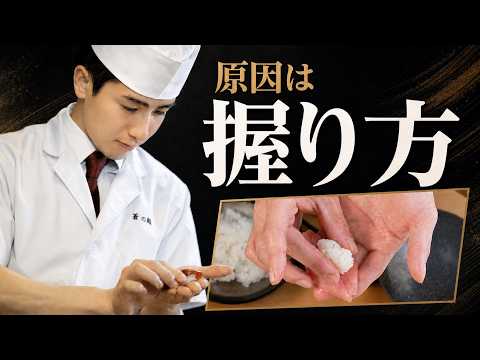
The Real Reason You Can't Shape Sushi Properly Isn't Your Hands
Ingredients
- Sushirice (Shari)
- Sushitoppings (Neta)
- Water
- Ricevinegar
About "Nigiri Sushi"
This video explains that the reason beginners struggle to shape sushi isn't due to clumsiness, but rather because they attempt overly difficult techniques first. By using the beginner-friendly 'Gyakukote-gaeshi' (reverse wrist-turn) method, you can shape beautiful sushi with just 30 minutes of practice. Learn step-by-step practical techniques used by professionals, including the golden ratio for hand vinegar (7 parts water to 3 parts rice vinegar), how to handle the sushi rice, tips for flipping with your fingers, and the final touch to secure the sides.
Introduction to 蒼の鮨 sushi-chef ao →
Tips for Making "Nigiri Sushi"
-
Prep
- The golden ratio for hand vinegar is 7 parts water to 3 parts rice vinegar. Dip three fingers, spread it in a circle on your left palm, and rub hands together to coat evenly.
-
Basics
- Gyakukote-gaeshi features placing the topping on your fingertips. It is a highly practical technique used by professionals, not just a beginner's method.
-
Flipping Tip
- Use your right index finger to push the rice forward and slide your fingertips to flip it, placing the topping on top and the rice on the bottom.
-
Shaping
- Align the left edge of the topping with the base of your left ring and pinky fingers, then gently squeeze with the base of your fingers to secure.
-
Finishing
- After securing the sides, press the front and back ends with your right index finger, then gently squeeze the sides with your middle finger and thumb.
-
Practice
- Mastering Gyakukote-gaeshi builds fundamental hand movements and rice-handling skills, serving as the fastest shortcut to learning other shaping styles.
Ingredients for "Nigiri Sushi"
4 items* Tap ingredient names to find on Amazon
How to Make "Nigiri Sushi"
- 1
Make the hand vinegar (Tezu): Mix water and rice vinegar in a 7:3 ratio.
- 2
Prepare your hands: Dip three fingers into the hand vinegar, spread it in a circular motion on your left palm, and gently rub your hands together to coat them evenly.
- 3
Shape a portion of sushi rice into a gentle oval.
- 4
Place the sushi topping (neta) on the fingertips of your left hand.
- 5
Place the oval-shaped rice in the center of the topping.
- 6
Using your right index finger, push the rice forward while sliding your fingertips to flip it over (so the topping is on top and the rice is on the bottom).
- 7
Move the sushi to a comfortable position in your palm for shaping.
- 8
Position the sushi so the left edge of the topping aligns with the base of your left ring and pinky fingers.
- 9
Gently squeeze using the base of your fingers to secure both sides.
- 10
Gently press the front and back ends of the sushi with your right index finger to balance the shape.
- 11
Gently squeeze the sides of the sushi with your right middle finger and thumb to finalize the shape.
- 12
Finished
Food Science
Using hand vinegar (tezu, a mixture of water and rice vinegar) creates an acidic moisture barrier on your hands, preventing the starch in the sushi rice from sticking to your skin. This allows you to shape the rice gently without crushing it, creating a delicate texture that melts in the mouth. Additionally, the acidity of the rice vinegar combines with the umami of the topping to balance the five basic tastes (sour, sweet, salty, and umami), enhancing the natural flavors of the ingredients.
Detailed Commentary on "Nigiri Sushi"
* Content organized by topics from the video.
It's Not Clumsiness Holding You Back
When people want to learn how to shape sushi, they often try to mimic the flashy techniques of professional chefs. However, the reason beginners struggle isn't due to clumsiness. The truth is, the technique they try first is simply too difficult. That's why we highly recommend starting with the 'Gyakukote-gaeshi' (reverse wrist-turn) method. With this technique, just 30 minutes of practice will allow you to shape beautiful, professional-looking sushi. Instead of copying advanced pros right away, starting with a beginner-friendly method suited to your skill level is the fastest shortcut to mastering sushi making.
Why Beginners Should Start with Gyakukote-gaeshi
The standard 'Kote-gaeshi' (wrist-turn) technique requires you to shape the sushi while flipping the topping and rice in your palm, which involves too many movements for a beginner to manage at once. This often leads to common mistakes, such as rice sticking to your hands, the topping shifting, or squeezing too hard and crushing the rice while trying to fix it. In contrast, 'Gyakukote-gaeshi' requires very few steps and features incredibly simple movements. Because each step is clear, you can focus entirely on learning the sequence. When I first became a sushi chef, I used this exact method for my first six months, and I still use it today for delicate toppings like conger eel (anago). It is not just a simplified beginner's method, but a highly practical technique used by professionals in real kitchens.
Essential Prep: Hand Vinegar and Rice Handling
Proper preparation is essential for making delicious sushi. First, prepare your sushi rice, hand vinegar (tezu), and a plate to place the finished sushi. The key here is the ratio of the hand vinegar. In this video, we use a golden ratio of 7 parts water to 3 parts rice vinegar. To apply it, dip three fingers into the vinegar, spread it in a circular motion on your left palm, and gently rub your hands together to coat them thinly and evenly. Once prepared, gently pick up a portion of rice. While you will eventually develop a feel for the exact weight of the rice through practice, don't overthink it at first—just focus on gently shaping it into a neat oval.
Gyakukote-gaeshi Basics and Flipping Tips
Once prepared, it's time to shape using the Gyakukote-gaeshi method. Unlike the standard wrist-turn, a key feature of this method is placing the topping on your fingertips. First, place the topping on the tips of your left fingers, then place the oval-shaped rice right in the center. Next, use your right index finger to push the rice forward, sliding your fingertips to flip it over. This rotation places the topping on top and the rice on the bottom. Once flipped, move the sushi to your most comfortable palm position. From here, you will shape it in a '1, 2, 3' rhythm. Placing the rice exactly in the center of the topping and using your fingertips for a smooth flip are the secrets to success in this step.
Positioning and Securing the Sides
Where you place the sushi in your hand after flipping it determines the final look. The key reference point is the base line of your left ring and pinky fingers. Position the sushi so the left edge of the topping aligns perfectly with this line. Once positioned, use the base of your fingers to gently squeeze and secure both sides of the sushi. However, if you only squeeze the sides, the rice will stretch out lengthwise and lose its shape. To prevent this, use your right index finger to gently press the back end of the sushi. Do the same for the front end to balance the shape, creating a beautifully plump and well-proportioned sushi base.
The Final Touch: Securing the Sides Like a Pro
For the final step, there is a crucial professional tip to elevate your sushi. After shaping, use your right middle finger and thumb to gently squeeze the sides of the sushi. Simply securing the ends and sides can still leave gaps or minor instability. Squeezing the sides with your thumb and middle finger unifies the topping and rice perfectly, creating a beautiful finish. To review the sequence: place the topping on your fingertips, add the rice and flip, shape on counts 1 and 2, and secure the sides on count 3. Keep this rhythm in mind and practice repeatedly.
Gyakukote-gaeshi: The Fastest Path to Mastery
In my teaching experience, starting with the Gyakukote-gaeshi method is the absolute fastest way to master sushi shaping. It is the simplest and most straightforward technique, making it perfect for building muscle memory for the core movements. Attempting difficult techniques from the start often leads to frustration over basic issues—like the rice not adhering to the topping or the shape falling apart—before you even learn the flow. Master Gyakukote-gaeshi first. Since the fundamental hand movements and rice handling are the same for all styles, mastering this method will make learning advanced techniques surprisingly easy.
About 蒼の鮨 sushi-chef ao
蒼の鮨 sushi-chef ao
3.2万人 subscribers ・ 和食/寿司
* Opens YouTube channel
* Subscriber count is as of article creation and may differ from the current number.
