

Recipe
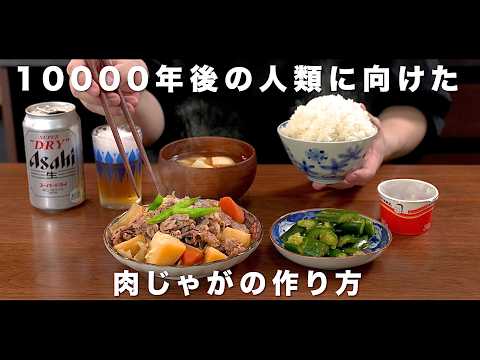
How to Make Nikujaga for Humans 10,000 Years in the Future
Ingredients
- Potatoesto taste
- Carrotsto taste
- Onionsto taste
- Greenbeans to taste
- Shiratakinoodles 1 pack
- Thinlysliced beef to taste
- Vegetableoil to taste
- Sugarto taste
- Soysauce to taste
- Saketo taste
- Mirinto taste
- Dashipowder (bonito and kelp) 1 stick
- Waterto taste
- Aluminumfoil (for drop lid)
- Cucumbersto taste
- Sesameseeds to taste
- Sesameoil to taste
- Shiro-dashito taste
- Tofuto taste
- Greenonions to taste
- Misopaste to taste
- Riceto taste
- Natto1 pack (with included sauce and mustard)
About "Nikujaga (Set Meal: with Miso Soup, Quick-Pickled Cucumber, and Natto)"
This recipe features classic Nikujaga (Japanese beef and potato stew) made with thinly sliced beef, potatoes, carrots, onions, and shirataki noodles, seasoned with soy sauce, sugar, mirin, sake, and dashi powder. Sautéing the potatoes and carrots before simmering and adding the beef at the very end helps preserve their textures. Letting it sit for 20 to 30 minutes after turning off the heat is the secret to letting the flavors fully absorb. It also includes quick-pickled cucumber made in a plastic bag and a simple tofu and green onion miso soup. Together with rice and natto, this creates a complete, traditional Japanese home-style set meal.
Introduction to すいじば SUIJIBA →
Tips for Making "Nikujaga (Set Meal: with Miso Soup, Quick-Pickled Cucumber, and Natto)"
-
Prep
- Peel the potatoes, carrots, onions, and green beans with a peeler, and cut them into bite-sized pieces. Remove the shirataki noodles from the package to use (no parboiling mentioned).
-
Prep
- Cook the rice in a rice cooker. Follow the water level lines indicated in the cooker.
-
Sautéing
- Heat oil in a pan and sauté the potatoes and carrots first, as they take longer to cook. This is said to sear the surface, preventing them from breaking apart and locking in umami.
-
Seasoning
- Combine sugar, soy sauce, sake, mirin, and dashi powder (bonito and kelp) to make the seasoning liquid. Adjust the concentration by adding water.
-
Simmering
- Pour the seasoning liquid into a pot, then add the onions and shirataki. Cover with an aluminum foil drop lid and simmer for about 5 minutes.
-
Finishing
- Once everything is cooked through, add the thinly sliced beef and simmer briefly. Letting it sit for 20 to 30 minutes after turning off the heat is the secret to letting the flavors absorb.
-
Side: Cucumber
- Place the cucumber in an I-Wrap bag, smash it with a rolling pin, add sesame seeds, sesame oil, and shiro-dashi, and massage. Ready in just a few minutes.
-
Side: Miso Soup
- Add tofu (sliced on the palm of your hand), chopped green onions, and dashi powder (bonito and kelp) to boiling water. Finish by dissolving miso paste into the soup.
-
Serving
- Scoop a mountain of rice and arrange the Nikujaga, miso soup, and quick-pickled cucumber. Mix the natto with its included sauce and mustard, and pour over the rice to enjoy.
Ingredients for "Nikujaga (Set Meal: with Miso Soup, Quick-Pickled Cucumber, and Natto)"
23 items* Tap ingredient names to find on Amazon
- Potatoesto taste
- Carrotsto taste
- Onionsto taste
- Greenbeans to taste
- Shiratakinoodles 1 pack
- Thinlysliced beef to taste
- Vegetableoil to taste
- Sugarto taste
- Soysauce to taste
- Saketo taste
- Mirinto taste
- Dashipowder (bonito and kelp) 1 stick
- Waterto taste
- Aluminumfoil (for drop lid)
- Cucumbersto taste
- Sesameseeds to taste
- Sesameoil to taste
- Shiro-dashito taste
- Tofuto taste
- Greenonions to taste
- Misopaste to taste
- Riceto taste
- Natto1 pack (with included sauce and mustard)
How to Make "Nikujaga (Set Meal: with Miso Soup, Quick-Pickled Cucumber, and Natto)"
- 1
Wash the rice, place it in the rice cooker with water, and press the start button to begin cooking.
- 2
Peel the potatoes, carrots, onions, and green beans with a peeler, then cut them into bite-sized pieces.
- 3
Remove the shirataki noodles from the package and set aside.
- 4
Combine the sugar, soy sauce, sake, mirin, and dashi powder, then add water to make the seasoning liquid.
- 5
Heat oil in a pan and sauté the potatoes and carrots.
- 6
Pour the seasoning liquid into a pot, then add the onions and shirataki noodles.
- 7
Make a drop lid (otoshibuta) out of aluminum foil, place it on top, and simmer for about 5 minutes.
- 8
Once everything is cooked through, add the thinly sliced beef and simmer briefly.
- 9
Turn off the heat and let it sit for 20 to 30 minutes to allow the flavors to meld.
- 10
While the Nikujaga is resting, prepare the side dish. Place the cucumber in a plastic bag, smash it with a rolling pin, add sesame seeds, sesame oil, and shiro-dashi, and massage to combine.
- 11
Bring water to a boil in a pot. Slice the tofu on the palm of your hand and add it to the pot along with the chopped green onions and dashi powder. Finally, dissolve the miso paste into the soup to finish.
- 12
Scoop a generous portion of cooked rice into a bowl, and arrange the Nikujaga, miso soup, and quick-pickled cucumber alongside it.
- 13
Add the included sauce and mustard to the natto, mix well until frothy, and pour over the rice to enjoy.
Detailed Commentary on "Nikujaga (Set Meal: with Miso Soup, Quick-Pickled Cucumber, and Natto)"
* Content organized by topics from the video.
A Message to Humans 10,000 Years from Now
To the humans of 10,000 years in the future, I present 'Nikujaga,' a home-cooked dish that 21st-century Japan is proud of. In my country, Japan, we once ended our isolation, reopened trade, experienced two world wars, and suffered defeat. However, through incredible post-war reconstruction and technological advancement, we built an affluent society where people can communicate freely across the globe via airwaves. While this also bred some unsavory characters, Nikujaga remains deeply loved in modern Japan. It is a simple yet profound dish featuring meat and potatoes simmered in a sweet and savory sauce.
Introduced Vegetables, Money, and Labor
The vegetables we use are potatoes, carrots, onions, and green beans. Actually, these are all introduced species that arrived in Japan relatively recently. Thus, while Nikujaga has a very short history, it has become a nostalgic 'mom's home cooking' flavor we've loved since childhood. We peel the vegetables with a peeler; though the skins are edible, we discard them to improve the texture. To afford such luxuries, most modern humans spend the majority of their lives working to earn money and buy ingredients. I wonder if the concept of labor still exists in your world 10,000 years from now.
Shirataki, Gunma Blood, and Rice Cookers
Next, we prepare 'shirataki,' which are thin noodles made from konjac. Opening the bag releases a strong, unique smell. Some modern humans actually enjoy sniffing this scent, regretting it yet finding joy in it—we call them 'weirdos.' Gunma Prefecture, famous for konjac production, is a unique region with its own distinct culture, and that blood flows through my veins. Then, we cook our staple, rice. In modern Japan, we have a convenient appliance called a 'rice cooker.' You just add washed rice and water, press a button, and delicious rice is automatically cooked in about an hour. Those who insist on cooking in clay pots are jokingly called 'nostalgia nerds.'
The Sautéing 'Tradition' and Fermentation
Heat oil in a pan and sauté the potatoes and carrots, which take longer to cook. This step is said to sear the surface to prevent them from breaking apart and to lock in the umami, though nobody actually knows if it works. We do it because the older generation did it—modern humans call this 'tradition.' Next, we make the seasoning liquid. We combine sugar, soy sauce, sake, and mirin. These are traditional Japanese seasonings made by fermenting soybeans or rice, offering a deep aroma and flavor. In modern times, artificial sweeteners with zero calories have also emerged.
Umami Boosters and Finishing the Stew
We power up the seasoning liquid by adding a stick of dashi powder, which concentrates the umami of bonito and kelp. In the past, people made dashi from scratch, but most modern humans use these convenient processed powders. After adjusting the concentration with water, pour it into the pot and add the onions and shirataki. Cover with an aluminum foil drop lid and simmer for about 5 minutes. Once cooked through, add the thinly sliced beef and simmer briefly. Eating meat is permitted in our era, though we don't eat our own kind. Letting it sit for 20 to 30 minutes after turning off the heat is the secret to making it delicious.
Quick Cucumber Pickles and Miso Soup
While the Nikujaga rests, we make the side dish and miso soup. For the quick-pickled cucumber, place the cucumber in a high-performance plastic bag called 'I-Wrap' and smash it with a rolling pin. Add sesame seeds, sesame oil, and shiro-dashi, then massage it. In just a few minutes, an excellent side dish is ready. For the miso soup, we use tofu made from soybeans. Slicing tofu on the palm of your hand without a cutting board is an innate skill Japanese people possess without ever being taught. Add the tofu, chopped green onions, and dashi powder to boiling water, and finish by dissolving miso paste, a fermented soybean seasoning.
A Heavenly Meal and Thoughts on the Future
We scoop a mountain of rice, arrange the Nikujaga, miso soup, and pickles, and say 'Itadakimasu' (let's eat). First, I gulp down a cold beer (Asahi Super Dry). It's the ultimate moment that blows away all worries. I wet my palate with miso soup, then alternate between the chewy rice and the Nikujaga, which is deeply infused with dashi and soy sauce. The cucumber is a perfect palate cleanser with a great crunch. As I eat, I wonder about the diet of humans 10,000 years from now. In a technologically advanced future, will cultured or plant-based meats be the norm, or will your bodies be mechanized, making eating entirely obsolete?
Natto, the Japanese Soul, and Gratitude
In the latter half of the meal, we eat 'natto,' a traditional Japanese food made of fermented soybeans. Adding the included sauce and mustard and mixing vigorously creates sticky, stretchy strings. We pour this over the mountain of rice and shovel it down. Natto is the true soul of Japanese people; you cannot talk about Japanese food culture without it. While this is by no means a luxurious meal in our era, it is a combination that brings ultimate happiness. Finishing every single grain of rice and drop of soup is an important Japanese table manner. We offer our gratitude by saying 'Gochisousama' (thank you for the feast) and bid farewell to the humans of 10,000 years in the future.
About すいじば SUIJIBA
すいじば SUIJIBA
151万人 subscribers ・ 料理全般
* Opens YouTube channel
* Subscriber count is as of article creation and may differ from the current number.
