

Recipe
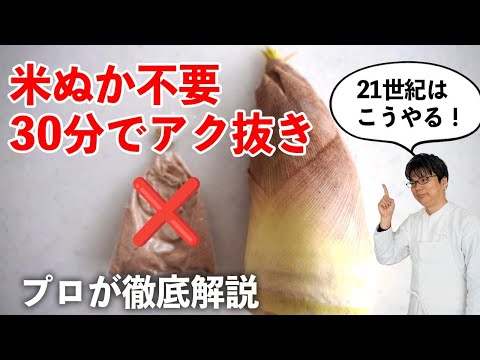
How to Prep Bamboo Shoots: The 21st-Century Method
Ingredients
- 1small fresh bamboo shoot (preferably 'jiware-bori' / harvested before breaking the surface)
- Water(enough to fill the pot)
About "Prepping Fresh Bamboo Shoots"
Introducing the 21st-century method to easily prep spring bamboo shoots—no rice bran required. By diluting bitter compounds like homogentisic acid and oxalic acid in plenty of water, this method is eco-friendly and makes cleanup a breeze. Learn how to cut and enjoy each part to customize the flavor to your liking.
Introduction to 樋口直哉の料理論[Cooking theory] →
Video Timestamps
Tips for Making "Prepping Fresh Bamboo Shoots"
-
Selection
- For home cooking, choose small, brown 'jiware-bori' shoots. Smaller shoots are sweeter and less bitter than larger ones.
-
Prep
- Peel the skin easily by making a cut along the side. Slice the tip at an angle to avoid wasting the tender edible parts.
-
Heat & Time
- Use your largest pot and simmer in plenty of water for 20 minutes, keeping it around 95°C (203°F) on low heat.
-
Bitterness Removal
- Boil with just water instead of rice bran. The bitter compounds are water-soluble and dilute easily. No rice bran means no clogged pipes or environmental impact.
-
Flavor Adjustment
- Taste after cooling. If it is still too bitter, boil in fresh water for another 5 minutes to adjust to your liking.
-
How to Use Parts
- Julienne the tender tip layers for bamboo shoot rice. Slice the base and enjoy with mayo or olive oil and salt to highlight its sweetness.
Ingredients for "Prepping Fresh Bamboo Shoots"
2 items* Tap ingredient names to find on Amazon
How to Make "Prepping Fresh Bamboo Shoots"
- 1
Selecting and Prepping the Bamboo Shoot
Choose a small, brown 'jiware-bori' bamboo shoot (harvested before it breaks the soil surface), which is ideal for home cooking. Wash off any dirt from the surface with water.
- 2
Peeling the Skin
Make a shallow cut along the side and peel the skin off. Once peeled, slice off the tough tip at an angle. Cutting at an angle ensures you don't waste the tender, edible parts inside.
- 3
Cutting the Bamboo Shoot
Cut the bamboo shoot in half lengthwise to ensure even cooking and to help release the bitterness more easily.
- 4
Boiling in Plenty of Water
Fill your largest pot with plenty of water and add the cut bamboo shoots. To keep them submerged, place some of the peeled skins on top as a drop lid (otoshibuta), then heat over medium heat. Once boiling, reduce to low heat and simmer gently for 20 minutes, maintaining a temperature of around 95°C (203°F) without letting it boil vigorously.
- 5
Checking Doneness and Cooling
After 20 minutes, insert a bamboo skewer into the thickest part of the base to check for doneness. If it goes through smoothly, it is done. Submerge in cold water to cool down until it is safe to handle.
- 6
Tasting and Adjusting
Taste a small piece of the cooled bamboo shoot to check for bitterness. If it still tastes too bitter, discard the cooking water, refill with fresh water, and boil for another 5 minutes.
- 7
How to Enjoy Each Part
Peel off the tender outer layers near the tip (called hime-kawa) by hand, julienne them, and use them for bamboo shoot rice. Slice the firm base and eat it freshly boiled with mayonnaise or olive oil and salt to bring out its natural sweetness.
Food Science
Freshly harvested, small bamboo shoots contain lower amounts of bitter compounds like homogentisic acid and oxalic acid. Boiling them in just water without rice bran moderately reduces the bitterness while preserving the delicate, natural sweetness and umami of the bamboo shoot. This maximizes the balance of the five basic tastes, resulting in a delicious finish.
Detailed Commentary on "Prepping Fresh Bamboo Shoots"
* Content organized by topics from the video.
What is the 21st-Century Prep Method?
Bamboo shoots are a quintessential spring delicacy, but many people avoid them because they think prepping them is too difficult or requires soaking them overnight with rice bran. The '21st-century prep method' we are sharing today completely eliminates these tedious steps. While you can easily buy pre-boiled bamboo shoots at the store, freshly boiling raw bamboo shoots at home yields a completely different aroma and texture. The bitterness comes from organic compounds like homogentisic acid and oxalic acid, as well as polyphenols that cause discoloration. Although modern cultivated vegetables have less bitterness due to selective breeding, wilder plants like bamboo shoots still require prep. However, since some of that bitterness is also what gives them their unique character, boiling them yourself allows you to customize the flavor to your exact liking.
How to Choose the Best Bamboo Shoots
To get the most delicious results, choosing the right bamboo shoot is key. Smaller bamboo shoots are generally sweeter, more tender, and less bitter than larger ones. Their characteristics also depend on how they were harvested. Shoots with green tips and darker outer layers are called '*chihyou-bori*' (surface-harvested), meaning they were dug up after sprouting above ground. These have a firmer texture but are also much more bitter. On the other hand, the small, brown shoots commonly found in supermarkets are called '*jiware-bori*' (ground-crack harvested), meaning they were harvested while still completely underground. These are sweet, tender, and low in bitterness, making them highly recommended for home cooking.
Why Boil with Just Water and No Rice Bran?
Traditionally, rice bran is used to prep bamboo shoots. It adds flavor and prevents the extracted bitterness from reabsorbing into the bamboo shoot. To prevent reabsorption, the boiling liquid simply needs to be colloidal, which is why rice-washing water or water mixed with flour can also work. However, we won't be using any of those. The 21st-century method is simple: just boil in water. Since the main bitter components, homogentisic acid and oxalic acid, are completely water-soluble, boiling them in a large volume of water dilutes and removes them effectively. Using rice bran makes cleaning the pot a hassle and can clog pipes or harm the environment when washed down the drain. This water-only method is designed to fit seamlessly into modern lifestyles.
Prepping and Peeling Bamboo Shoots
Let's start with the prep before boiling. First, rinse off any dirt from the surface with water. A key feature of the 21st-century method is peeling the skin before boiling. Peeling and reducing the size makes it much easier to fit into standard home pots. To peel, simply make a shallow cut along the side and slide the skin off—it comes off surprisingly easily. Once peeled, slice off the tough tip at an angle. Cutting at an angle ensures you don't accidentally waste the tender, edible parts inside. Finally, cut the bamboo shoot in half lengthwise to ensure even heat distribution and help release the bitterness more efficiently during boiling.
Simmering Gently in Plenty of Water
Place the cut bamboo shoots into a pot. The key here is to use the largest pot you have. Boiling them in plenty of water ensures that the extracted bitter compounds are thoroughly diluted. Fill the pot with water and place it over medium heat. If the bamboo shoots float above the water, they will oxidize and discolor upon contact with the air, so you need a drop lid. We highly recommend using the peeled bamboo skins as a natural drop lid. The skins contain almost no bitterness, and using them helps concentrate and enhance the natural aroma of the bamboo shoots. Once the water boils, reduce to low heat and simmer gently for 20 minutes, keeping the temperature around 95°C (203°F) without letting it boil vigorously.
Checking Doneness and Adjusting Taste
After simmering for about 20 minutes, insert a bamboo skewer into the thickest part of the base to check for doneness. If it slides in smoothly, it is ready. If it still feels a bit firm, simmer for another 5 to 10 minutes (about 30 minutes total). Bamboo shoots hold their texture well even when boiled longer, so it is better to overcook slightly than to undercook. Once done, submerge them in cold water until they are cool enough to handle. A crucial step in the 21st-century method is to taste a small piece to check for bitterness. If you still find it too bitter, simply discard the cooking water, refill with fresh water, and boil for another 5 minutes to adjust the flavor to your liking.
How to Enjoy Each Part Freshly Boiled
Once boiled, cutting the bamboo shoot differently depending on the part will make it taste dramatically better. The tender outer layers near the tip are called hime-kawa (tender tip layers). Gently peel them off by hand and julienne them—they are absolutely delicious and perfect for the bamboo shoot rice we will share in our next video. While the bamboo shoot gets firmer toward the base, the base actually contains less bitterness and has a stronger sweetness. Slicing this freshly boiled base and eating it as-is is the ultimate luxury. Simply dip it in mayonnaise or drizzle with a little olive oil and salt. The sweet, corn-like aroma and fresh seasonal flavor will fill your mouth, making it impossible to stop eating.
About 樋口直哉の料理論[Cooking theory]
樋口直哉の料理論[Cooking theory]
7.9万人 subscribers ・ 家庭料理/調理科学
* Opens YouTube channel
* Subscriber count is as of article creation and may differ from the current number.
